Locusts wreaking havoc across South Australia's pastoral land
Producers in South Australia's Mid North and Flinders Ranges are reporting significant locust outbreaks.
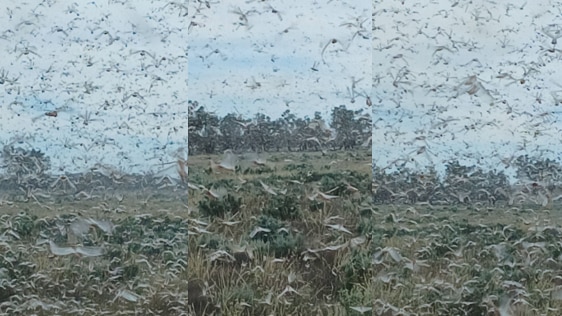
South Australian pastoralists are facing a severe locust outbreak, with producers in the Mid North and Flinders Ranges reporting significant infestations. One livestock farmer, Bridget Woods, had been communicating with the Primary Industries and Regions South Australia (PIRSA) for five weeks before aerial spraying began this week. PIRSA is continuing to monitor locust numbers across the state and spray where feasible.
Locust outbreaks are reaching unprecedented levels in parts of South Australia, with producers expressing frustration that the time for effective control has passed. The Department of Primary Industries and Regions (PIRSA) has been surveying the outbreaks since early September and has completed aerial spraying over 115,000 hectares in the Flinders and Mid North regions.
Bridget Woods, a livestock producer in Peterborough, reported thousands of small locusts on her property that devoured the vegetation, leaving only half-formed seed pods. She expressed her concern that the pests' numbers had grown exponentially, even making riding a motorbike impossible due to their density.
PIRSA Commissioner Michael McManus stated that several factors were considered before aerial spraying, such as the pest's size and the landscape. He emphasized the need for efficiency and effectiveness in controlling large areas. The state government previously faced criticism for a backflip on its outbreak management approach, spraying parts of the Mallee region despite previously deeming it unsuitable for spraying.
At Mount Little Station in the Flinders Ranges, pastoralist Peter Zadow reported that the locusts had been out of control this year. He advised that the best time to control locusts is at the banding stage, a few weeks after hatching, when they gather in large groups. PIRSA had been monitoring his property, but the outbreak did not meet the threshold for aerial spraying.
Zadow was instead offered the Plague Locust Chemical Rebate, which he deemed insufficient without the necessary machinery and misters. McManus encouraged producers to control pests in the morning or evening when they settle, suggesting that PIRSA would continue to monitor the situation in the Flinders Ranges and Mid North, with aerial spraying as needed.
Written by urgent.news from ABC News AU's reporting — not their text. Machine-written — may contain errors; check the original before relying on it.