Is it AI? Is it not AI?
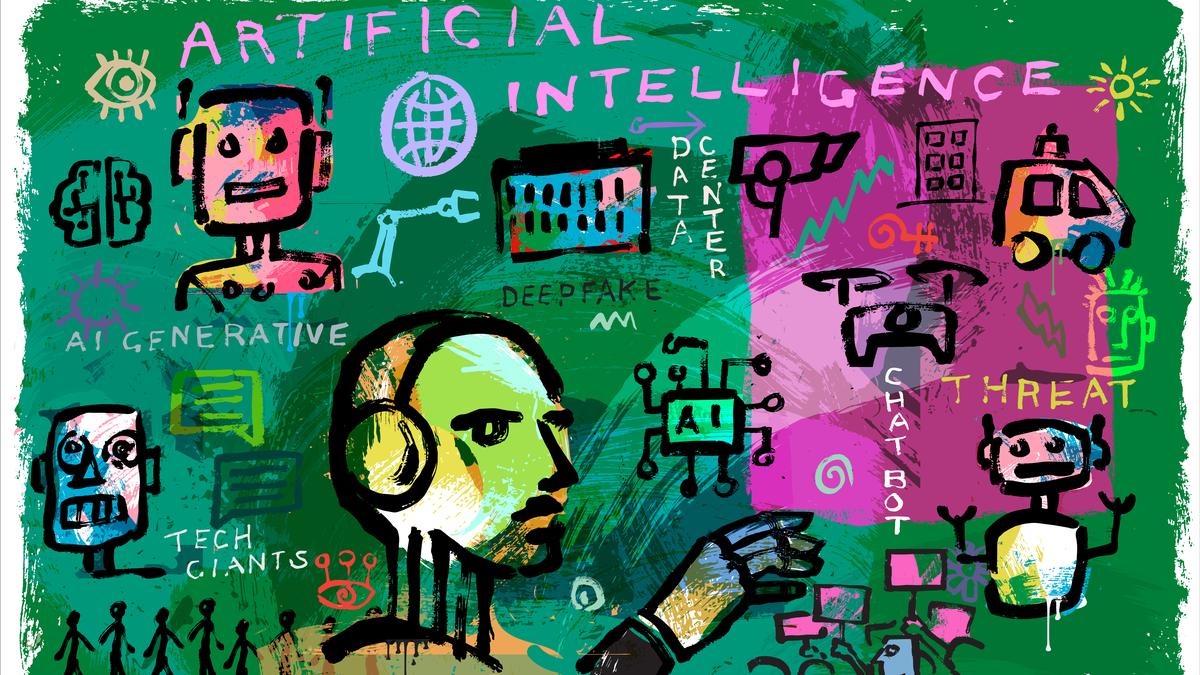
The introduction of AI, its meteoric rise, and the pervasive presence in the digital spaces had teens excited at first, then confused, and now, has them questioning the authenticity of things left and right. Some share their feelings here and it seems there is no losing control just yet.
After school, 14-year-old Sree Lekshmi eagerly awaits her phone, as is the typical routine for many these days. Phones serve various purposes throughout the day — from watching entertaining YouTube videos to studying, calling friends, and keeping up with social media trends. Sree Lekshmi, a ninth-grade student at Crescent Higher Secondary School in Malappuram, Keralam, once held great enthusiasm for artificial intelligence (AI), which had recently become a part of her family's phones.
She learned about AI through ChatGPT, Google's AI assistant Gemini, and Studio Ghibli's trend that spread across society.
Initially, AI seemed like a helpful addition, but as time passed, Sree Lekshmi began to question whether what she was seeing was genuinely made by AI or not. As the technology improved, her doubts grew stronger. "It came to us rather unexpectedly, at an unexpected time," she muses, adding that she wouldn't be surprised if AI suddenly vanished without a trace.
Her friend Jenny, a 12th-grade student from Sarvodaya Vidyalaya ISC in Thiruvananthapuram, Keralam, also grapples with the rapid development of AI. "I better remember the simple things that happened in my childhood," she reflects, "like watching TV after coming from school, than remembering when exactly I first encountered AI in my life." Jenny admits that she has no memory of the transition, as it happened so quickly.
As AI becomes increasingly prevalent, concerns arise about its authenticity. Sree Lekshmi generates more than one AI-generated image per year, and she starts to doubt whether these images are truly hers or not. In 2026, she struggles to tell the difference between AI-generated content and real-life scenarios. Even simple tasks, like watching a room being cleaned, can trick her into believing it's real. Consequently, she often checks the comment section to verify the authenticity of a video.
Jenny, on the other hand, takes a firm stance against AI in art. She finds it disheartening that some creators are accused of using AI when they are, in fact, humans producing genuine work. Jenny's fellow students often question her work, asking if it was created using AI, despite her consistently denying its use. She worries about the impact of such accusations on genuine artists and wishes that people would better understand the technology behind AI.
Rewritten by urgent.news; may contain errors — check the original.
Source: thehindu.com