I’d rather use Android XR glasses over Meta Ray-Bans for the app alone
In trying out Google’s Intelligent Eyewear Android XR glasses for the first time, one of my main takeaways is that it’s the app, not necessarily the glasses themselves that would push me into using them over the mainstay Meta Ray-Bans. more…
I recently had the opportunity to try out Google's Intelligent Eyewear Android XR glasses for the first time, and my main impression was that it wasn't the glasses themselves, but rather the app, that would convince me to use them over Meta's Ray-Bans. One of the major advantages Android XR glasses have over third-party options is their seamless integration.
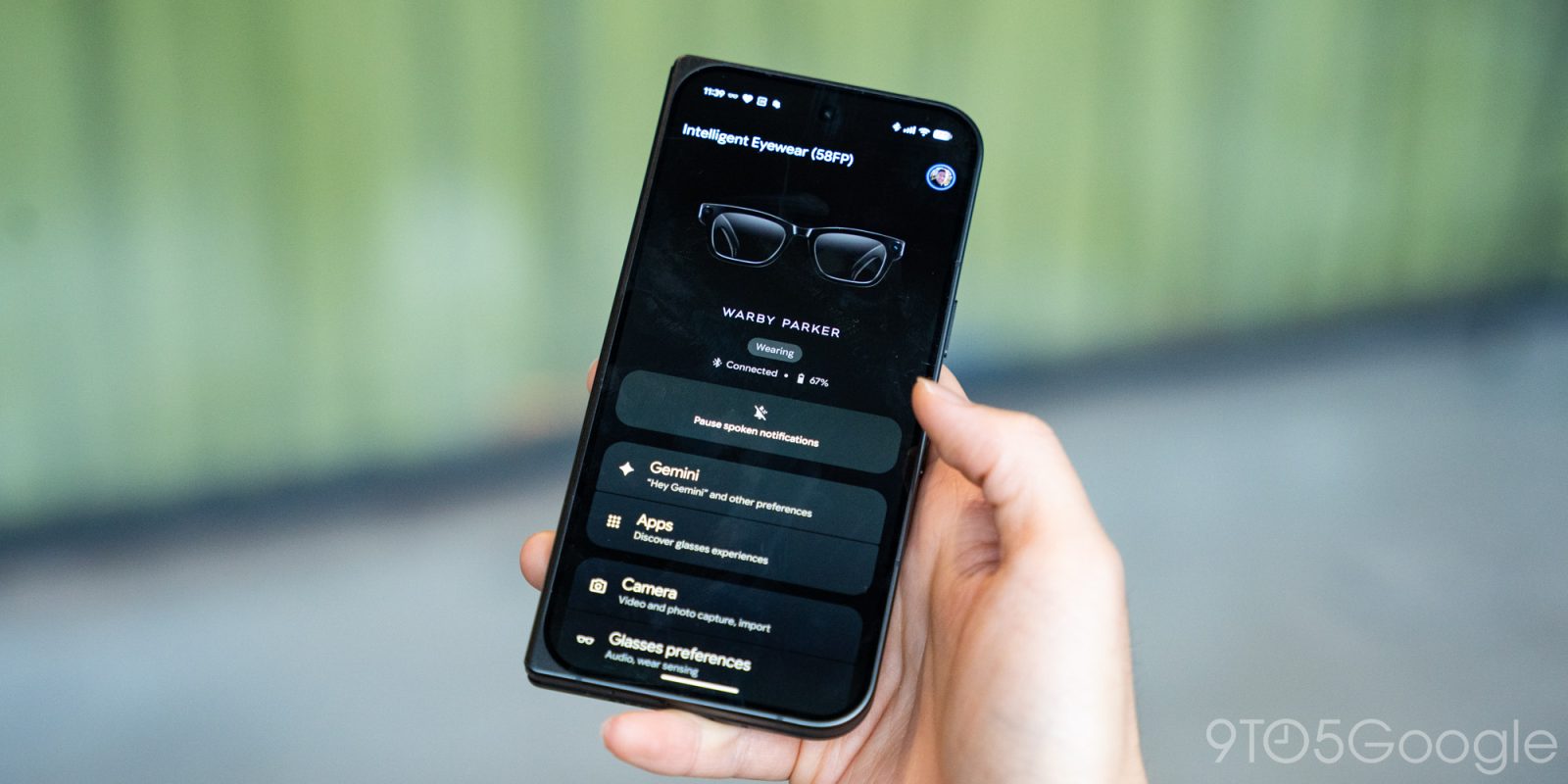
This is particularly true for the "Glasses" app, which is available on Android, iOS, and Samsung Galaxy devices and is incredibly straightforward to use. Whether you're using Pixel, iOS, or Samsung Galaxy devices, the app opens up to show your glasses' connection and battery status, with settings for Gemini, apps, the camera, and more.
At the same time, you can learn about the lights on the glasses, access tutorials, and more. There's no unnecessary clutter or complicated features – it's a straightforward utility for making adjustments or controlling the glasses as needed. The app primarily allows you to view the photos and videos captured on Android XR glasses.
Google has set up the app to auto-import photos in near real-time, taking only about 4 seconds to do so. However, videos require manual import, albeit for the sake of battery life. The experience is consistent across all three platforms: the iPhone app imports photos a bit slower, and Samsung has its own app to match One UI's design language for Galaxy users, but the core idea remains the same.
While we'll have to see how well this performs in real life, I was impressed by the simplicity of the app. It's easy to see why the app might be the deciding factor for many potential users. Meta's Ray-Bans and newer Meta Glasses have been the focus of the smart glasses debate, and I believe the app is the biggest issue. It's definitely one of the main reasons I've barely used my Wayfarers in recent months.
In early 2025, Meta replaced its dedicated "View" app for its glasses with a Meta AI app, which is invasive and unappealing in my opinion. Meta isn't new to cramming AI into everything it can get its hands on. They've been known for forcing their AI onto users, such as converting Facebook and Instagram search into AI search boxes with intrusive levels of context and actions, making Google's AI Overviews seem mild in comparison.
However, the most aggressive move was the introduction of AI in their glasses. Basic tasks like adjusting settings or importing photos now involve interacting with an AI chatbot. Meta's app is, without a doubt, the worst, and I appreciate Google for creating a simple utility for Android XR glasses instead.
Written by urgent.news from 9to5Google's reporting — not their text. Machine-written — may contain errors; check the original before relying on it.