From shoreline waste to useful products: How solar-powered recycling is helping communities rethink plastic waste in Ghana
An environmental non-governmental organisation, Plastic Punch, has partnered with Marco Bernardo, founder of Sun Factory, to demonstrate how solar energy can be used to convert plastic waste into useful products and create economic opportunities.
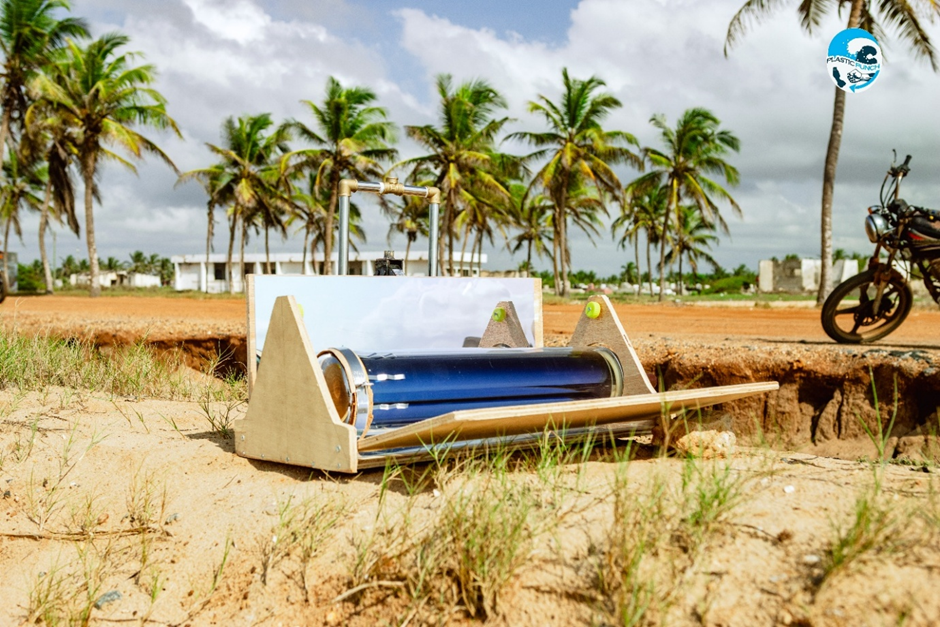
Plastic Punch, an environmental non-governmental organization, has collaborated with Marco Bernardo, founder of Sun Factory, to showcase how solar energy can convert plastic waste into useful products, creating economic opportunities and fostering community engagement. The partnership culminated in a two-week residency from October 26 to November 7, during which participants demonstrated the practical applications of solar-powered recycling and engaged with local communities on the topic of plastic pollution and sustainable waste management.
The residency commenced at the Plastic Punch office, where the team constructed a solar concentrator, a crucial component of the recycling system, which was subsequently used to illustrate how discarded plastics could be repurposed using solar energy. Subsequently, the team visited Street Academy, where students participated in discussions and live demonstrations about the challenges of plastic pollution, the importance of recycling, and sustainable waste management practices.
Next, the team journeyed to Ada Foah, where they joined PROTEGO's shoreline monitoring activities and engaged pupils from Tojeh Basic School in educational activities. Bernardo expressed his satisfaction with the school engagements, noting the enthusiasm and active participation of the students, as well as the economic potential of solar-powered recycling.
He emphasized that the process relies on solar energy, eliminating the need to purchase raw materials or conventional energy sources, and allowing for the sale of the transformed products.
Spencer Awortwi, Project Coordinator at Plastic Punch, highlighted that the residency provided the organization with a practical tool to demonstrate the value of responsible plastic waste management. He acknowledged that while recycling alone would not be a complete solution to the plastic pollution problem, transforming plastic waste into appealing products using solar energy could help alter public attitudes towards waste disposal.
During the residency, Bernardo and Plastic Punch Executive Director, Richmond Quarcoo, visited the organization's Agumatsa Eco-Lodge near Wli Falls. Together, they demonstrated how recovered plastics could be transformed into products like key holders. The team also received hands-on training in operating the technology to ensure that the acquired knowledge remains with the organization.
Furthermore, the team explored the use of local materials, such as bamboo, to construct sustainable structures, including an early dome prototype. Richmond Quarcoo commended Marco Bernardo for his dedication to knowledge sharing and capacity building among the Plastic Punch team members, stating that the NGO was excited to have Bernardo in Ghana for the residency.
He emphasized the importance of the Sun Factory project in inspiring communities to create their own solutions to the challenges they face, particularly those with limited access to electricity. Quarcoo further pointed out that while some communities generate waste, others face issues with transboundary pollutants, underscoring the Sun Factory Project's role in demonstrating viable solutions to these challenges.
Written by urgent.news from MyJoyOnline Ghana's reporting — not their text. Machine-written — may contain errors; check the original before relying on it.