From Juhu Beach To Mumbai's Waterfronts, How Chhath Puja Evolved From A Lesser-Known Festival Into A Grand Celebration
Mumbai: From small gatherings of five or six people on Juhu beach to lakhs of devotees assembling along the city's waterfronts, Chhath Puja has come a long way in Mumbai. Once a relatively unfamiliar festival outside the migrant communities from Bihar and eastern Uttar Pradesh, it has, over the past three decades, evolved into one of the city's largest community celebrations, with political…
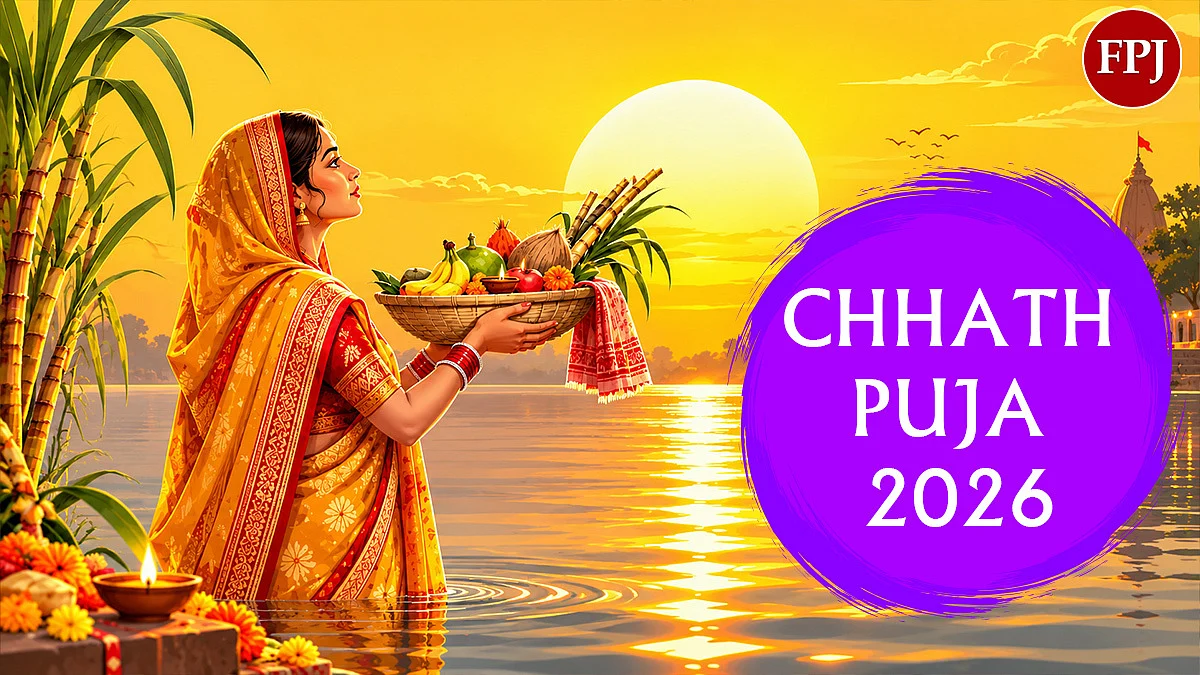
From humble beginnings on Mumbai's Juhu beach to a city-wide celebration, Chhath Puja has transformed significantly over the past three decades. Once a limited festival observed by a few families, it has now become one of Mumbai's largest community events, with political parties increasingly participating in its public presence.
U K Singh, secretary of the Bihar Association, recounts how the festival started with small groups of five or six people gathering at Juhu beach to offer prayers to the Sun God. It remained a family affair for decades, with devotees coming together in small groups to perform the rituals. However, in the 1990s, migration from Bihar and eastern Uttar Pradesh began to expand the festival's following in the city.
This led to community organisations like the Chhath Utsav Mahasangh being established to facilitate the celebrations.
Mohan Mishra, a BJP ward president, initiated the Chhath Utsav Mahasangh in 1993 to help devotees perform the rituals, providing tents, petromax lamps, and other necessary facilities. He emphasized that the motive behind these arrangements was not political, but rather a practical solution to the challenges faced by devotees. Similarly, Sanjay Nirupam, a former Congress MP and now with the Shiv Sena, started organising the festival in 1998 through his Bihar Front, aiming to make the celebration more accessible to the masses.
By the early 2000s, Juhu had become the principal gathering point for devotees, with cultural programmes and community participation elevating the festival's public profile. Celebrations spread to other waterfronts like Dadar Chowpatty, Banganga, and suburban lakes across Mumbai and the Mumbai Metropolitan Region (MMR). The four-day festival, which honours the Sun God and Chhathi Maiya, is celebrated from November 13 to 16, involving fasting, offerings, and prayers to the setting and rising sun.
While Chhath Puja holds deep religious significance and transcends social divisions, the increasing political involvement has also sparked concerns. U K Singh regrets the growing political overtones, noting that in the early days there were no political parties involved. The debate has intensified this year following the denial of permission to hold Chhath Puja at Girgaum Chowpatty, with some organizers expressing disappointment and others viewing it as a political move.
Despite the political dimension, the organisers highlight the government's support for the celebrations, with municipal corporations and local political representatives providing assistance. Senior leaders, including Chief Minister Devendra Fadnavis, are expected to participate in the festival, reflecting the continued importance and reach of Chhath Puja in Mumbai's cultural landscape.
Written by urgent.news from Free Press Journal's reporting — not their text. Machine-written — may contain errors; check the original before relying on it.