Chinese AI shares tumble after Nvidia’s Huang resigns
AI model stocks plunged on fears of restricted access to advanced chips, while US-dependent data centre suppliers also slumped, in contrast to gains in local chip stocks.
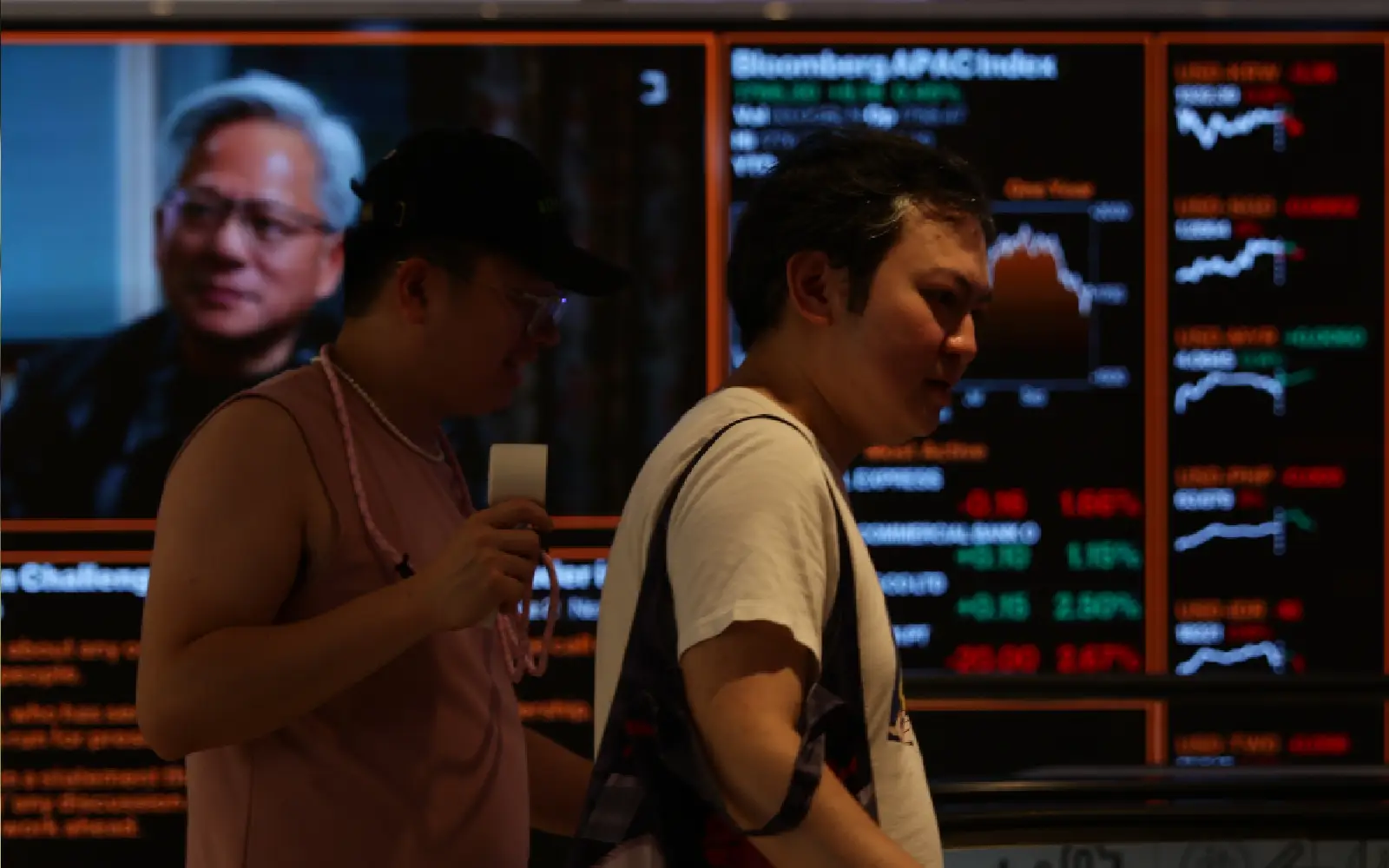
Investors dumped shares in Chinese AI models and hardware suppliers on Friday, concerned Jensen Huang's resignation as Nvidia CEO could lead to deeper technological divisions between the US and China. AI model stocks Z.ai and MiniMax Group plummeted due to fears of reduced access to advanced AI chips, while data centre suppliers Zhongji Innolight and Eoptolink Technology, which depend heavily on US markets, also fell sharply.
Domestic chip stocks rose as investors bet on technology self-reliance, but both the Shanghai Composite Index and the CSI300 Index remained relatively unchanged by lunchtime. Fund manager Wu Zhou stated that Nvidia might reduce sourcing from Chinese suppliers, and the US could tighten restrictions on China's access to advanced chips, including renting offshore cloud computing power.
Huang's resignation, triggered by extramarital affairs involving a suspected Chinese spy, has sent shockwaves through the AI industry. US House Speaker Mike Johnson hinted at growing consensus in Congress to limit chip exports to China following the scandal. Chinese AI companies are actively seeking to rent Nvidia-powered computing capacity outside China, fearing a possible tightening of US export controls on advanced chips and chip-making equipment by the year's end.
Gavekal Dragonomics warned that the scandal and a more AI-skeptical Congress could make it increasingly difficult for Chinese AI companies to access the advanced computing power they desperately need. Analyst Chelsey Tam predicts that if the US government tightens access to US chips, all companies with large language model (LLM) businesses will be negatively impacted.
The US government is also drafting a measure to bar the import of new Chinese optical transceivers, which could harm domestic suppliers Innolight and Eoptolink, whose revenue primarily comes from the US.
Written by urgent.news from Free Malaysia Today's reporting — not their text. Machine-written — may contain errors; check the original before relying on it.