5 things to watch at the Dublin EU leaders’ summit
Leaders will discuss Europe’s AI ambitions. But who speaks for Europe in Ukraine talks, how to fund Kyiv, and who replaces Christine Lagarde are also in play.
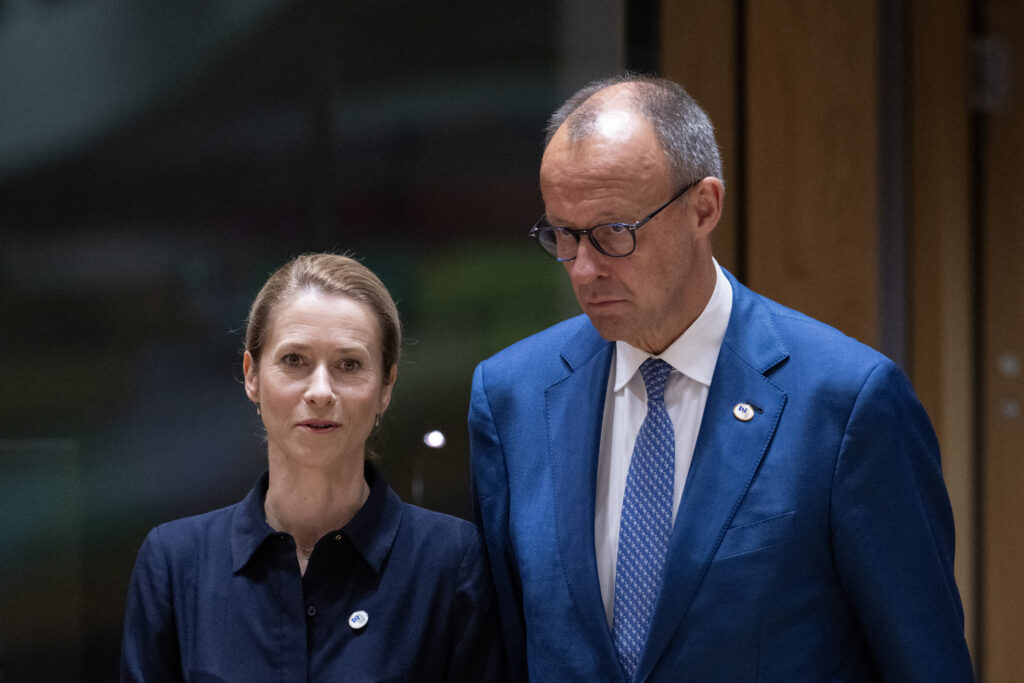
Dublin hosted the European Council summit, a gathering where EU leaders convene to discuss strategic matters. Though the summit was meant to focus on artificial intelligence (AI), it quickly became a platform for resolving other pressing issues. With AI talks slated to start at 9:45 a.m. followed by lunch at 1 p.m., and a press conference at 4:15 p.m., five key issues dominated the summit.
Firstly, the EU's potential to compete at the forefront of AI technology was the primary topic of discussion. Leaders debated whether Europe should develop its own AI models or rather build applications on top of existing models. Finland's Petteri Orpo and Estonia's Kristen Michal argued that Europe could indeed compete at the frontier, but the challenge lies in funding.
Discussions will revolve around how to generate the necessary computational capacity and resources to transform research into tangible products. The EU's AI Act is expected to provide a regulatory framework, but the real question remains whether leaders will back the development of frontier AI and commit the necessary funds.
Secondly, the European Union's representation in future Ukraine peace talks was another significant point of contention. European officials are still divided on who should speak on behalf of the bloc during the upcoming negotiations. U.S. envoy Steve Witkoff announced that the EU would be invited to the next round of talks, a demand that has been echoed by Ukrainian President Volodymyr Zelenskyy.
However, the EU remains split on the choice of representative. EU foreign policy chief Kaja Kallas and Costa both advocated for their role in representing the EU, while France and Germany pushed for a more organized approach. The issue of who speaks for Europe and the potential impact on future peace talks remains a critical talking point.
Thirdly, Ukraine's funding needs were a major subject of discussion. Kyiv faces a €70 billion funding shortfall for the upcoming year, and leaders are expected to address this pressing issue. Chancellor Friedrich Merz claimed that Germany, the EU's largest contributor, cannot accept free-riders in Ukraine and European security. Discussions are also expected to revolve around the potential use of frozen Russian assets to fund Ukraine's needs.
The funding debate is closely tied to the EU's leverage in any eventual settlement, and it remains to be seen if the leaders will be able to narrow their differences before the November summit.
Fourthly, the negotiation of the EU's budget for the period 2028-2034 was also on the agenda, although not formally on the agenda. The negotiation document aimed at reaching compromises is expected to be released around November 21. While no breakthroughs are anticipated in Dublin, leaders are expected to discuss the issue on the sidelines.
Merz has hinted that he intends to use the summit for bilateral talks, including with Macron. Signs of narrowing differences among major contributors and parties threatening to block a deal will be closely monitored.
Lastly, the European Central Bank (ECB) race to replace Christine Lagarde as president was also a topic of conversation. Spanish PM Pablo Hernández de Cos and former Dutch central banker Klaas Knot are leading contenders, along with German central banker Isabel Schnabel and Irish central banker Philip Lane, who are expected to leave their positions in 2027.
Paris and Berlin are vying for the chief executive position, with Germany potentially securing it by backing Hernández de Cos, who is seen as less hawkish than Knot. Discussions on this front are expected to continue at the Nov. 26-27 summit, with Paris and Berlin participants absent due to domestic political pressures. The ECB's top job's future is tied to broader contests for three senior positions, making it a key talking point during the summit.
Rewritten by urgent.news; may contain errors — check the original.
Source: politico.eu