Why Ramaphosa cannot be blamed for the ANC’s electoral humiliation
Cyril Ramaphosa must answer for his leadership, but the ANC’s electoral decline cannot be explained by the president alone. Provincial and regional power networks that shape leadership contests and influence local government must also face scrutiny.
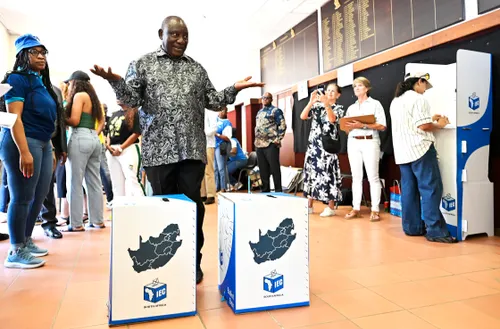
The ANC's recent electoral setback has sparked discussions about the party's leadership, particularly the role of President Cyril Ramaphosa. However, blaming Ramaphosa alone fails to address the underlying institutional problems plaguing the party. These issues lie not in Ramaphosa's personal leadership, but in the broader political architecture of the ANC itself.
The crisis stems from the concentration of power in provincial and regional structures, which wield significant influence over the party's decision-making processes. These networks, rather than the presidential office, determine the party's leadership and are responsible for critical aspects of governance, including the allocation of substantial public resources.
Despite their central role in the party's operations, these structures often escape accountability for their actions. The Auditor General's 2024/25 report revealed significant irregularities in provincial expenditure, with Gauteng alone accounting for R4.29 billion in irregularities, and the Eastern Cape facing R330 million in questionable spending.
Municipal irregularities over the past five years total R145.21 billion, highlighting a systemic problem of financial mismanagement and oversight failures. The Johannesburg case exemplifies this issue, where the city withheld records for 13 financial misconduct cases totaling R4.07 billion until after municipal elections, suggesting a disregard for transparency and accountability.
These figures paint a picture of communities suffering from poor infrastructure, unreliable services, and deteriorating public facilities, all of which can be traced back to these political networks and their failure to manage resources responsibly. Blaming Ramaphosa alone does not address this systemic problem. He must be held accountable for his leadership and decisions, but it is equally important to scrutinize the deeper structures that enable these failures.
The ANC's constitution grants significant authority to Provincial Executive Committees and regional structures, which influence local governance and resource distribution. These structures must also be made accountable for their actions, not merely the President. The buck cannot stop at Luthuli House; instead, it must be distributed across all levels of the party's leadership.
Until the ANC confronts and reforms these deep-rooted institutional weaknesses, merely changing its president will not resolve the underlying crisis.
Written by urgent.news from IOL's reporting — not their text. Machine-written — may contain errors; check the original before relying on it.