[WEEKENDER] How guide dogs and humans become partners
Completing professional training does not mean a guide dog is immediately ready to accompany a visually impaired person. The dog must first be matched with a suitable partner, and the two must learn to walk and live together. Few understand this process better than Yoo Seok-jong of Samsung Guide Dog School. Born with a visual impairment, Yoo now lives with his fifth guide dog. Drawing on his own…
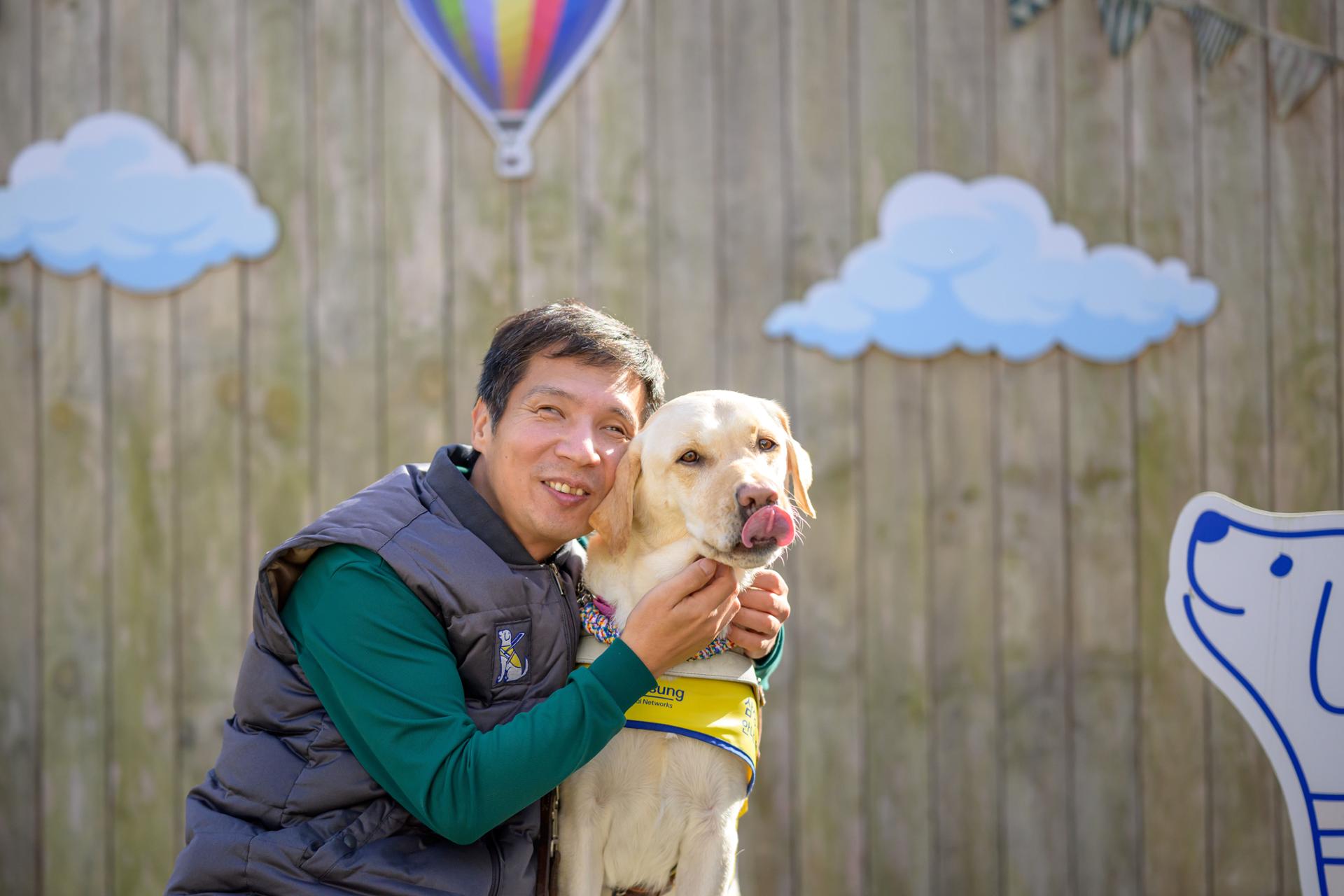
Completing professional training does not automatically make a guide dog suitable for a visually impaired person to accompany. Before the dog can be matched with a suitable partner, it must first learn to live and walk together with its human companion. This process is best understood by Yoo Seok-jong, a guide dog instructor at the Samsung Guide Dog School in Yongin, Gyeonggi Province, who has been visually impaired himself.
Drawing upon his own experience, Yoo assists visually impaired individuals in finding a guide dog that fits their particular needs and lifestyle.
During an interview on November 2 at the school, Yoo was accompanied by Gori, a friendly 5-year-old demonstration dog. Gori commonly introduces visitors to guide dogs and walks with visually impaired individuals during trial periods. Yoo explained that matching a guide dog with a prospective partner is crucially dependent on the balance between the person's walking speed and the dog's natural pace.
Forcing either one to adjust can prove challenging. Equally important to consider is the dog's temperament, which must harmonize with the human's personality.
Written by urgent.news from The Korea Times's reporting — not their text. Machine-written — may contain errors; check the original before relying on it.
Also reported by 1 other outlet
- [WEEKENDER] How guide dogs and humans become partners koreatimes.co.kr