Stephen Curry Potential Return Timeline: Doctor’s Opinion On Concerning Injury To Warriors Star
Dr. Brian Sutterer gives the differential diagnosis on Stephen Curry's injury with the potential timelines he could be looking at for his return to action.
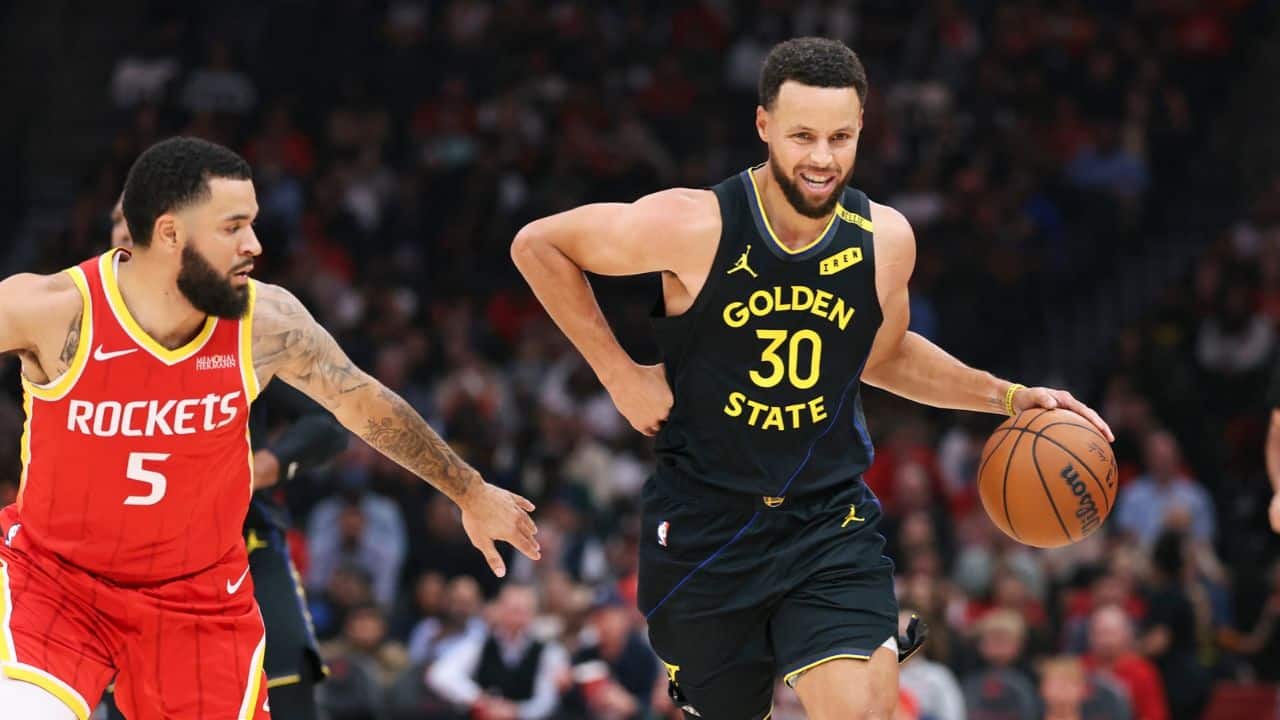
On November 11th, Houston, Texas, Stephen Curry, the Golden State Warriors guard, exited the game early due to right-sided abdominal pain after suffering a concerning injury during a loss to the Houston Rockets. Bill Kerr, the Warriors' head coach, acknowledged the high level of concern within the team, but Stephen Curry returned for the second half and was examined with an MRI, though the results were not yet known.
Dr. Brian Sutterer, a well-known sports physician, released a video on YouTube discussing his differential diagnosis of the injury with potential timelines for Curry's return depending on its severity.
Sutterer acknowledged that the team called the injury "abdominal soreness," but he believed it to be a true abdominal strain, given multiple clear moments on the court where Curry moved in ways that could have injured or strained the abdominal muscles, particularly on his right side. The first play where Curry grabbed and wince in apparent pain was when he tried to rotate his trunk from right to left while rotating his body to get through an opponent, Sengun.
This forced rotation could have led to an eccentric load, stretching and eccentrically loading the muscle, followed by a contraction when he rotated his trunk towards the left.
Sutterer pointed out that Curry was not grabbing at the front of his abdomen but rather towards the side, and that his grab was also accompanied by a lower back grab. He mentioned that the abdominal wall consists of four layers of muscles, including the external oblique, internal oblique, rectus abdominis, and transverse abdominis.
Given the location of Curry's injury, Dr. Sutterer ruled out the rectus abdominis as the affected muscle and suggested that the injury could be a strain to any of the other three abdominal muscles. He emphasized that the transverse abdominis, which wraps around the lower portion of the ribs, lower back, and is involved in core stability, might be the injured muscle.
Written by urgent.news from Yahoo Sports's reporting — not their text. Machine-written — may contain errors; check the original before relying on it.