'Slave payments' and 'expensive and exclusive shoe' discovered on 17th-century Danish ship that sank after deadly mutiny
Archaeologists have discovered the shoe of the first governor of the Danish West Indies, recovered from a 17th-century ship that was wrecked after one of the most violent mutinies in Denmark’s history.
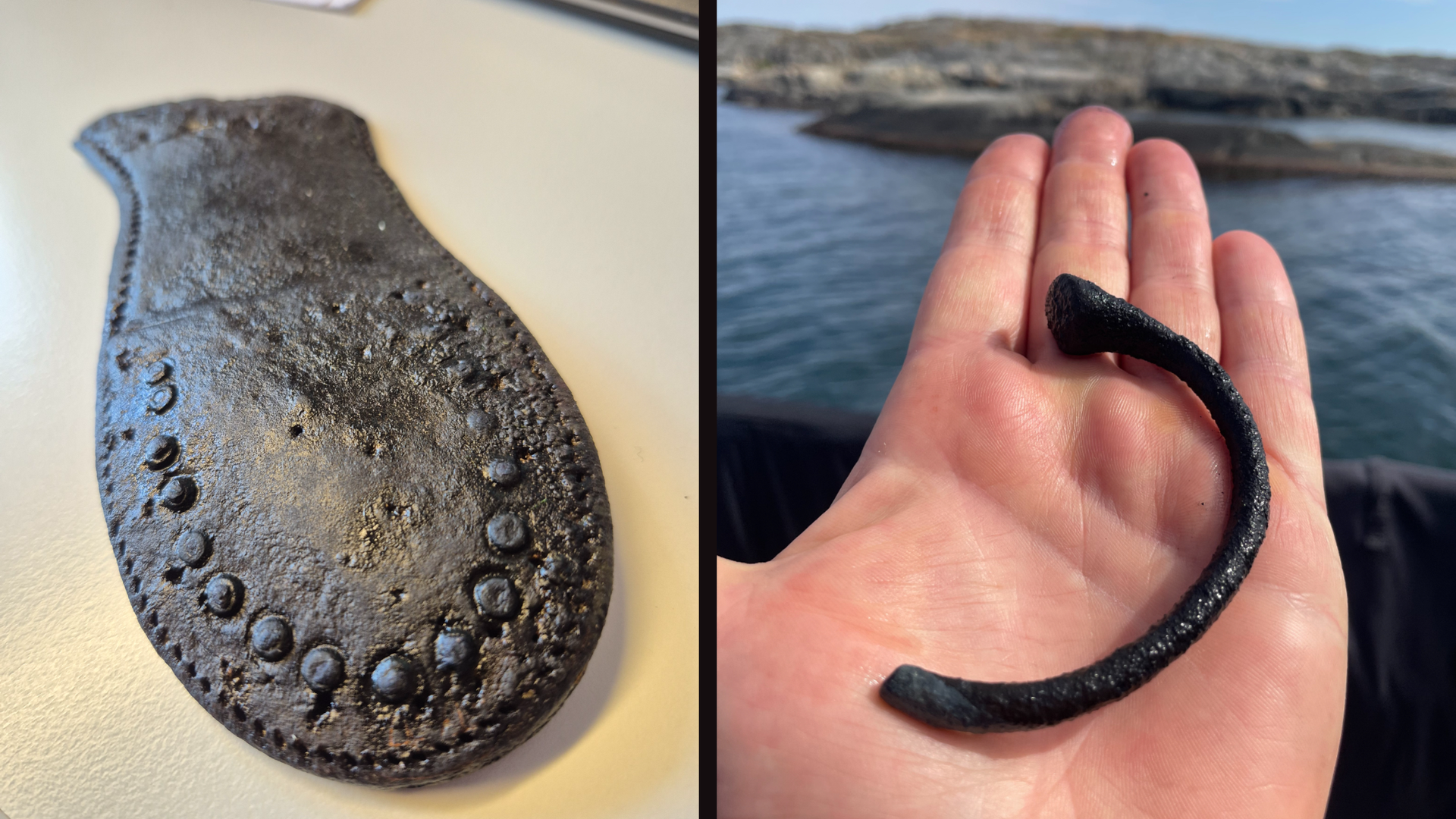
Underwater archaeologists have recently discovered a high-quality shoe and two metal rings used as currency in the 17th century Danish shipwreck off the coast of Sweden. The Havmanden (Merman), a Danish frigate, sank after a mutiny in 1683. The mutiny took place near the Azores in the North Atlantic, after the ship had dropped off new colonists in St. Thomas, a Caribbean island now part of the U.S. Virgin Islands.
The mutineers killed the ship's captain and threw other officers overboard, including Jørgen Iversen Dyppel, the first governor of the Danish West Indies. The ship's wreck, located east of Gothenburg, Sweden, revealed the rare, expensive shoe, which indicates the status of its owner, likely Iversen. In addition, two manillas, metal rings used as currency in West Africa for the slave trade, were found among the wreckage.
The items provide insight into the violent mutiny and Denmark's involvement in the transatlantic slave trade.
Written by urgent.news from Live Science's reporting — not their text. Machine-written — may contain errors; check the original before relying on it.