Sidra Medicine contributes to international AI study advancing neonatal care
<p>Doha, Qatar: Sidra Medicine, a member of Qatar Foundation, has contributed to a major international study demonstrating how artificial intelligence (AI) models originally developed for adult patients can be adapted to support neonatal care.</p> <p>Published in the high-impact journal, Nature Biomedical Engineering, the research highlights a promising approach to improving the accuracy of…
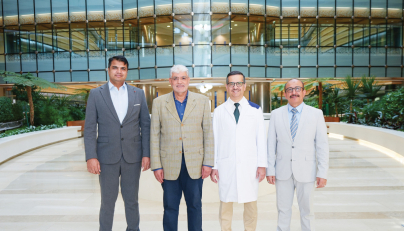
Doha, Qatar - Sidra Medicine, an affiliate of Qatar Foundation, has played a pivotal role in groundbreaking international research exploring how artificial intelligence (AI) models, initially designed for adult patients, can be adapted to enhance neonatal care. The study, published in the esteemed journal Nature Biomedical Engineering, showcases a promising method to boost the precision of AI-assisted medical imaging for newborns.
Titled 'Repurposing Adult AI Radiograph Models for Neonatal Care Through Continual Learning: An International Multicenter Study,' the investigation involved 30 neonatal intensive care units spread across 20 countries and territories. The research was spearheaded by Sidra Medicine, with Dr. Khalid Al-Kharazi, Senior Attending Physician and Director of the Paediatric Neurosurgery Fellowship programme, serving as the project lead.
Zafar Iqbal, Manager of Imaging Information Systems, and Dr. Abdusamea Shabani, Chair of Radiology, also contributed significantly to the initiative.
The Harvard Medical School-based Medical AI Data for All (MAIDA) team, which facilitated the collaboration, aimed to adapt existing AI models to cater to the unique requirements of newborn patients while maintaining stringent data privacy standards. Dr. Al-Kharazi emphasized the importance of this research, stating that AI holds immense potential in supporting clinical decision-making.
However, it's crucial that AI models perform effectively across various patient populations. Neonates possess anatomical and clinical needs that often differ from those of adults, which this study demonstrates can be addressed by repurposing AI models.
The research specifically concentrated on the positioning of endotracheal tubes, a critical component in the care of critically ill newborns. Proper tube placement is vital, as incorrect positioning can result in severe complications. Each participating institution contributed between 100 to 300 radiographs, enabling the AI model to learn from a diverse patient population without necessitating the sharing of medical imaging data from a central source.
Sidra Medicine, as one of the participants, provided 100 anonymized neonatal chest X-ray images to aid the study.
Written by urgent.news from The Peninsula Qatar's reporting — not their text. Machine-written — may contain errors; check the original before relying on it.
This story
This is one outlet's version. Read the fullest account.
- Sidra Medicine contributes to international AI study advancing neonatal care thepeninsulaqatar.com