Is there a North Star for Mars?
Is there a North Star for Mars ... a guide star for future explorers? Not in any satisfying way. But Martian stargazers wouldn't lack for things to see! The post Is there a North Star for Mars? first appeared on EarthSky .
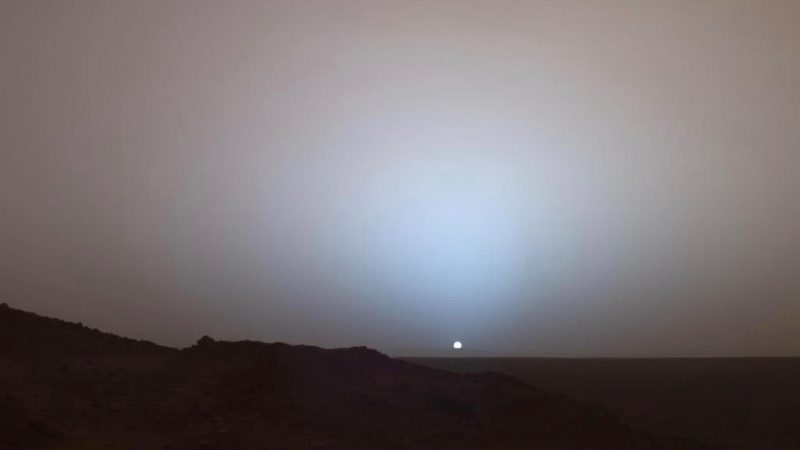
The sun sets over the Martian landscape, unveiling stars in the night sky. The question arises: is there a North Star for Mars? The 2027 EarthSky Lunar Calendar is available for purchase. Earth's North Star is Polaris, but does Mars share this celestial reference point? Let's explore the concept of a North Star. All planets in our solar system rotate on their axes, determining the length of their day.
This rotation creates a line extending into space that might align with a visible star, known as a pole star. Earth's North Star, Polaris, is less than a degree away from the north celestial pole and serves as a reliable indicator of north. Earth's south, however, lacks a comparable South Star; the nearest visible star to Earth's south celestial pole is about 9 degrees away.
Earth's axial tilt, approximately 23½ degrees, and Mars' tilt at around 25 degrees, coupled with the differing directions of these tilts, prevent Mars from having a North or South Star in a similar manner to Earth. While Mars does have a star near its north celestial pole about half a degree away, Polaris is significantly brighter (the 47th brightest star in the night sky), making this Martian candidate less ideal.
The star near Mars' north celestial pole is located between the constellations Cygnus and Cepheus, while the southern sky, as viewed from Mars, features Kappa Velorum, only about 3 degrees from the Martian south celestial pole. Although not as close as Earth's Polaris, this star is still not as bright. Eventually, Mars' colonists might not have a bright North Star like Polaris to guide them.
However, observers on Mars would witness fascinating celestial events, such as seeing Earth and its moon with the naked eye. The Earth would appear to transition from morning to evening "star" as it orbits closer to the sun than Mars, similar to Venus' relationship to Earth. As for Mars' own celestial show, the moon Phobos occasionally passes in front of the sun, a captivating sight captured by NASA's Curiosity rover in 2019.
Written by urgent.news from EarthSky's reporting — not their text. Machine-written — may contain errors; check the original before relying on it.