How Nvidia became so crucial to the AI boom
An espionage scandal has hit the biggest company in the world, and the fallout has the potential to destabilise economies that rely on its AI chips. Columnist Jacob Aron explains how Nvidia became the lynchpin to the AI industry

Nvidia, a company once synonymous with video games, has become a cornerstone of the AI revolution. Its graphics processing units (GPUs) were initially crafted for the intense number-crunching required to create 3D scenes from triangles, but have since become essential for training and deploying large language models (LLMs) like ChatGPT.
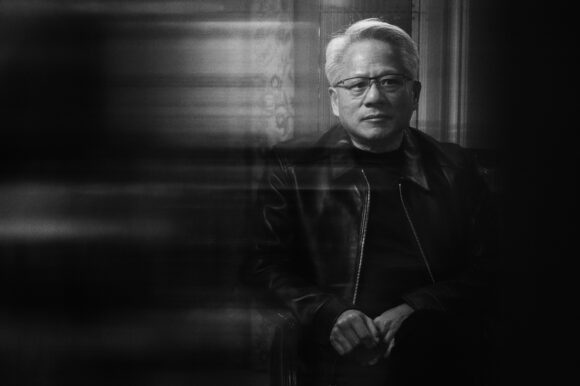
This shift catapulted Nvidia's stock to a value of $4.5 trillion, making it the world's largest company. However, the company's CEO, Jensen Huang, resigned after admitting to an affair with Alice Huang, who is suspected of being a Chinese spy; a claim China dismisses. Nvidia's transformation began more than two decades ago when researchers discovered they could repurpose GPUs for broader computational tasks.
In 2007, Nvidia introduced CUDA, software that translated algorithms for GPU processing, a move that initially subsidized the development of its general-purpose computing business. The turning point came in 2012 with the release of AlexNet, a neural network that significantly outperformed previous techniques, sparking the deep learning era.
Nvidia's GPUs, coupled with CUDA, fueled the AI boom. The release of the DGX-1 in 2016, a system containing eight GPUs billed as the world's first deep learning supercomputer, further cemented Nvidia's dominance. Despite competition from companies like Google, Amazon, Meta, and Microsoft developing custom AI hardware, Nvidia GPUs have remained dominant, partly due to the software industry's long-standing familiarity with CUDA.
The current scandal, involving the alleged misuse of Nvidia GPUs by Alice Huang, has shaken investor confidence. Nvidia has appointed its CFO, Colette Kress, as interim CEO, and is now searching for a new leader amidst competition from chip rivals.
Written by urgent.news from New Scientist's reporting — not their text. Machine-written — may contain errors; check the original before relying on it.
Also reported by 4 other outlets
- Nvidia CEO Jensen Huang steps down in big blow to AI boom bangkokpost.com
- Nvidia CEO Jensen Huang to step down in big blow to AI boom brecorder.com
- Chinese 'spy' Alice Huang's firms invested in DeepSeek, promised Nvidia's Blackwell chips timesofindia.indiatimes.com
- Sources: firms tied to Alice Huang recently invested in DeepSeek, to forge closer ties and supply Nvidia's Blackwell chips, which are banned from sale to China (The Information) theinformation.com