Gemini in action: How voice, agents, and coding tools are changing the way businesses use AI
At TechSparks 2026, Google Cloud’s Rajesh Shewani walked through how businesses are using Gemini for voice, agents, and coding, and why the systems built around a model now matter as much as the model itself.
Generative AI, a rapidly evolving field, has progressed through three significant eras in just three years. First came retrieval, where chatbots answered questions and waited for the next one. Next were agents that performed actions on behalf of users. Now, the industry is entering the harness era, where orchestration, memory, and guardrails enable models to carry out work from start to finish.
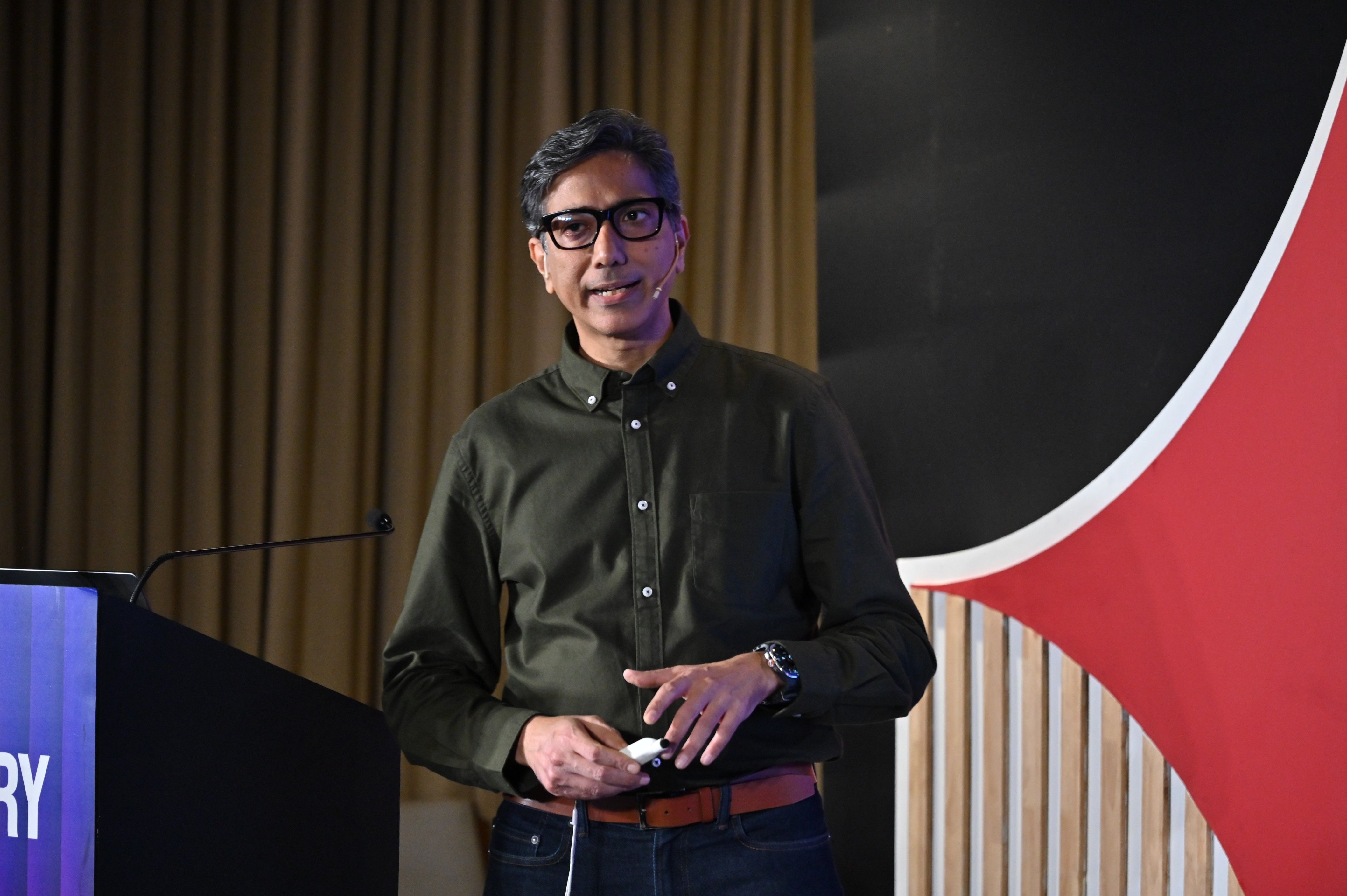
Rajesh Shewani, Head of AI Customer Engineering for Digital Natives, Startups and ITeS at Google Cloud, explained this concept in his masterclass titled 'Gemini in action' at TechSparks 2026.
In this masterclass, Shewani highlighted how businesses are utilizing AI across five broad areas. Agents, which are changing how companies operate and how startups build for others, were one such area. Creative work, including image and video generation for marketing and branding, also emerged as an early adopter of AI. Additionally, multimodal AI, enabling models to work with images, video, and voice, was gaining traction.
Physical AI, including robotics and self-driving cars, was expected to grow rapidly as large language models gained a body.
AI fluency was a priority for traditional industries like banking, insurance, retail, and telecom. These businesses aimed to make employees AI-fluent, rather than needing to be experts or developers. Shewani emphasized that agents, which combine models with a harness, are the key to this AI fluency. The harness comprises four essential components: a goal, instructions, knowledge, and tools.
Knowledge, in particular, is where much effort is being invested. Companies are building their own LLM wikis for agents and Google is working on standardizing this approach with the Open Knowledge Format (OKF). OKF v0.1 represents knowledge as a directory of markdown files with YAML frontmatter, which agents can read directly. This shared knowledge layer, combining a knowledge graph with plain text, helps keep costs down by using fewer tokens.
Voice interfaces are becoming increasingly popular, serving customers, employees, and users who prefer speaking in local languages. Google DeepMind's team in Bengaluru is focusing on Indic languages, with Gemini Live supporting over 90 Indian languages and dialects. A live translation demo was shown, where travelers and drivers who didn't share a language could coordinate a pickup seamlessly.
Another example mentioned was Citi Sky, Citibank's AI-powered wealth assistant, which uses a virtual avatar to guide clients through options for a maturing certificate of deposit and complete the renewal process. To ensure smooth interactions, Shewani stressed the importance of low latency, as even a slight delay can disrupt the experience.
Shewani then delved into the technical aspects of these AI-driven experiences. The Gemini agent, introduced on October 8, 2026, can carry out tasks end-to-end and work in the cloud for hours or days, even when a user's device is offline. Google Cloud introduced this agent, and it routes each task to the most suitable model, currently between Gemini and Anthropic's Claude models.
Gemini Enterprise adds guardrails and quotas for businesses to prevent costs from spiraling, a major concern for tokenomics, with nearly 90% of Fortune 100 companies utilizing this enterprise version.
Antigravity, Google's harness for building software, was also discussed. It's available as a command-line tool and code editor extensions, and most of Google's own code now uses this harness, known internally as Jetski. Google CEO Sundar Pichai concluded the masterclass by emphasizing that AI is no longer just an assistant that appears and disappears but an autonomous colleague, with the model plus everything built around it, including memory, context management, and sandboxing.
Written by urgent.news from YourStory's reporting — not their text. Machine-written — may contain errors; check the original before relying on it.