Communities around DRC’s Upemba National Park say conservation comes at a cost
A forest can be many things to the communities that live in and around it. It can serve as farmland, a pharmacy, a food source or a cultural center. The forest can be a lifeline to residents who depend on it for survival. Yet access to that land can be restricted if it lies within […]
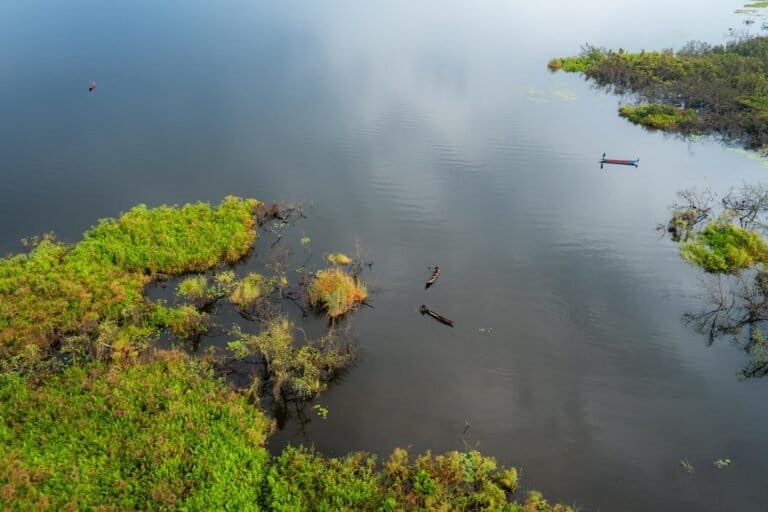
Communities surrounding DRC's Upemba National Park express that conservation efforts come at a significant expense. Within these protected areas, forests serve multiple purposes, functioning as farms, pharmacies, and food and medicine sources. However, these same forests can be restricted if they fall within a conservation zone.
This predicament is not uncommon, as areas of high ecological importance frequently overlap with the lands inhabited by local communities who rely on them for their survival. Research is increasingly revealing the disputes that can emerge when conservation zones intersect with community territories. An exemplar of this issue is Kisandji, a community with a diverse ethnic makeup, located approximately 13 kilometers from Upemba National Park in Haut-Katanga province.
The villagers of Kisandji utilize the natural resources present in the park for sustenance, medicinal needs, and agricultural purposes. However, since 2015, their access to the parkland has become increasingly constrained due to national initiatives aimed at combating poaching and other wildlife-related offenses. The park's domain has historically been a crucial source of livelihood for the surrounding settlements, with around 85% of households in Kisandji depending primarily on farming.
The residents of Kisandji, who also face challenges such as lack of electricity, piped water, and healthcare, also depend heavily on the forest for food, medicine, and income. In a region marked by war, displacement, poverty, and other extractive activities that interfere with the communities' means of subsistence, the forests within the park continue to serve as their primary resource.
Written by urgent.news from Mongabay's reporting — not their text. Machine-written — may contain errors; check the original before relying on it.