BoJ's Asada says must be mindful of expected effect of past rate increases on economy
Bank of Japan (BoJ) board member Toichiro Asada said on Thursday that the central bank must be mindful of expected effect of past rate increases on economy. Asada added that underlying inflation fluctuates around levels consistent with BoJ's price target.

Bank of Japan board member Toichiro Asada urged the central bank to consider the impact of previous rate hikes on the economy. Asada noted that inflation rates stay close to the bank's target levels. Financial conditions were still accommodative. Should the policy rate stay in the neutral zone, a further rate increase might have a bigger effect on the economy.
Asada warned of the risks posed by potential overshoot in underlying inflation above the target, which could hurt the economy and lower core inflation. He emphasized the importance of monitoring actual consumer inflation data to assess the risk of inflation surpassing 2%. Even if the Bank of Japan raises rates in the future, caution should be exercised regarding the pace of increases.
Asada expressed doubt about the robustness of recent consumption data. Japan's growth was expected to modestly pick up. Given the lag in monetary policy effects, the bank would closely monitor the cumulative impact of rate hikes on corporate funding and household borrowing. Asada's speech received a 3.2/10 rating on the FXS Speechtracker, indicating a neutral tone despite the mention of past rate hikes and the neutral policy rate.
The focus on financial conditions, weak consumption, and the risk of further hikes harming the economy and reducing core inflation suggests a mildly dovish bias for the Yen, even as underlying inflation fluctuates around the price target. Asada highlighted that current price increases are not driven by demand and stressed the need for gradual, cautious rate hikes to avoid harming the economy.
The Bank of Japan's emphasis on data-driven policy and warnings about past and future hikes curbing inflation by slowing growth supports a cautious, data-dependent approach that could temper expectations for rapid Yen-supportive rate hikes. No significant reaction was observed in the Japanese Yen (JPY) following Asada's remarks.
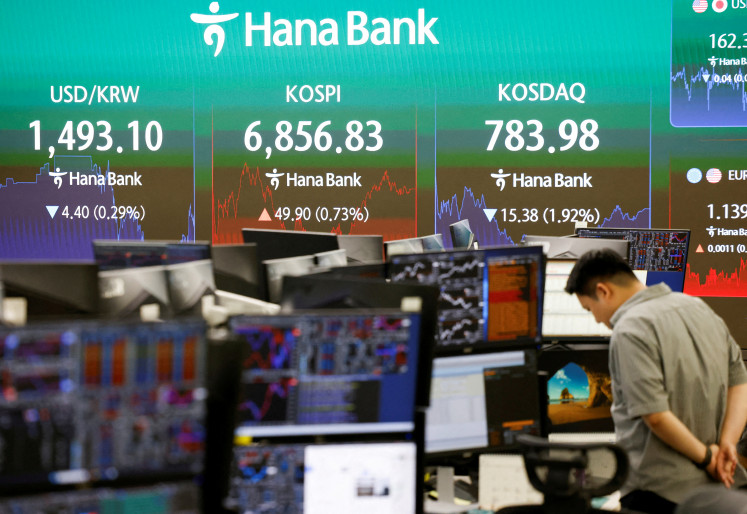
At the time, the USD/JPY pair was trading 0.12% lower at around 159.65. The Japanese Yen is influenced by the performance of the Japanese economy, the differential between Japanese and US bond yields, and market sentiment. The central bank's role in currency control is crucial for the Yen's value. The Bank of Japan has occasionally intervened in the currency markets, primarily to lower the Yen's value, but does so infrequently due to political concerns among its key trading partners.
The Bank of Japan's ultra-loose monetary policy from 2013 to 2024 contributed to the Yen's depreciation against major currencies due to increasing divergence between the Bank of Japan and other central banks. Recently, the gradual unwinding of this ultra-loose policy has provided support to the Yen. Over the past decade, the Bank's ultra-loose stance has led to widening policy divergence with other central banks, particularly the US Federal Reserve, favoring the US Dollar against the Japanese Yen.
The BoJ's decision in 2024 to gradually abandon the ultra-loose policy, coupled with rate cuts in other major central banks, is narrowing this differential. The Japanese Yen is often viewed as a safe-haven currency, gaining value in times of market stress due to its perceived reliability and stability. Turbulent periods typically strengthen the Yen's worth against riskier currencies. Lallalit Srijandorn, a Parisian at heart living in Paris and Bangkok, provided this account.
Written by urgent.news from FXStreet's reporting — not their text. Machine-written — may contain errors; check the original before relying on it.