AI Automation Safety: When to Keep a Human in the Loop
AI can send routine replies, but it never pays or deletes. How we decide which automation steps need a human approval, and how to build one in Zapier.
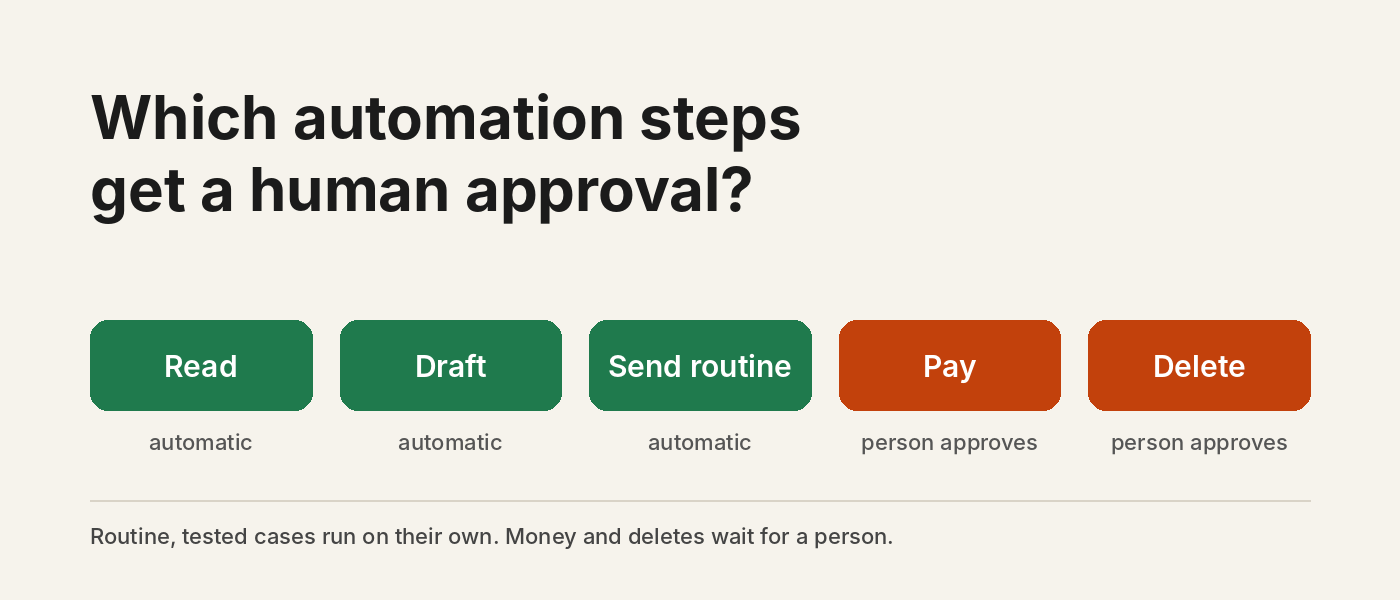
A key principle in building AI automation systems is ensuring that the AI never executes irreversible actions on its own. Instead, the AI should send tasks to a person for approval when certain conditions are met. To determine whether a step requires human intervention, three questions are asked:
1. Can we undo the action? Actions like deleting records or sending emails cannot be reversed, so these require human approval.
2. Does the action leave our control? Anything sent to a third party, such as a customer or supplier, is out of our hands once sent.
3. What does a mistake cost compared to a delay? If a delay is inexpensive while a mistake could cause financial loss or breach trust, the step needs human approval.
In practice, most steps are sorted into categories:
- Read and classify emails, tagging them by language and topic: No human approval needed.
- Write a reply, summary or invoice: No human approval needed, as it doesn't reach anyone yet.
- Update internal records: No human approval needed, as it's logged.
- Send to someone outside or reply to a customer/supplier: Requires human approval or follows a tested rule for routine cases.
- Pay an invoice or issue a refund: Always requires human approval.
- Remove records, cancel orders, or archive accounts: Always requires human approval.
When a model is retired, the system tests for about three weeks to ensure everything is working properly. The model extracts information from invoices and compares it with stored records. If the details match, the invoice moves forward for payment. If they don't match, the invoice is held until a person verifies the changes with the supplier. This approach protects against invoice fraud, as the AI cannot detect incorrect bank details.
Rewritten by urgent.news; may contain errors — check the original.
Source: hackernoon.com