When gold has two masters: Demand versus rates and inflation
Gold’s outlook is being pulled between higher-rate expectations and persistent demand for protection. Two Exness analysts assess whether the recent retreat can deepen—or whether inflation, geopolitics and central-bank buying will support a recovery.
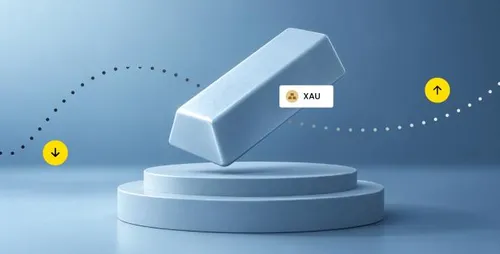
Gold found itself in a precarious position in summer 2026, caught between the Federal Reserve's hawkish expectations and the ongoing inflationary pressures. After a brief rebound in August, gold experienced a decline in September and early October, struggling to drop below the 4,000 USD mark. Exness' analysts Stanislav Bernukhov and Michael Stark offered contrasting perspectives on the precious metal's future.
Stanislav believed that the correction was far from over and that gold had not yet become cheap, despite being below this year's record highs. He noted that the market had yet to fully process the exceptional recent gains, and that volatility had risen significantly, making gold behave more like a high-beta risk asset. Stanislav expected gold to break below 3,000 USD in the medium term, although he did not consider this a near-term target.
Michael, on the other hand, was more optimistic about gold's prospects. He believed that the fundamentals had not changed significantly since early 2026 and that the demand for gold would continue to remain strong. Michael pointed out that expected appreciation had also become an important factor in recent years, and that the bounce in August demonstrated that demand remained robust despite rising interest rates.
He contended that gold was more of an economic haven and that the US dollar played a geopolitical role, suggesting that if a permanent peace became more likely, gold could gain in value.
Both analysts agreed that economic uncertainty supported gold as an investment, but that the response was not always immediate. They also noted that gold's popularity among CFD traders was due to its tendency to move in strong trends, its clear technical structure, and its potential to change direction quickly. Ultimately, both analysts recognized that gold's price movements were influenced by a complex interplay of factors, including central bank policies, geopolitical events, and market sentiment.
Written by urgent.news from IOL's reporting — not their text. Machine-written — may contain errors; check the original before relying on it.
This story
This is one outlet's version. Read the fullest account.