US citizen, ‘Chinese blood’: top biologist Yuan Junying caught in debate over returnees
A top Chinese-American biologist who left Harvard University to take up a position in China is facing an online backlash amid a growing debate over whether senior returnees are squeezing out the country’s young scientists. Yuan Junying, a pioneer in the study of how cells die, drew attention in China late last month when she defended her US citizenship after winning a major science prize at the…
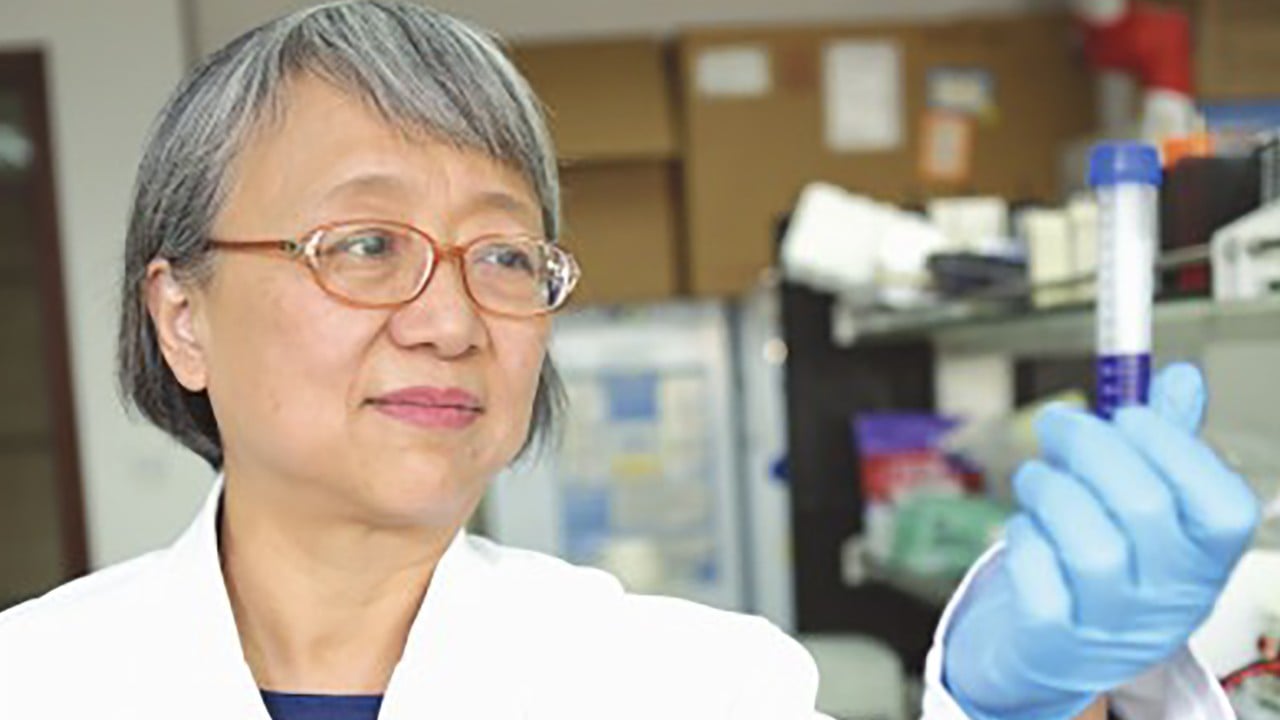
Chinese scientist Yuan Junying, who holds American citizenship, has become the target of online criticism amid a controversy surrounding senior scientists who return to China for work. Yuan, a distinguished biologist known for her research on cellular death, defended her US citizenship after receiving a prestigious award at the World Laureates Forum in Shanghai. She has been running a biological and chemistry centre at the Shanghai Institute of Organic Chemistry full-time since her return to China in 2020.
Yuan argued that nationality is determined by more than just a passport, emphasizing that "blood is Chinese blood" for her. However, Xiang Ligang, a prominent telecoms commentator, accused her of returning to China only to claim research funding meant for younger scientists, labeling her as an "ordinary retired old lady" and alleging she was "cheating the country." He also criticized her for staying in the US after receiving state-funded education in China during the 1980s.
Supporters of Yuan, including neuroscientist Rao Yi from Peking University, defended her integrity and praised China's open-mindedness towards talented individuals. Rao dismissed concerns that Yuan was taking resources away from young researchers, asserting that many were thankful for her support. Hu Xijin, former editor-in-chief of the state-run tabloid Global Times, dismissed Xiang's comments as "vicious" and suggested that the issue should be addressed through reforms in the funding and evaluation systems.
The debate over senior returnees is not new in academic circles. In December, cell biologist Zhang Hong noted that senior returnees often received significant funding shortly after returning to China, while homegrown scientists struggled to secure grants. A recent PhD graduate from a Beijing university highlighted the pressure on promotions, as top positions are limited, and each high-profile appointment by a foreigner can hinder the career progression of mid-level and junior colleagues.
Written by urgent.news from Reuters Business via SCMP's reporting — not their text. Machine-written — may contain errors; check the original before relying on it.
This story
This is one outlet's version. Read the fullest account.