THE MISSING VOTERS: The invisible winner: SA counted the votes — who’s counting the absent?
South Africa has counted its votes. Parties are counting their seats. Coalition negotiators are counting their options. But who is accounting for the millions missing from the ballot box?
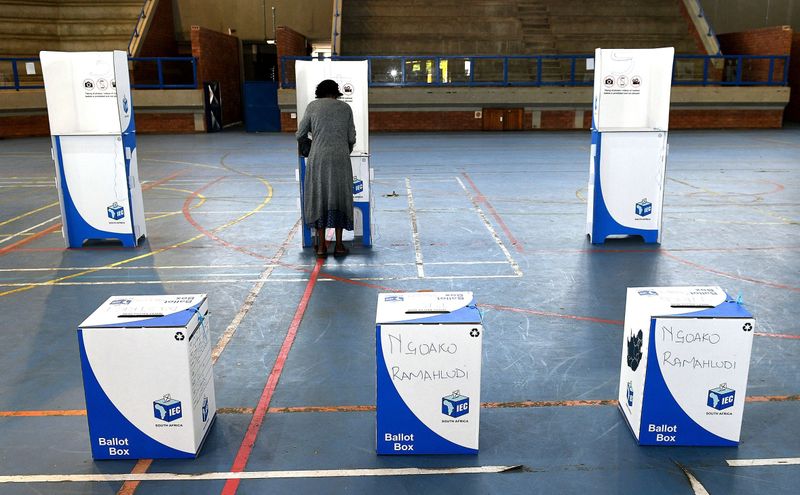
South Africa has recently completed its local government elections, with parties determining their outcomes and coalition negotiators evaluating their possibilities. However, a critical question remains unanswered: what of the millions of voters who were absent from the ballot box?
Estimates suggest that approximately twice as many eligible South Africans failed to vote as those who did cast their ballots. While an election can be managed effectively despite this significant gap in political participation, it is essential to acknowledge the implications for democracy.
Using the Political Campaigns Resource Hub's (PCRH) estimate of 45.5 million eligible citizens, the figures reveal that about 16.3 million individuals were not on the voters' roll, and around 14.3 million registered citizens did not vote. Altogether, approximately 30.6 million eligible citizens were absent from the election.
These statistics show that participation rates may have improved, but the number of excluded or disengaged individuals remains substantial. The election's improvement should not be viewed in isolation from the considerable portion of the population that remains unrepresented.
Comparing 2026 to the 2021 elections, the registered population that did not vote has remained relatively stable, while the estimated unregistered population has increased. This growth in the unregistered population highlights the persistent barriers that prevent some eligible citizens from participating in the electoral process.
While increased turnout can be considered progress, it is crucial to evaluate this progress against the population that democracy is supposed to represent. A high turnout percentage alone does not guarantee that the participation gap is closing.
Winning an election does not automatically grant legitimacy or public confidence. A council may have the authority to govern without the active endorsement of most eligible residents. Therefore, it is important to consider how incoming administrations will govern for residents whose voices were not heard in the election results.
The "missing voter" concept serves as a useful analytical tool, but it is not representative of a single political constituency. Some individuals may have deliberately abstained from voting, while others encountered practical barriers to participation, felt disconnected from politics, or distrusted the available choices.
Non-participation can stem from various reasons, and it does not necessarily equate to apathy or deliberate protest. Understanding the causes of absence requires engaging with the people affected and testing explanations against evidence.
The distinction between unregistered citizens and registered non-voters is also important. While both groups did not fully participate in the electoral process, their circumstances and barriers may differ significantly. Addressing the concerns of both groups will require tailored approaches to ensure a more inclusive and representative democracy.
Written by urgent.news from Daily Maverick's reporting — not their text. Machine-written — may contain errors; check the original before relying on it.