Tens of thousands march for affordable housing and higher wages in Spain’s first general strike in 14 years
Tens of thousands of people marched through Spain’s cities on Wednesday demanding lower rents, better pay and stronger protection for tenants, bringing the country’s first nationwide general strike in 14 years to a close less than three weeks before the 29 November general election. Heavy rain failed to deter an... The post Tens of thousands march for affordable housing and higher wages in…
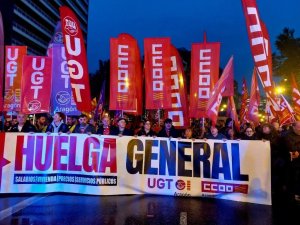
On Wednesday, hundreds of thousands of people took to the streets in Spain, participating in the country's first nationwide general strike in 14 years. Protests were held in major cities including Madrid, Barcelona, Valencia, Alicante, Zaragoza, Bilbao, Santiago de Compostela, Vigo, and La Rioja. The strike was organized by Spain's two largest trade unions, CCOO and UGT, along with the tenants' union Sindicato de Inquilinas and various grassroots groups, under the slogan "Salaries. Housing. Prices."
The strike was sparked by an eviction in Madrid that killed 87-year-old Maricarmen Abascal, whose death led to weeks of protests. Her eviction highlighted the ongoing housing crisis in the country, with average rents having almost doubled in the last decade. The strike demanded lower rents, better pay, and stronger protection for tenants, as well as guarantees for public services and pensions.
The strike brought together groups with differing demands, with tenants' groups pushing for lower rents and stronger protection from eviction, while trade unions called for more public housing and a new minimum wage agreement. Protesters in Madrid shook their house keys, chanted against landlords, and directed their anger towards property companies and the government.
The strike saw major stoppages in industries such as automotive, port operations, meat processing, waste collection, and energy. Schools and universities were also affected, with Andalusia's public broadcaster temporarily going off air. However, employers' associations reported that overall participation was below 5%, with production and service disruptions largely below expectations.
Police response to the protests also drew attention, with clashes reported at various locations. CCOO and UGT threatened to take legal action against the police for violating fundamental rights, citing their duty to guarantee the right to strike. Riot police used rubber bullets and pepper spray to disperse protesters in Madrid's Gran Vía and Barcelona's Passeig de Gràcia.
Written by urgent.news from Spain in English's reporting — not their text. Machine-written — may contain errors; check the original before relying on it.