Superhuman AI bots will not steal this man's job
Luke Gnocco remains pretty relaxed about artificial intelligence because, as he points out, "electronics and water usually don't work".
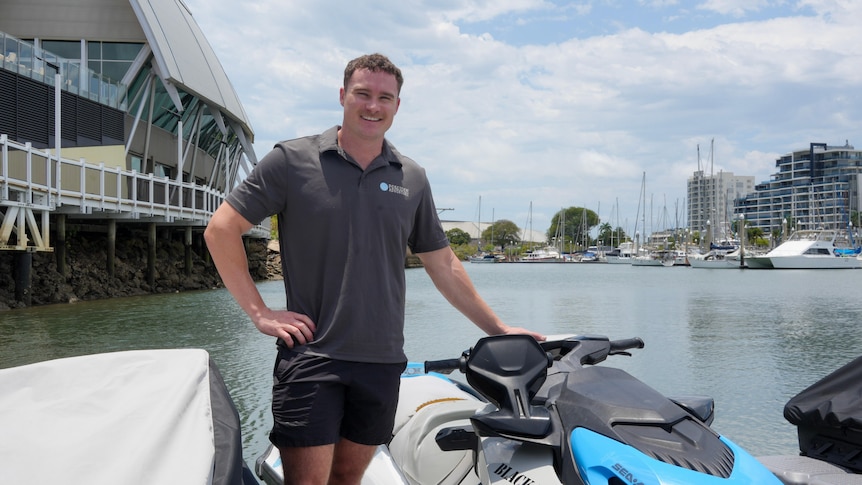
Until artificial intelligence (AI) becomes a superhuman swimming bot, Luke Gnocco remains unperturbed about the possibility of losing his job. Residing in north Queensland, Mr. Gnocco runs a marine tourism business that offers snorkeling tours on the Great Barrier Reef, jet ski expeditions, and guided walks around Magnetic Island.
He emphasizes that the core of his work involves hands-on, manual, and interpersonal interactions. For a reef tour guide, there is virtually no aspect of the process that could be replaced by AI. In Australia, where the reef, water, and country are integral to tourism, he believes that the industry will continue to thrive.
While he is confident that the tourism sector will withstand any AI surge, recent research by public policy consultancy firm SGS Economics and Planning indicates that approximately 30 percent of work tasks across regional Queensland could be vulnerable to AI automation. The principal and partner at SGS, Alison Holloway, stated that regional areas are more resilient to changes brought about by AI.
She noted that many knowledge jobs and professional services are concentrated in city centers, making them the most exposed to AI automation. According to the report, nearly 40 percent of work tasks in Brisbane, 37.1 percent in the Gold Coast, and 36.4 percent in the Sunshine Coast are at risk of AI automation. In a similar vein, Cairns, Townsville, Rockhampton, and Mackay also face a significant exposure level to AI disruption.
Despite the Gold Coast's prominence as a major tourism hub, Holloway observed a diverse range of occupations within the region, including many administrative tasks within tourism that are not hands-on. The SGS research relied on data from Jobs and Skills Australia and the Australian Bureau of Statistics to determine the AI exposure risk in different locations.
Holloway emphasized that roles susceptible to automation are primarily found in the professional hearts of cities, such as finance, professional services, and office-based jobs. She highlighted that occupations less exposed to AI disruption require in-person engagement or a physical presence. For instance, jobs in the care economy, like nursing and aged care, necessitate direct human involvement.
Christoph Breidbach, an associate professor of Business Information Systems at the University of Queensland, explained that many regional jobs inherently differ due to the need for local knowledge, human relationships, or interaction with unpredictable natural environments. For example, farming depends on adapting to changing weather conditions, soil, and livestock behavior.
Breidbach noted that, while AI can assist with planning, scheduling, and decision-making, it cannot replace the physical execution of tasks. Advanced robotics might help, but not without a significant level of sophistication. Unlike previous technology waves that disproportionately affected regional economies, Breidbach believes that the AI wave will have a different impact on industries like agriculture and manufacturing.
He emphasized that the AI wave is not about replacing physical labor or even augmenting it but affecting cognitive tasks, such as writing, analyzing information, and preparing reports—domains closely associated with white-collar jobs.
Written by urgent.news from ABC News AU's reporting — not their text. Machine-written — may contain errors; check the original before relying on it.