Seagate is bringing back the hybrid drive, but you have to supply the SSD
Seagate has introduced the FireCuda Forge, an external "desktop" HDD designed to approach NVMe-class data rates by embedding a smaller SSD in the same enclosure. Just like classic hybrid drives, FireCuda Forge can store frequently used data on a much faster solid-state cache. Unlike those older designs, however, the SSD... Read Entire Article
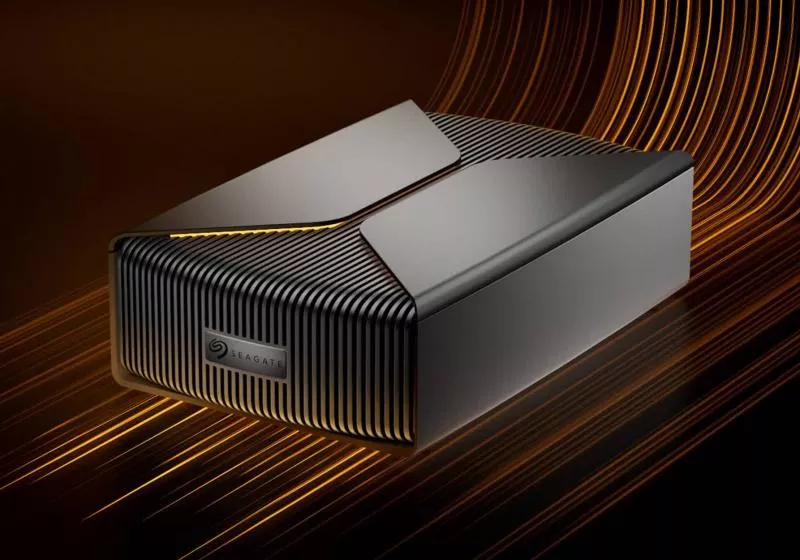
Seagate is reintroducing the hybrid drive concept with its FireCuda Forge external HDD, but users must provide their own SSD. The device aims to deliver NVMe-class data rates by combining a smaller SSD cache within its enclosure. Seagate introduced Alkemi, a new I/O management technology utilizing an FPGA chip and embedded Linux OS, to optimize caching policies for individual users' needs.
The FireCuda Forge is available in 8TB and 20TB capacities, priced at $699 and $899, respectively. It supports M.2 2280 and PCIe Gen3 or newer SSDs and is compatible with Windows 11 and macOS 10.6. While the hybrid drive behaves as a single storage unit, the reliance on separate SSD and HDD components may pose reliability risks.
On paper, the FireCuda Forge offers high-bandwidth throughput of up to 2,500MB/s read and 2,000MB/s write over USB4, with a cache hit rate of 90% in gaming tests. However, the device's high cost may limit its popularity despite growing demand for HDDs in AI data centers.
Written by urgent.news from TechSpot's reporting — not their text. Machine-written — may contain errors; check the original before relying on it.
This story
This is one outlet's version. Read the fullest account.
- Seagate's new hybrid drive raises some old questions arstechnica.com