SC: Indians married here can't get divorced abroad
In a landmark decision, the Supreme Court declared that divorces executed overseas, based on grounds not acknowledged under Indian law, are invalid. This ruling implies that individuals who remarry after such foreign divorces may risk prosecution for bigamy. The court also affirmed that marriages conducted according to Indian traditions hold validity, irrespective of any foreign citizenship.
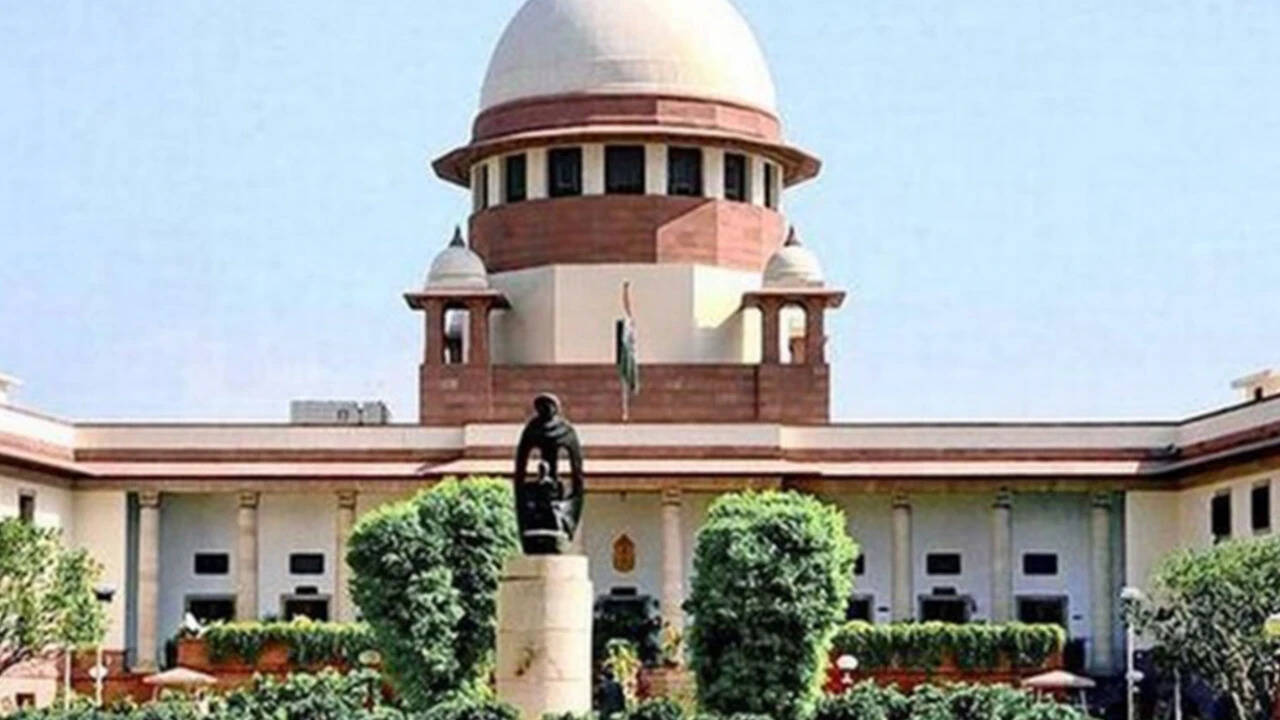
The Supreme Court of India has ruled that Indians married abroad cannot obtain a divorce through foreign courts. The court dismissed the notion that such divorces would automatically dissolve the marriage under Indian law. Viewing negatively the practice of utilizing foreign divorce grounds, the Supreme Court emphasized that a person contracting a second marriage based on this foreign divorce may face prosecution for bigamy, as the first marriage remains valid under Indian law.
Many men have been approaching foreign courts to seek divorce on the basis of irretrievable breakdown of marriage, even when the wife opposes the request. Subsequently, these individuals have remarried. The Supreme Court stated that legal consequences stemming from the subsisting marriage cannot be overridden by a change in a spouse's nationality. Irretrievable breakdown of marriage is not recognized as a ground for divorce under Indian law, and hence, the foreign divorce decree is not valid.
The bench of Justice Prashant Kumar Mishra and Justice Shree Chandrashekhar allowed criminal proceedings for bigamy against a man who remarried after obtaining a foreign divorce order based on the ground of irretrievable breakdown of marriage, which was opposed by his wife. The court declared that such a foreign divorce decree was passed in violation of India's matrimonial laws and used a ground that is not even statutorily recognized, thus violating Section 13 of the Civil Procedure Code (CPC).
The Supreme Court concluded that if the foreign decree fails to satisfy the requirements of Section 13 of the CPC, the husband cannot argue that his first marriage was dissolved in the eyes of Indian matrimonial laws and avoid the consequences of Section 494 of the Indian Penal Code (IPC) for marrying again during the lifetime of the spouse.
The court rejected the husband's argument that since he was a British citizen when he married his second wife outside India, he could not be held liable under Section 494, as his first marriage under Indian law remains valid.
Written by urgent.news from Times of India's reporting — not their text. Machine-written — may contain errors; check the original before relying on it.