Ruler: Healthy ageing a right, not a luxury
Your browser does not support the audio element.
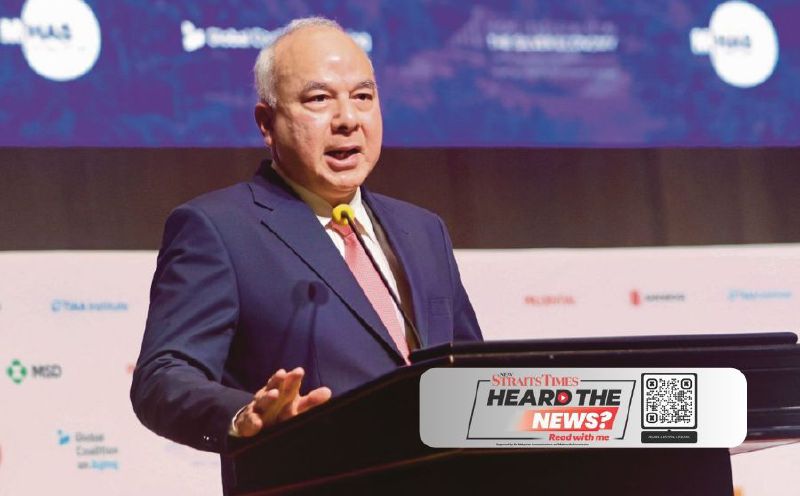
KUALA LUMPUR — Sultan Nazrin Muizzuddin Shah, the ruler of Perak, emphasized that healthy ageing should be a fundamental right, not a luxury. He stated that while longer and healthier lives were among modern civilization's greatest achievements, access to their benefits must not be limited by wealth. Sultan Nazrin argued that a society's true measure is whether its opportunities remain accessible to its most vulnerable citizens.
He highlighted that healthy ageing must be inclusive by design, with environments, services, and technologies that expand access rather than widen existing inequalities. This, he said, is not just good social policy, but a moral obligation and a sign of respect for our elders.
Sultan Nazrin delivered his address, titled "The Silver Economy: A Foundation for Shared Prosperity," at the High-Level Forum on the Silver Economy 2026, which focused on the theme "Healthy Longevity for Economic Growth." He was honored with the Baroness Sally Greengross Award for Healthy Longevity Innovation by the Global Coalition on Ageing.
The Kuala Lumpur Declaration on Ageing, adopted by Southeast Asian leaders in 2015, recognized the requirement for equitable access to healthcare, public services, preventive measures, and support throughout life. Sultan Nazrin pointed out that the foundations of healthy ageing are established long before one reaches 60, through decisions made decades earlier.
Intervention should be made early to prevent the rapid decline of capabilities. He stressed the need for well-designed environments that not only accommodate but preserve declining capabilities. Sultan Nazrin emphasized that healthy ageing requires the right infrastructure, not just the right services. He pointed out that housing, healthcare, financial security, and technology must be viewed as interconnected components of the same lived environment.
Citing an Asean study, Sultan Nazrin projected that demand for aged-care services in the region would more than double over the next two decades. He stressed that discussions on longevity must address the economic implications, as pressures on public finances and families are significant. He cited research indicating that every ringgit invested in care can generate up to RM7 in economic benefits, including increased economic activity, employment, and income.
Written by urgent.news from New Straits Times's reporting — not their text. Machine-written — may contain errors; check the original before relying on it.