Re-analysis of black hole data proves iconic ring shape really is there
The doughnut shape of the Event Horizon Telescope’s first image of a black hole has come under fire, but an independent check showed that it – and general relativity – still stands
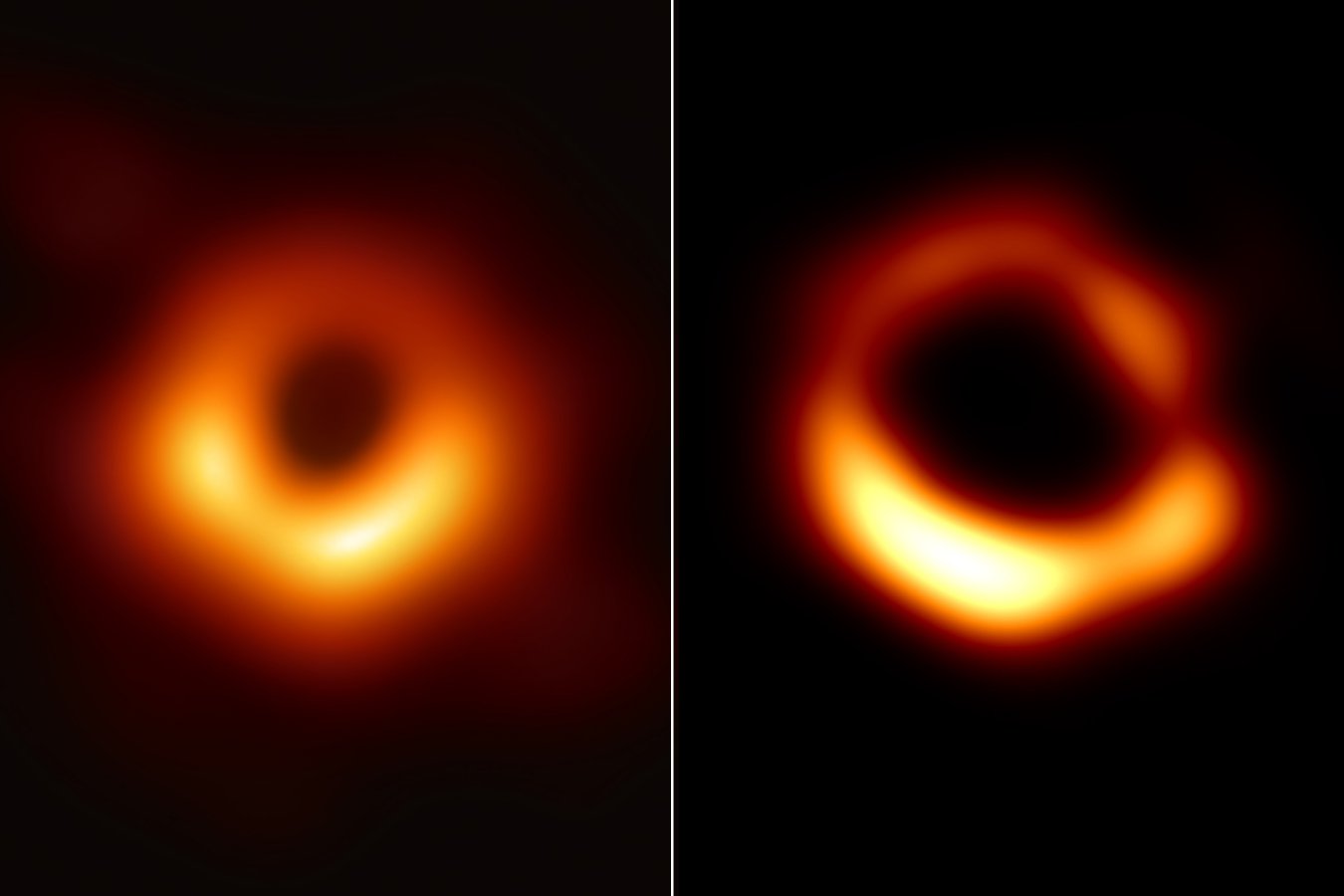
The iconic ring shape observed in the first image of black hole M87* by the Event Horizon Telescope (EHT) team in 2019 has long been a subject of debate in the astrophysics community. However, a new, independent analysis has finally put an end to the scepticism surrounding the image. This key feature of the EHT image, which perfectly matches the predictions of general relativity, provides strong evidence for the accuracy of this fundamental theory of physics.
The unique structure of the EHT, a network of telescopes spread across the globe functioning as a single Earth-sized radio dish, allowed the team to observe the black hole much closer to its edge than any other observatory. This advantage comes with limitations, though. The EHT consists of a few telescopes distributed globally, leaving significant gaps in measurement data that must be filled by the imaging algorithm.
Additionally, the short radio wavelengths used by the EHT make the atmosphere a source of distortion for the signals being observed.
These limitations resulted in the raw data from the EHT being more prone to interpretation and the processing methods employed having a considerable impact on the final image. Most analyses of the M87* data produced similar ring shapes, but a study published in 2022 reported no ring at all. This discrepancy prompted Nithyanandan Thyagarajan and his colleagues at CSIRO in Australia to reanalyze the data using an entirely new approach.
Thyagarajan and his team decided to group the telescopes into triplets instead of the usual method of analyzing data from pairs of EHT telescopes. By combining measurements from sets of three telescopes, the team preserved information about the object's shape while simultaneously minimizing errors caused by atmospheric distortion and telescope limitations. Additionally, they employed a machine learning algorithm trained on non-black-hole images to minimize bias in their own expectations regarding the image's appearance.
In the end, their new image is nearly identical to the original, providing a crucial confirmation of the EHT's finding that general relativity accurately describes the space-time around a black hole.
Written by urgent.news from New Scientist's reporting — not their text. Machine-written — may contain errors; check the original before relying on it.


