Pakatan politik BN-PAS mesti bertanggungjawab kepada rakyat
Persefahaman politik mudah goyah apabila pemimpin menyangka persetujuan sesama elit bermakna rakyat turut merestuinya.
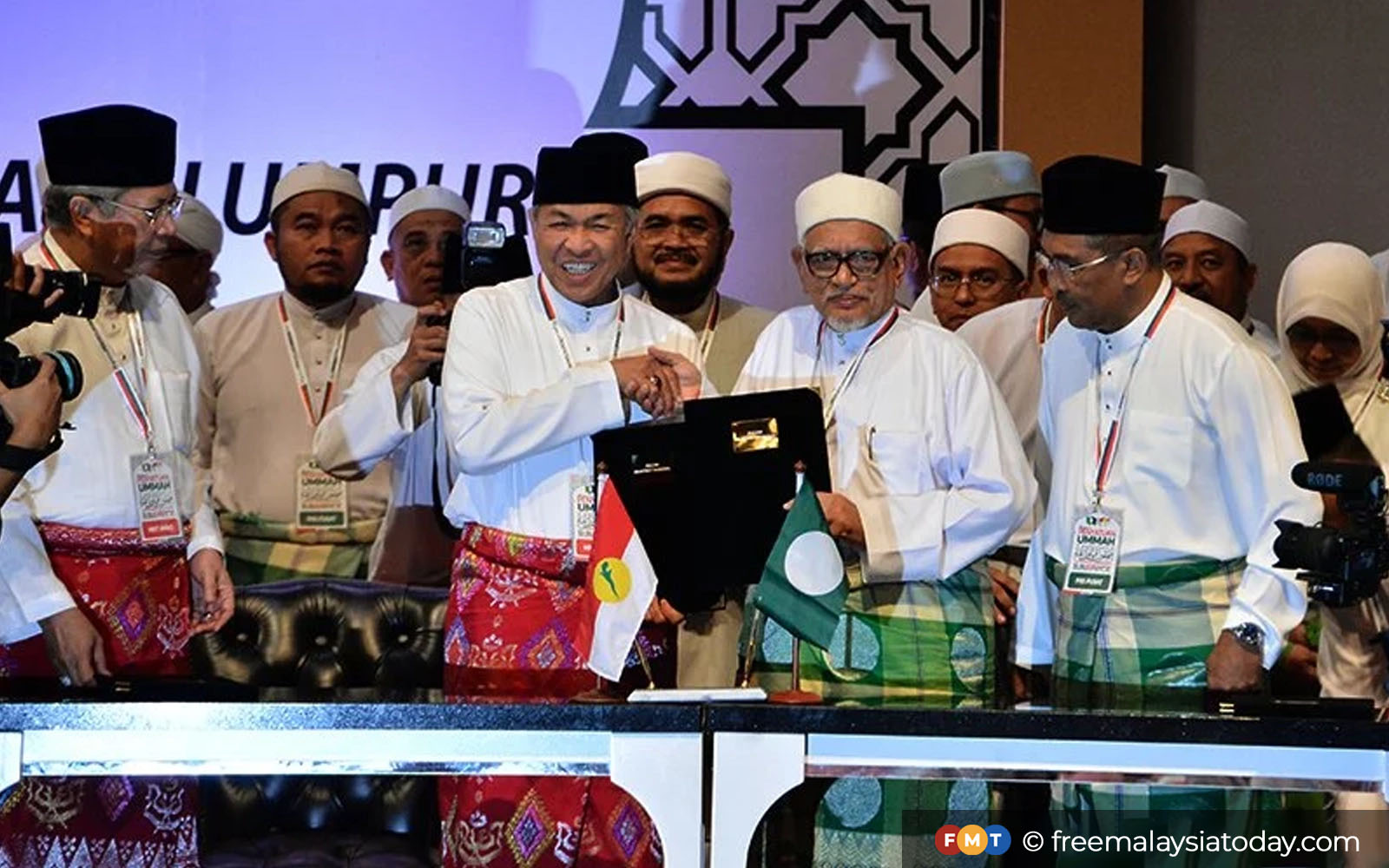
The framework of a new political understanding in Melaka presents a significant challenge: can parties cooperate without demanding citizens overlook their right to question their leaders' actions? The collaboration between the Barisan Nasional (BN) and PAS, known as the political understanding, is essential not only because the two parties have reconciled, but also because it tests whether political harmony can accept differences in opinions, research, and voices within society.
BN Chairman Zahid Hamidi announced on October 21 that BN would contest in 21 of Malacca's 28 parliamentary seats, while PAS and its allies received seven. However, as candidate nominations approached, the seat distribution reportedly changed, with BN contesting in 23 seats and PN in five. This shift reflects parties' political aspirations, while the final list of candidates determines the options available to voters.
BN Malacca Chief Ab Rauf Yusoh later characterized PAS as a strategic ally and said both parties would coordinate campaigns and use a joint manifesto. PAS President Hadi Awang suggested the cooperation could extend beyond Melaka. This indicates a developing political relationship rather than a guarantee of future government formation or the election pattern.
More interesting to observe is the meaning of the understanding itself. The term "tafaqah" implies readiness to accept differences while seeking common ground. In a diverse society, such an approach can bring benefits. The consent of the people, however, may be questioned if leaders believe that the consent of their peers is tantamount to the consent of the people.
Political cooperation among Malays does not necessarily contradict Malaysia's status as a multi-ethnic nation based on the Constitution. However, consistency between the two requires proof through principles and actions. Take the issue of representation as an example. BN is affiliated with component parties that have distinct supporters' groups and historical struggles compared to PAS.
Cooperation must explain how to address the interests of minority groups, religious freedom, local education, and economic issues without assuming that political cooperation automatically erases significant differences in viewpoints. Similarly, voters have the right to know which proposals the party still considers its own and which commitments have been agreed upon by all collaborators.
A joint manifesto provides an opportunity to answer these questions. Without such explanations, the manifesto risks being a collection of promises that sound good, while disagreements between parties may only surface after the vote. The relationship between the state and the federal government also has implications at the federal level.
BN participates in the federal unity government with Pakatan Harapan (PH), while its cooperation in Melaka involves a party that is in the opposition in Parliament. The different forms of cooperation at the state and federal levels do not necessarily violate the law, and may not be a new phenomenon in coalition politics. However, this situation can confuse citizens in understanding who is responsible.
Leaders need to clarify whether cooperation at the state level will change their commitment at the federal level, while setting boundaries between pre-election cooperation and governance responsibility. This issue cannot be answered solely with political loyalty rhetoric. The state government makes decisions that affect land use, investment approval, local infrastructure, and public services.
Business confidence depends more on clarity of principles and the existence of an institutional channel to challenge a decision rather than merely displayed unity. It needs to be further examined. At present, there is no evidence to suggest that the relevant pre-election understanding has already influenced investment decisions.
For PH and other competing parties, the appropriate approach is to deeply investigate the pre-election cooperation, rather than continuing to view it as evidence of ideological differences. Debate between parties that have had different beginnings is common in democracy. What is important in democracy is that voters receive clear explanations about such debates and have clear alternative options.
Criticism should focus on commitments that can be proven, not on accusations of hidden intentions based on speculation. The November 14 election results will show the voters' choice, but may not explain the reasons behind each choice. Voting turnout, candidates contesting, local issues, and each party's loyalty influence the decision.
The assertion that a new Malay political understanding has already emerged requires stronger evidence than just the appearance of party leaders' unity and seat distribution. Three questions need to be judged cautiously regarding this pre-election understanding. First, does the agreed-upon shared commitment sufficiently clearly and specifically to be evaluated?
Second, can the parties that cooperate openly express differences of opinion without undermining the principles?
Written by urgent.news from Free Malaysia Today's reporting — not their text. Machine-written — may contain errors; check the original before relying on it.
This story
This is one outlet's version. Read the fullest account.
- Pakatan politik BN-PAS mesti bertanggungjawab kepada rakyat freemalaysiatoday.com