Our education system cannot succeed if children cannot read, write or count – VEEP Jane Naana Opoku-Agyemang
By: Ashiadey Dotse The Vice President, Professor Jane Naana Opoku-Agyemang, says Ghana’s education system cannot achieve its purpose if children are unable to read, write and count confidently. Professor Jane Naana Opoku-Agyemang says despite successive governments’ efforts to expand access to education, too many Ghanaian learners still lack these essential skills, making foundational learning a…
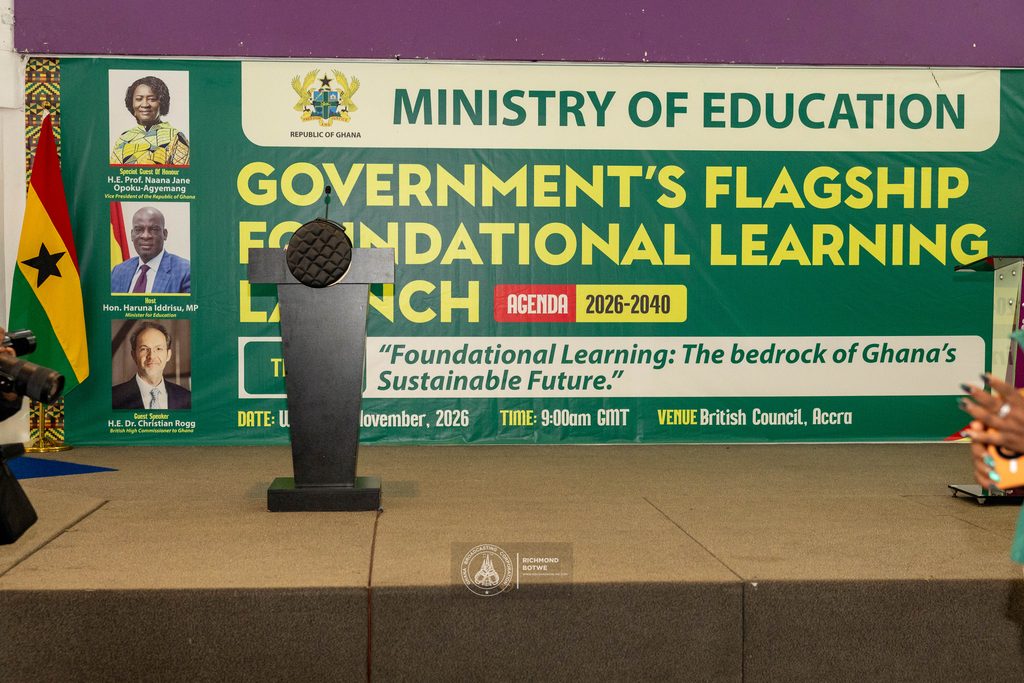
Ghana's Vice President, Professor Jane Naana Opoku-Agyemang, has emphasized that the country's education system cannot fulfill its mission if children are unable to read, write, and count effectively. Despite ongoing government initiatives to widen access to education, a significant number of Ghanaian learners still struggle with basic skills, making foundational learning a top priority.
Addressing the launch of the Government's Flagship Foundational Learning Agenda, Professor Opoku-Agyemang stated that early childhood education is crucial as it lays the groundwork for future learning and development. Children who cultivate strong reading and numeracy skills during their formative years are better equipped to learn independently, pursue new subjects, and engage confidently with their environment.
The Vice President stressed that merely increasing access to education is insufficient. Instead, attention must be paid to the knowledge and abilities children acquire throughout their schooling. She emphasized that foundational learning deserves special consideration as it pertains to what children learn, not just their attendance in school.
Professor Opoku-Agyemang highlighted the agenda's importance for Ghana's economic ambitions, such as fostering competitive industries, boosting local production, and generating better employment prospects. Achieving these objectives requires individuals capable of learning, reasoning, adapting, and applying knowledge to real-world situations.
The Vice President also addressed disparities in children's access to learning resources, noting that some students receive greater support at home than others. She argued that robust foundational education could lessen the impact of a child's socioeconomic background on their future opportunities, ensuring that a child's prospects are not solely determined by their circumstances of birth.
Regarding implementation, Professor Opoku-Agyemang announced that the new agenda would involve curriculum revisions to increase the role of Ghanaian languages in early literacy instruction. The program would undergo a pilot phase, pending Cabinet approval, before broader implementation. The government aims to see children aged four to eight in public and low-fee private schools demonstrate significant improvements in foundational literacy, numeracy, and socio-emotional development by 2030.
These improvements will be evaluated based on gender, geographical location, ability, and socio-economic circumstances.
Professor Opoku-Agyemang urged the Ministry of Education and other stakeholders to closely monitor the program, address its shortcomings, and build upon successful strategies. She also called for collaboration among teachers, parents, education authorities, and development partners to achieve the agenda's objectives.
Written by urgent.news from GBC Ghana's reporting — not their text. Machine-written — may contain errors; check the original before relying on it.