'No one dared question his results': How thermodynamics sparked a heated debate about Earth's age in the 19th century
In this excerpt from "This is Life: A Journey from Inside Your Body to Beyond Earth," author and physicist Christophe Galfard explores the way 19th century scientists were starting to use thermodynamics to understand just how old Earth is.
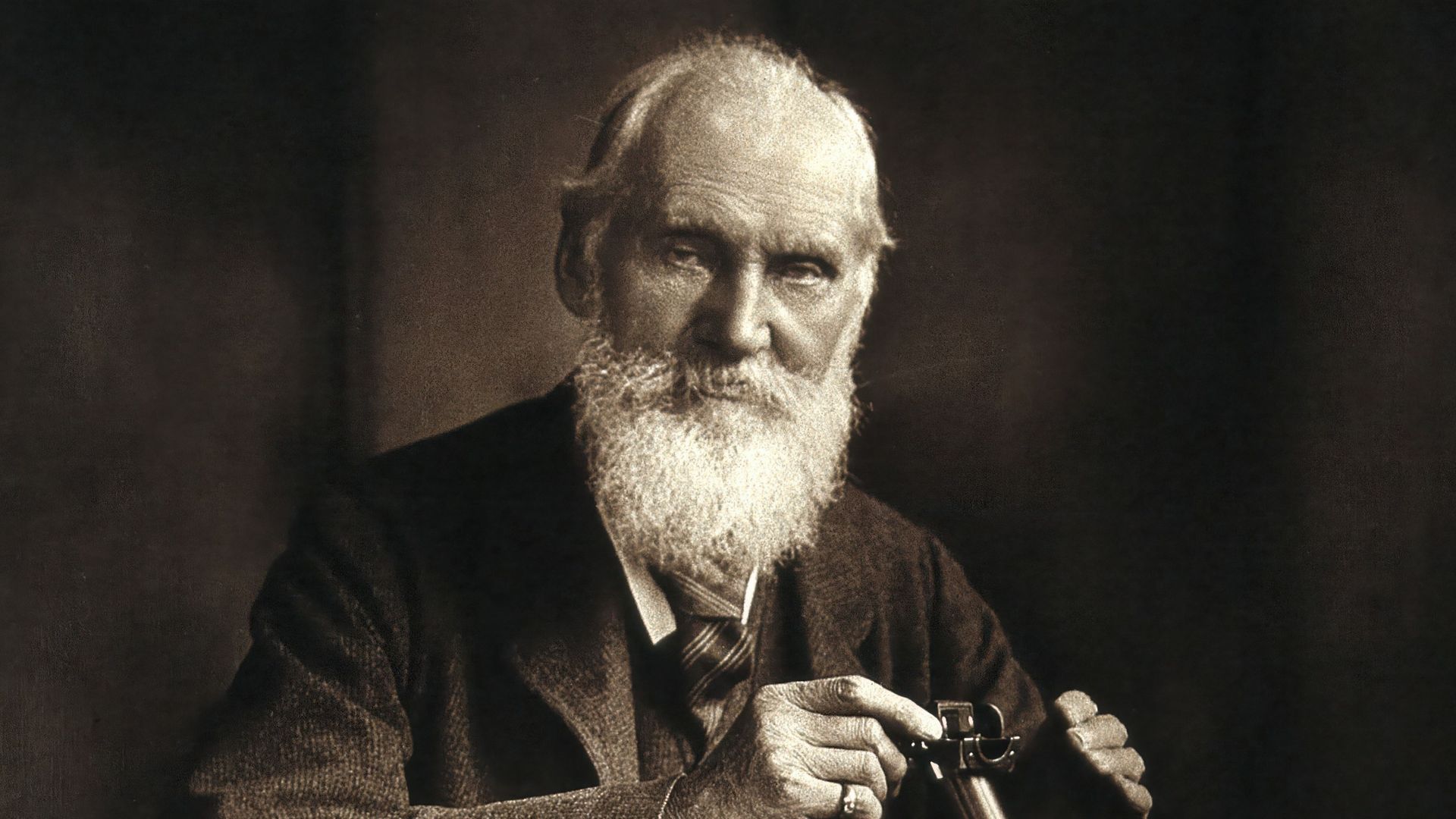
In the 19th century, the age of Earth was a subject of intense debate among scientists. However, it was physicists who recognized that understanding the planet's age required the study of thermodynamics, the science of heat and its relation to energy. Clair Patterson, an American geochemist from the 1950s, provided evidence that Earth is approximately 4.55 billion years old based on lead isotopic analysis.
Yet, the journey to this discovery began centuries earlier when scientists sought to understand how heat influenced the cooling of our planet.
The concept of thermodynamics emerged from the knowledge of heat transfer and its ability to explain emergent phenomena like heat and pressure. In 1824, French physicist Nicolas Léonard Sadi Carnot published a book that laid the foundation for understanding how heat could produce work, akin to the operation of a steam engine. Lord Kelvin, a prominent physicist, built upon Carnot's work by proposing that by determining the Earth's initial temperature and its current temperature, one could estimate the time it took for the planet to cool down.
British physicist William Thomson (Lord Kelvin) was the first to attempt this calculation by picturing Earth as a smooth, solid ball without any variations like oceans or mountains. His initial estimates ranged from 40 to 400 million years. However, Thomson's results were later refined, leading him to conclude that Earth was around 100 million years old, before finally settling on 40 million years.
Despite the incorrectness of Thomson's calculations, his work was met with unwavering acceptance from the scientific community. This was partly due to his transformation into Lord Kelvin, a respected figure in the scientific world, which gave his findings an air of authority. Geologists, who were not typically trained in mathematics and physics, were hesitant to question Kelvin's results, as they viewed geology as a discipline grounded in intuition and proper English language skills.
John Perry, one of Kelvin's students, eventually challenged the established age of Earth by suggesting that the mantle was liquid rather than solid. Despite Perry's findings, they were ignored by both Kelvin and the broader scientific community.
Written by urgent.news from Live Science's reporting — not their text. Machine-written — may contain errors; check the original before relying on it.