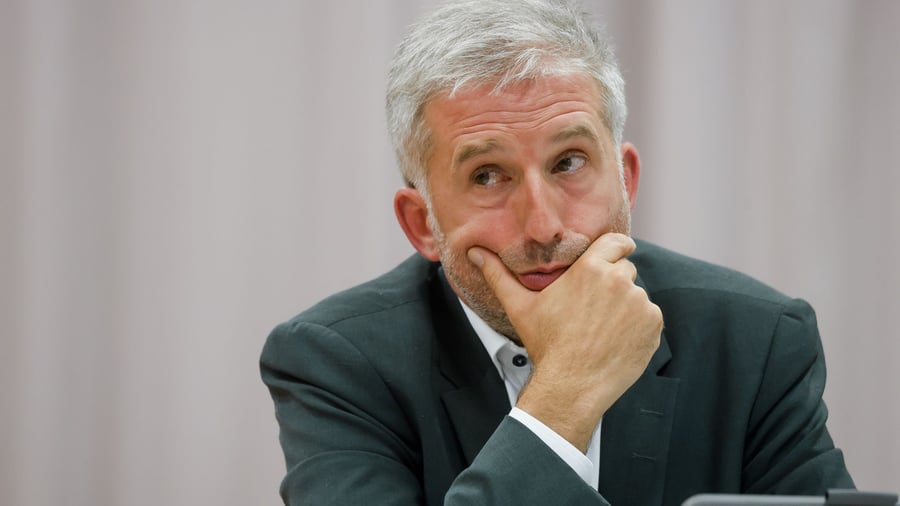
Monika Schnitzer: Wirtschaftsweisen-Chefin: „Wir laufen mitten in ein Problem historischen Ausmaßes“
Im Interview erklärt die Vorsitzende des Sachverständigenrats, warum Deutschlands Staatsfinanzen aus dem Ruder laufen und wie harte Kürzungen und Steuererhöhungen durchzusetzen wären.

Monika Schnitzer, the head of the Expert Council for Overall Economic Development Assessment, proposes an additional tax on income, corporation, and capital income tax. The revenue from this tax should fund the state's defense spending, avoiding the need to finance it through debt in the long term. A 2.5% increase in these taxes would generate an additional ten billion euros annually in revenue, according to Schnitzer.
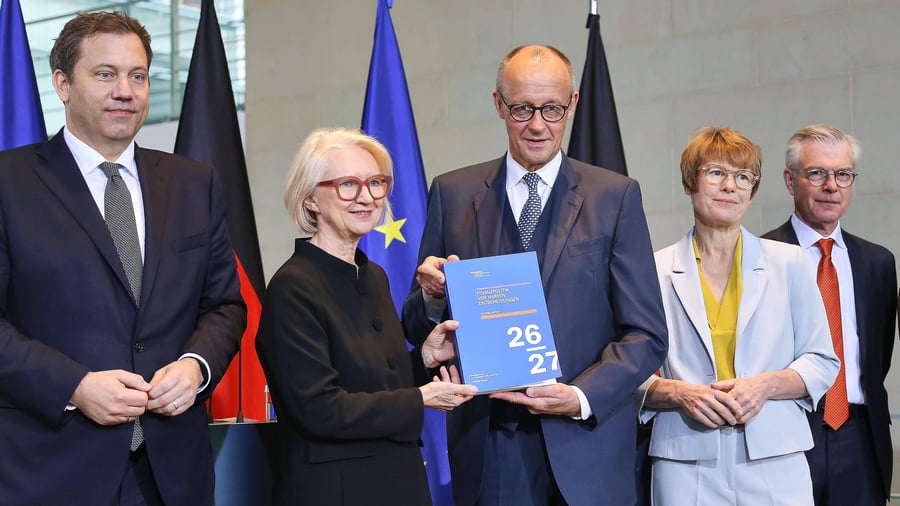
The Expert Council's new annual report suggests gradually transitioning defense expenditures back into the regular budget, which should be enshrined in the Basic Law. However, Schnitzer emphasizes that permanent debt financing is not an option, as Germany cannot afford to take on so much debt. The consolidation need, or the budget shortfall, would amount to 300 billion euros, or 4.6% of GDP.
If the state had ever faced such a level of consolidation before, it would be considered historically significant. Even if the state continued to finance defense through debt, the funding gap in 2040 would still be over 175 billion euros, a significant improvement but still substantial. This option is not viable, as Germany's debt-to-GDP ratio would reach nearly 100%, a situation other countries would not find sustainable.
The euro would be at risk, and financial markets would face significant pressure. While Germany is an anchor for capital markets in the Eurozone, its fiscal rules must be respected to maintain credibility. The article emphasizes that something must be done, as the budget deficit cannot be closed through further debt financing alone.
The consolidation potential, including implementing the proposed pension reform, reversing the increase in the mother's pension, streamlining tax exemptions, and strengthening tax enforcement, amounts to 140 billion euros. Additional revenue measures are necessary, such as a tax increase, but it should be limited to 2.5%, as proposed, to generate ten billion euros annually.
Written by urgent.news from Handelsblatt's reporting — not their text. Machine-written — may contain errors; check the original before relying on it.