Immobilien: Deutschland verliert bei Immobilieninvestoren an Attraktivität
Eine neue Studie nennt die chancenreichsten Städte für Investments in Europa: Die Zahl der deutschen Metropolen in den Top Ten wird kleiner. Wer jetzt zu den Gewinnern zählt.
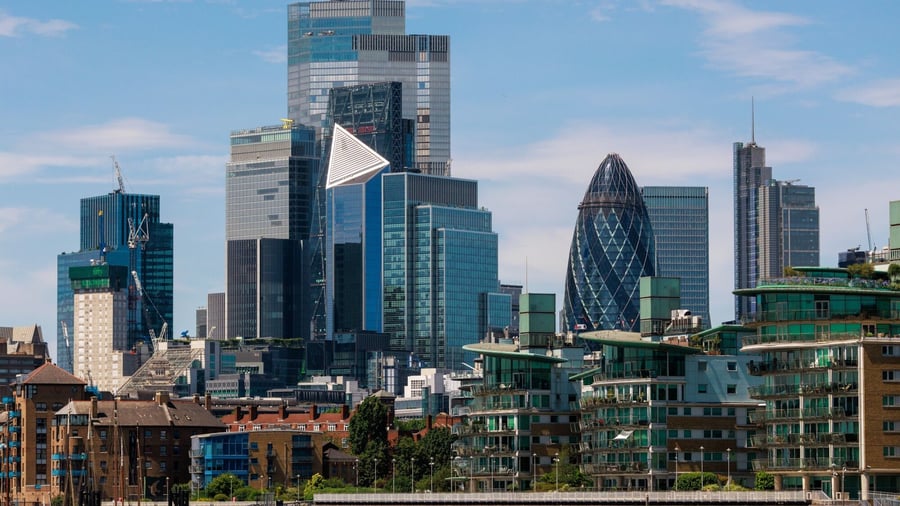
Germany's real estate market is losing its appeal to investors compared to other European countries, according to a recent study. While investors in other European countries are increasing their investments in commercial and residential properties, German commercial and residential real estate investments are continuing to decline.
The study, "Emerging Trends in Real Estate Europe 2027" conducted by PwC and the Urban Land Institute (ULI), surveyed 1,488 leading real estate experts. German cities have become less attractive to large-scale investor investments compared to other European metropolises. The study highlights the top ten cities in Europe with the best investment and development prospects, with only three German locations remaining in the top ten, down from four the previous year.
Munich has improved its ranking from sixth to fourth place, while Berlin has dropped three places to seventh. Only Munich improved its position, rising from sixth to fourth. Frankfurt holds the ninth position. The shifts in the city rankings indicate that investors are increasingly focusing on economically robust locations. "Political and regulatory uncertainties play a significantly larger role in investment decisions today," says Thorsten Schnieders, a partner at PwC.
"Investors must therefore expect a liquid market with reliable pricing even years down the line." Munich benefits from its diverse economy, relatively stable rental markets, and high demand for premium properties. In contrast, Berlin is experiencing a significant loss of attractiveness. "The social debate weighs heavily on Berlin's investment location," says Schnieders.
Investors may avoid Berlin if they cannot assess future regulatory conditions, leading to increased uncertainty and higher return expectations or capital being redirected to other locations, he explains. This decline in Germany's attractiveness applies to foreign investors as well, warns the expert. "Germany has lost some of its former reputation as a safe haven for real estate investments."
Germany is already falling behind in real estate investment development compared to the rest of Europe. According to data from MSCI, a leading analysis house, transaction volumes in Germany fell from 45 billion euros to 38 billion euros in one year, a 17% decrease or 7 billion euros. No other major European real estate market experienced a similar percentage drop.
Surveys conducted with family offices managing the wealth of wealthy families also found a trend for these investors to move away from Germany as a location for real estate investments. This is part of a highly varied development in the European real estate market according to the PwC survey. Italy saw a 14% decrease in investment year-over-year, while the largest European market, the UK, saw a 5% increase in transaction volumes to 67 billion euros.
Spain even saw a 14% increase in volume to 19 billion euros. While Germany remains the second-largest real estate investment market in Europe, the gap to the leader is widening.
Written by urgent.news from Handelsblatt's reporting — not their text. Machine-written — may contain errors; check the original before relying on it.
This story
This is one outlet's version. Read the fullest account.