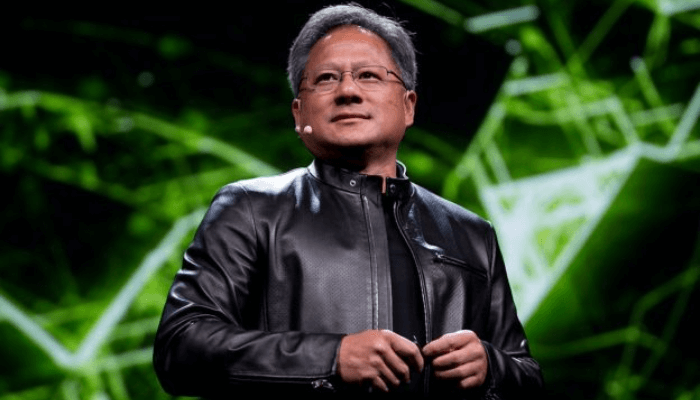
How Nvidia found itself at the heart of an international scandal, between Chinese spy, chip war and Donald Trump's indifference
The founder of the American microprocessor giant has acknowledged an affair with an entrepreneur suspected of having worked for Beijing, at a time when it was under an embargo, right in the middle of the artificial intelligence race between the two countries.

Brussels recently saw Jensen Huang, CEO of Nvidia, welcomed with great pomp by European figures like King Charles, Emmanuel Macron, and German Chancellor Friedrich Merz. Today, however, there is radio silence surrounding the scandal surrounding the world leader in AI chips, concerning his relationship with a suspected Chinese spy.
This could raise potentially delicate questions for European leaders, both public and private, who have interacted with Huang and concluded agreements with him. But this silence also reflects an economic and strategic reality: Europe has no local alternatives to Nvidia. In response to a barrage of questions about the company, a German government spokesperson stated on Monday that they "do not comment on media reports" and that "we always respect the strictest standards, including when concluding agreements."
A European Commission spokesperson also declined to comment on the subject. In both Silicon Valley and Washington, investigators are already at work. Nvidia has launched an internal investigation to determine if its CEO was targeted by a Chinese intelligence operation. Huang even publicly acknowledged being in an intimate relationship with a Chinese businesswoman suspected of attempting to transmit confidential information on American chips to Beijing.
U.S. Congress, particularly its most China-skeptical members, is also poised to take action. "The United States should immediately suspend deliveries of top AI chips to China until we have gotten to the bottom of this incident and ensured our national security is not compromised," Republican Texas representative Michael McCaul posted on X. In Brussels, the setback for the Silicon Valley giant might seem like good news for those warning against American technological dominance in the AI race.
But, like recent mid-term election results, Nvidia's difficulties do not change the fundamental European reality: the Union is heavily dependent on Nvidia's AI chips. "We have no other choice, the chip design is almost entirely American," emphasized Bart Groothuis, a Dutch MEP and one of the negotiators of the EU's latest chip manufacturing plan.
Groothuis denounced Nvidia's "strange monopoly position." The strong dependence of Europe on Nvidia was evident during Huang's European tour in October, where he received a medal from King Charles and shared the stage with German Chancellor Friedrich Merz. European leaders were not left out. European Commission for Start-ups Ekaterina Zaharieva met Huang during a trip to the U.S. in spring, and members of Henna Virkkunen's office discussed a "possible meeting" between the EU's Technology Sovereignty Commissioner and the American CEO in September, according to an EU transparency register entry, to explore Nvidia's investments in Europe.
Contacted, the European Commission declined to indicate if this meeting was still relevant. Indispensable To be courted for investments in Brussels: few U.S. tech leaders can boast of such treatment today. But Nvidia has become indispensable to Europe if it wants to stay in the global AI intelligence race, as its powerful chips are needed for training complex and advanced models that the Continent aims to have.
Brussels suddenly realized this reality when the Biden administration restricted AI chip exports to several European countries in early 2025, triggering a diplomatic reaction throughout the Union. Since then, the EU has presented itself as a willing buyer of American AI chips, even pledging to acquire 40 billion euros worth within the framework of its trade agreement with the U.S. When the European Commission launched a project to build seven large AI computing centers in July, Nvidia was among three U.S. companies selected "to ensure... smooth access to the necessary hardware."
The EU only recently began trying to reduce its dependence on advanced American chips, with a new chip manufacturing plan presented in June. According to this plan, the EU is almost "entirely dependent on the U.S. and Asia for the most advanced and cutting-edge chips, including AI chips." That's why creating a leading chip factory in Europe is now a "strategic project of the highest priority."
It doesn't even require billions in investment. Nvidia doesn't manufacture its chips itself; it designs them and then relies on companies like TSMC, based in Taiwan, to produce them. All of this underscores the importance for Europe to become a player in chip design, a skill Nvidia has perfected over the years and which has made it the most valuable company in the world. "Access to this market is quite easy, and the knowledge needed to do better is also available in E"
Written by urgent.news from Politico EU's reporting — not their text. Machine-written — may contain errors; check the original before relying on it.
This story
This is one outlet's version. Read the fullest account.