Cliffs, quarries and memories of a deposed queen
Climb the hill along the city wall north of Dongdaemun Gate and look east. On the far side of the valley, you'll notice houses clustered around a crescent-shaped cliff. If you venture into the valley beyond it, you'll find more of these oddly curved, stark granite cliffs jutting out of the hillsides. These are not geological formations, but remnants of a time when the hills were used as quarries.…
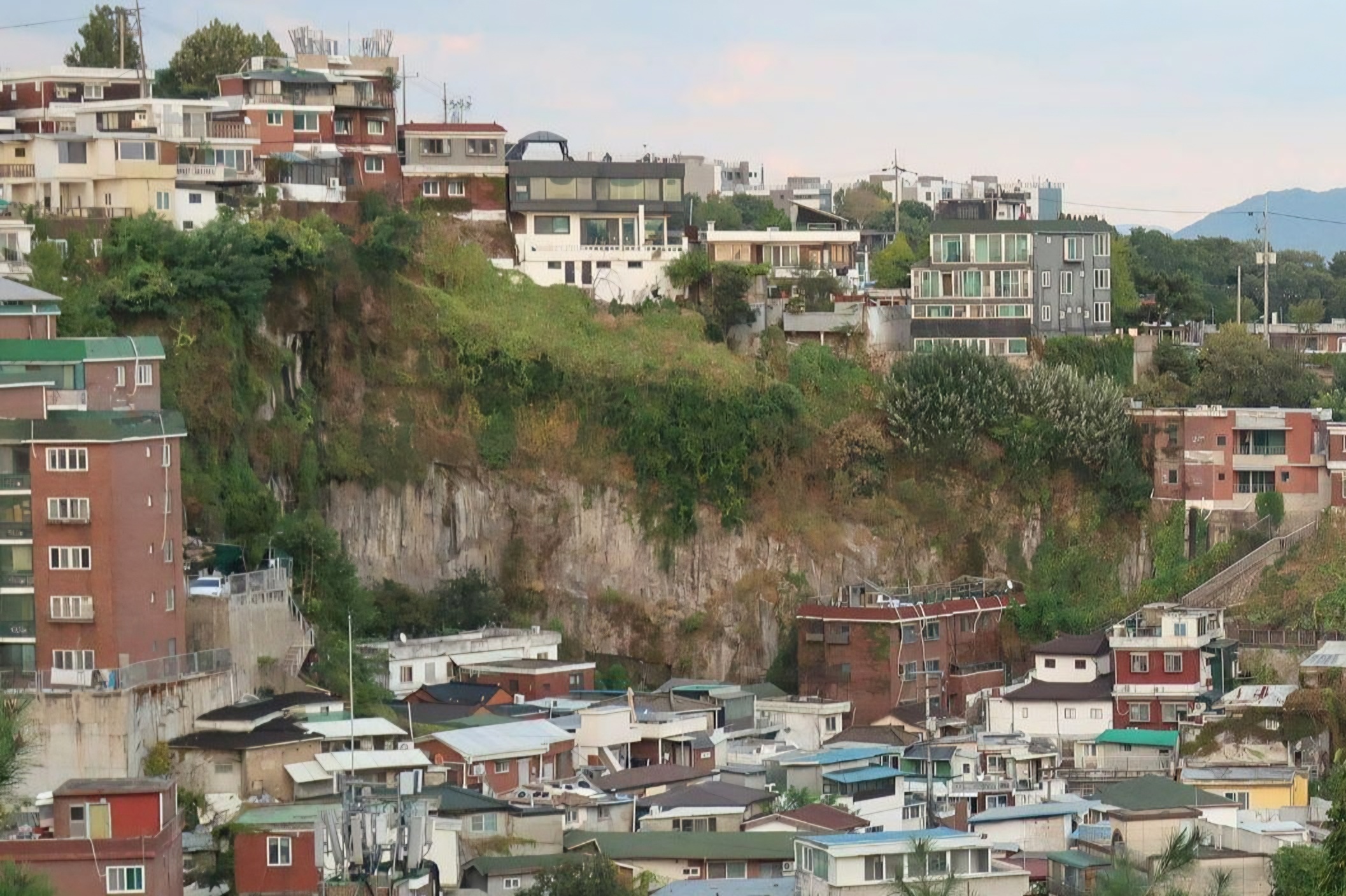
Walk north of Dongdaemun Gate along the city wall and ascend the hill. On the eastern side of the valley, notice a crescent-shaped cliff with houses surrounding it. Venture further into the valley and you will encounter more of these distinctive, curved granite cliffs protruding from the hillsides. These are not natural geological formations, but rather the remnants of a quarrying industry that operated from the 1860s during the reconstruction of Gyeongbok Palace up until the colonial era.
The granite was utilized extensively in the construction of significant structures such as the Bank of Korea, Seoul Station, and the former Government-General Building, which once stood where Gwanghwamun now resides.
While a temple in the vicinity houses a cave-like grotto carved into a natural cliff face, another temple known as Beopwang Temple features a worship space within a tunnel excavated from the hillside, likely constructed by the Japanese forces during World War II. This year, a film titled "The King's Warden" premiered, focusing on the plight of the deposed teenage King Danjong, who faced overthrown circumstances.
Written by urgent.news from The Korea Times's reporting — not their text. Machine-written — may contain errors; check the original before relying on it.