Beyond the model: Why context, not intelligence, is the moat for durable AI
At TechSparks 2026, leaders from MongoDB, Pine Labs, and Spinny discussed why data, memory, workflows, and trust matter more than model access.
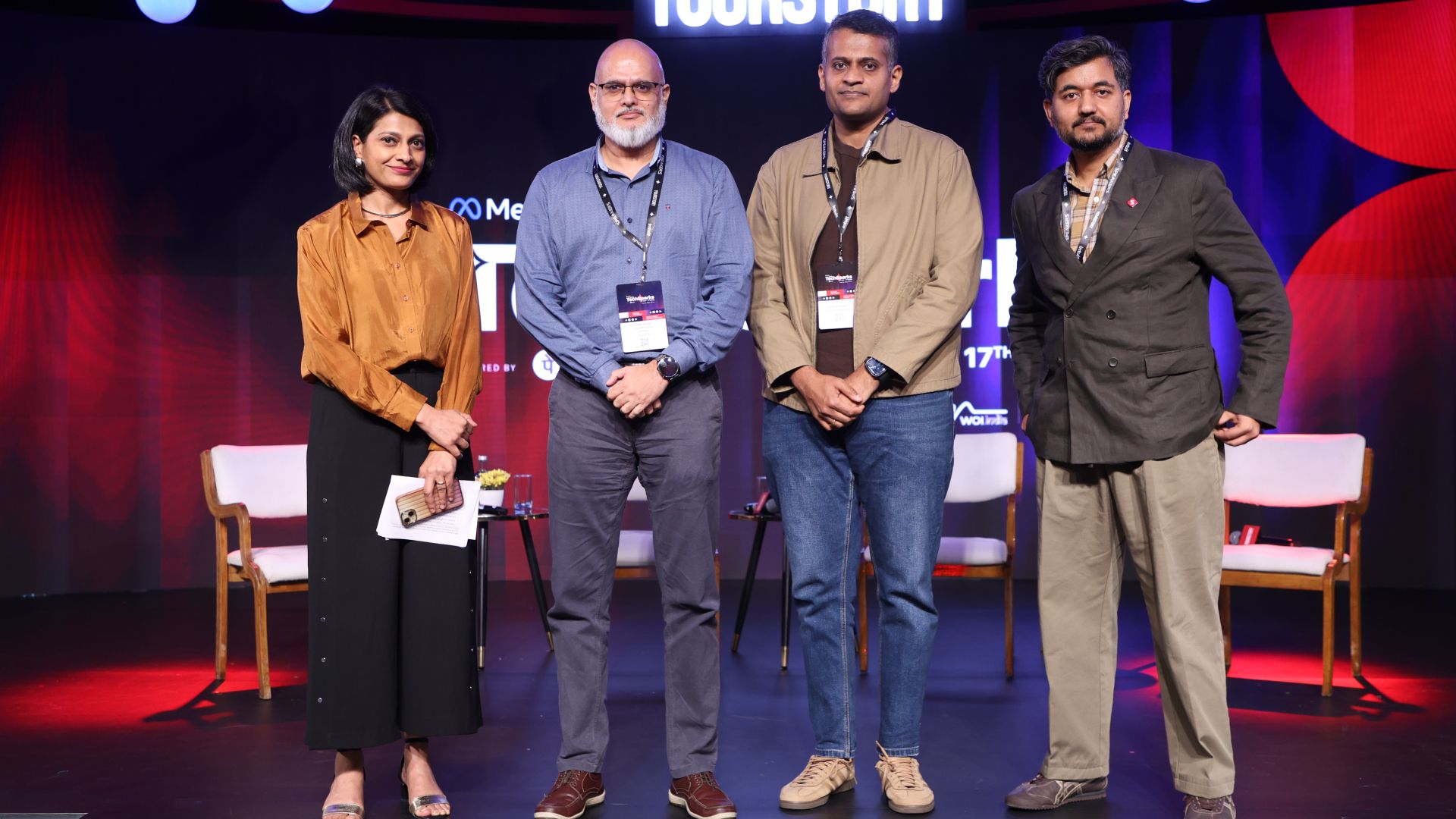
In the rapidly evolving world of artificial intelligence, the focus has shifted from merely accessing powerful models to building a competitive advantage that cannot be easily replicated. At the TechSparks 2026 session 'Beyond the model: The moat for durable AI', Divakaran Ullampuzha Mana, Director of Solutions Architecture at MongoDB; Vijeth Pandit, Chief Product Officer at Pine Labs Payments; and Karan Kumar, Vice President of Product at Spinny discussed the importance of context, not intelligence, as the key to creating AI that lasts.
Mana pointed out that open-source models have reached a level of capability and performance comparable to frontier models, and access costs are decreasing. However, he emphasized that the true differentiator for businesses lies in their ability to seamlessly access and transform their own enterprise data, which is scattered across various systems in both structured and unstructured formats, into actionable insights or actions.
Pandit underscored the significance of distribution and accumulated experience. He explained that while models in isolation may only be capable of inference, the interactions, data, and historical context built by a company are what make its products and services relevant. Kumar compared models to electricity, suggesting that the true winners in the AI race depend on what businesses plug into the system and the layers they build on top to address specific problems.
At Spinny, Kumar highlighted that their success is built on verified internal metrics, the reasoning behind past decisions, and the team's processes for running and evaluating experiments. This context, created through their internal operating system AIR, provides a competitive advantage that competitors find challenging to replicate.
Building a prototype may seem straightforward, but maintaining it at scale presents significant challenges. Mana noted that while it's easy to create a convincing, intelligent system that appears magical, maintaining it with thousands of concurrent users and vast amounts of data under stringent security and compliance requirements is a different story.
Successful companies begin by establishing a secure, governed data foundation, followed by evaluation frameworks, observability, memory systems, and runtime engines. These elements enable them to convert pilots into production quickly and efficiently.
Pine Labs treats AI agents much like human employees, training them, imposing guardrails, auditing their decisions, and gradually delegating more responsibilities as confidence grows. The company has developed the Grantex protocol to define agent capabilities and the P3P protocol to facilitate transactions between buyer and seller agents. An example of this approach is a shopper setting a mandate for a festive flash sale, where the agent will only make a purchase if the price falls below a predetermined threshold.
Mana emphasized the crucial importance of security from the outset. This includes encryption at rest, in transit, and during queries, least-privilege access, and agents inheriting the permissions of the user running them instead of operating under service accounts. Every action taken by an agent should also be traceable and replayable to ensure accountability and transparency.
When it comes to product development, Kumar suggested starting with consumer problems rather than solutions. Using car discovery as an example, his conversational navigation allows customers to describe their needs in their own words, while AI supports inspection and pricing. While vision AI is still in the early stages of development, voice AI has already demonstrated significant returns. Kumar concluded that businesses should consider the cost of not implementing AI solutions rather than just the cost of developing them.
In summary, to create AI that lasts, companies must prioritize a sound data strategy, redesign workflows to learn from their outcomes, and implement robust security and governance from the beginning. By focusing on their unique proprietary data and context, memory, and workflows that improve with use, businesses can establish a competitive moat that protects them from the threat of easily replicable AI models.
Written by urgent.news from YourStory's reporting — not their text. Machine-written — may contain errors; check the original before relying on it.