A radio-wave trick from the 1980s could keep fusion reactors running continuously
The coil in question, a central solenoid, works a lot like a transformer. It keeps ramping up its own current to induce one in the plasma, but it eventually runs out of room to ramp. Those stop-start cycles also wear on the machine over time, so engineers would much rather... Read Entire Article
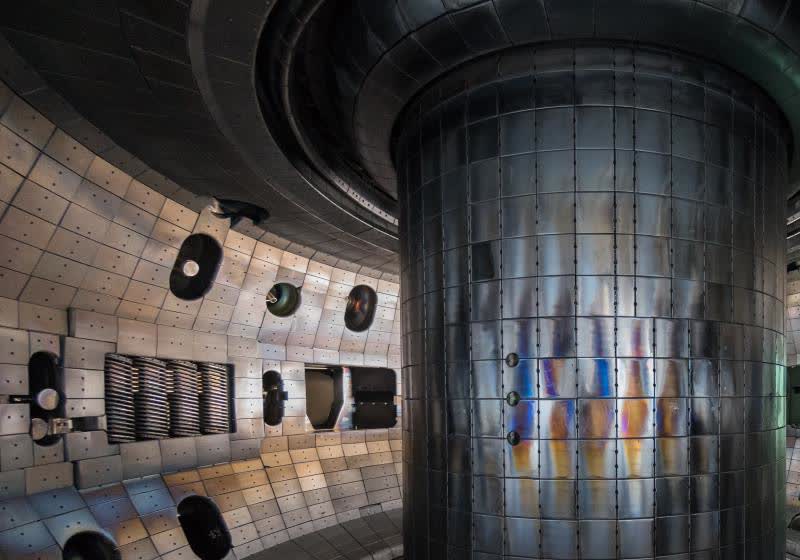
In 1980s fusion experiments, physicists discovered that radio waves could maintain a steady current flow in plasma without relying on a central solenoid coil, which typically stops and resets during fusion reactions. Although the initial tests in the 1980s showed a very weak effect, a recent study by General Atomics has confirmed that helicon current drive can indeed generate the necessary current flow.
By beaming 476 MHz radio waves into the plasma, researchers in San Diego were able to inject 370 kW of power into the plasma for a full second, generating around 20 kA of current near the core. While the helicons only supplied approximately 2% of the total 1 MA of current in the plasma, they could potentially be used alongside other current drive methods to enhance the efficiency of fusion power plants.
However, it is unlikely that helicon waves will replace the need for the coil entirely, as they are expected to perform well near the plasma edge rather than in the dense plasma core.
Written by urgent.news from TechSpot's reporting — not their text. Machine-written — may contain errors; check the original before relying on it.