What ‘Brain Flows’ gets right
Michael W. Cole’s new book makes a convincing case that the dynamic movement of signals underpins just about everything the brain does, though it misses mention of relevant theoretical and single-cell work.
Michael W. Cole's new book "Brain Flows: How Network Dynamics Compose the Human Mind" argues that dynamic movement of signals in the brain underlies all cognitive processes. He defines "brain flows" as "the dynamic processes at the core of what the brain does and what generates the mind." Cole, a professor of neuroscience at Rutgers University, has long advocated for this perspective, having contributed to the early work on the concept.
In his book, Cole employs an engaging story from his daughter's preschool "Dad Day," where they collaborate to build a unicorn using simple wooden parts and tools. He emphasizes the adaptability and creativity required for such challenges, illustrating the idea that we are dynamic beings who must constantly adjust to new situations.
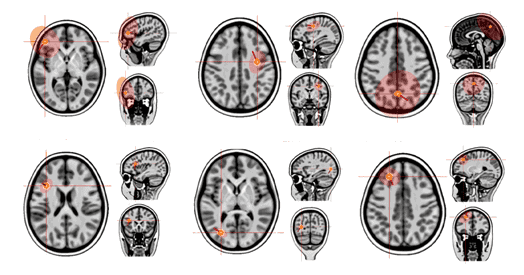
However, Cole acknowledges that accurately tracking the flow of information in the brain remains a challenge. Most researchers typically focus on analyzing localized neural activity patterns using techniques like fMRI or EEG, without considering the broader network of interconnected neurons and regions. Cole argues that this narrow focus overlooks the fundamental role of dynamic signal flow in brain function.
He highlights the importance of "flexible hub" regions in the frontoparietal cortex, which act like thermostats, regulating brain activity through negative feedback loops. Mismatches between expected and actual rewards serve as gating mechanisms to redirect flows toward new goals. Cole provides a detailed explanation of how these hubs contribute to goal-setting and adaptive behavior.
Throughout the book, Cole critiques the common assumption that the brain primarily performs point computations. Instead, he demonstrates how signaling flows across interconnected networks drive cognitive processes. He proposes integrating machine learning techniques to better model and understand brain flows, while acknowledging the limitations of current models and the potential of single-cell studies to shed light on this complex phenomenon.
Although Cole does not directly reference recent theoretical work on brain flows from single-cell studies or network modeling approaches, his book presents a compelling case for the centrality of signal flow in brain function. He urges the neuroscience community to broaden its perspective and consider the dynamic nature of information transfer in the brain, rather than solely focusing on isolated computations.
Written by urgent.news from The Transmitter's reporting — not their text. Machine-written — may contain errors; check the original before relying on it.