Viral Asesewa plastic-to-fuel plant fails first NPA tests, but regulators offer help
A backyard plant in Asesewa that melts plastic waste into fuel fell short in mobile lab tests, though the NPA says it wants to support the inventor.
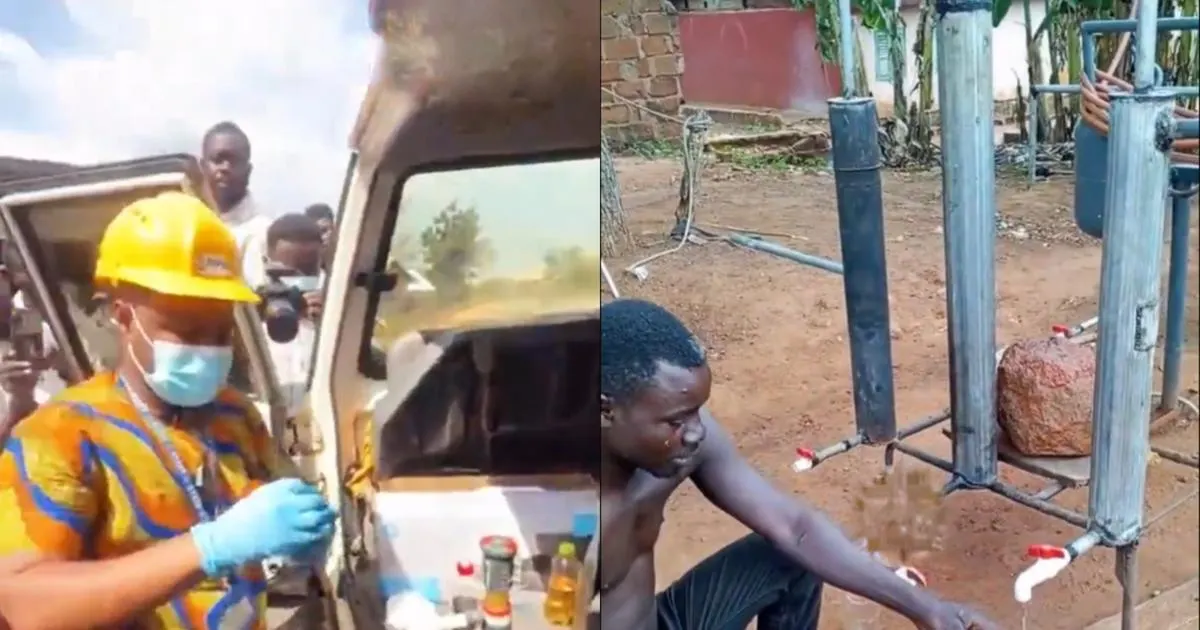
In Asesewa, a homemade plant that transforms discarded plastic bags into liquids akin to petrol and diesel has fallen short of initial quality tests conducted by the National Petroleum Authority (NPA). Despite this setback, the regulator expressed its willingness to assist in perfecting the invention. Eastern Regional Director Salifu S. Nagumsi led an NPA team to the town to engage with the 38-year-old inventor, Michael Adaesame, following the viral spread of videos showcasing his backyard setup.
Adaesame's device utilizes a perforated metal barrel, vertical condensation pipes, and heat to convert plastic waste into a thick grease-like substance. The process involves separating the vapour into lighter and heavier liquids, with the heat level determining the product's composition. He reportedly improvised the setup by perforating the top of a barrel, inserting rubber materials inside, and then applying heat.
During the demonstration, inspectors subjected Adaesame's petrol and diesel samples to a mobile laboratory kit for real-time assessment. Unfortunately, neither sample met the technical specifications mandated for motor vehicles, leading the authority to issue warnings to drivers in the vicinity against using the unrefined liquid in their vehicles.
Rather than abandoning the experiment, the team collected additional samples for comprehensive laboratory analysis in Accra and commended Adaesame's ingenuity in converting plastic waste into usable energy.
The delegation's chief executive expressed enthusiasm for exploring Adaesame's concept of turning plastic litter into valuable energy. The NPA delegation emphasized that the inventor's motivation stemmed from environmental curiosity rather than financial gain, with no hidden motives behind his efforts.
Written by urgent.news from 3News's reporting — not their text. Machine-written — may contain errors; check the original before relying on it.