Vietnam among 13 nations maintaining energy stability despite global shocks
As per the Ministry of Industry and Trade's first-ever Vietnam Energy Security Report 2026, Vietnam is among 13 nations maintaining energy stability despite global shocks.
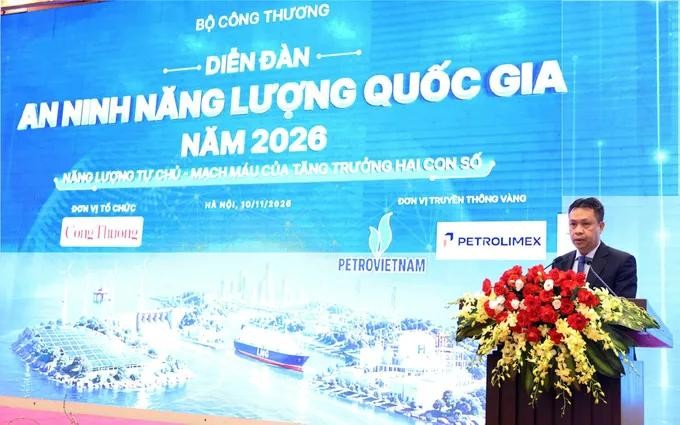
Vietnam emerges as one of 13 nations preserving energy stability amid global turbulence, according to the Vietnam Energy Security Report 2026. On November 10, the Ministry of Industry and Trade convened the National Energy Security Forum in Hanoi to unveil the inaugural report. The report reveals that the global energy system endured significant disruptions, with the Strait of Hormuz's blockade and soaring Brent crude oil prices of up to US$118.35 per barrel.
Extreme heatwaves and the El Nino phenomenon further strained electricity demand, potentially reducing Vietnam's hydropower output by 18.5 billion kWh in 2025.
Despite these challenges, Vietnam maintained a stable electricity supply. In 2026, electricity production and imports are projected to reach 356.2 billion kWh, a 10.3 percent rise from 2025 and 6.2 billion kWh above the projected scenario. The country's peak capacity hit 57,537MW on June 24, 2026, with the Northern region reaching 30,248MW. Remarkably, the nation avoided rolling blackouts during peak demand, even as commercial electricity usage climbed by 9.84 percent in the first ten months of 2026.
Nguyen Viet Son, Deputy Minister of Industry and Trade, credits the power system's resilience in withstanding three extreme heatwaves and managing soaring electricity demand. Petrol supply also remained robust, with two domestic refineries producing approximately 12.1 million tons of petroleum in the first nine months of 2026. Two refineries, Dung Quat and Nghi Son, operated at 123 and 112 percent of their design capacities, respectively.
Vietnam sourced crude oil from over 10 types, ensuring no petroleum shortages. However, the report highlights that by 2025, net energy imports are expected to constitute 43.9 percent of total primary energy supply, falling short of the target for a 90-day petroleum reserve as outlined in Resolution 70-NQ/TW.
Electricity demand in Vietnam's Northern region has surged, and many power generation and grid projects face regulatory, land clearance, and capital challenges. The report also proposes implementing E10 gasoline nationwide in June 2026, which could cut CO2 emissions by about 2.5 million tonnes annually. The Vietnamese government has earmarked over VND64 trillion for initiatives aimed at reducing petroleum-related taxes and fees, as well as providing advances from the Price Stabilization Fund.
As of October 26, retail gasoline prices in Vietnam were approximately 63 percent of the global average, the lowest among the 16 economies examined. Deputy Minister Nguyen Viet Son emphasized that energy security is paramount to economic autonomy and called for a profound transformation in the nation's approach to energy security.
Written by urgent.news from SGGP English Edition Business's reporting — not their text. Machine-written — may contain errors; check the original before relying on it.