Tennessee Men’s Basketball Players Propose CBA
The agreement isn’t finalized but serves as a model for future negotiations.
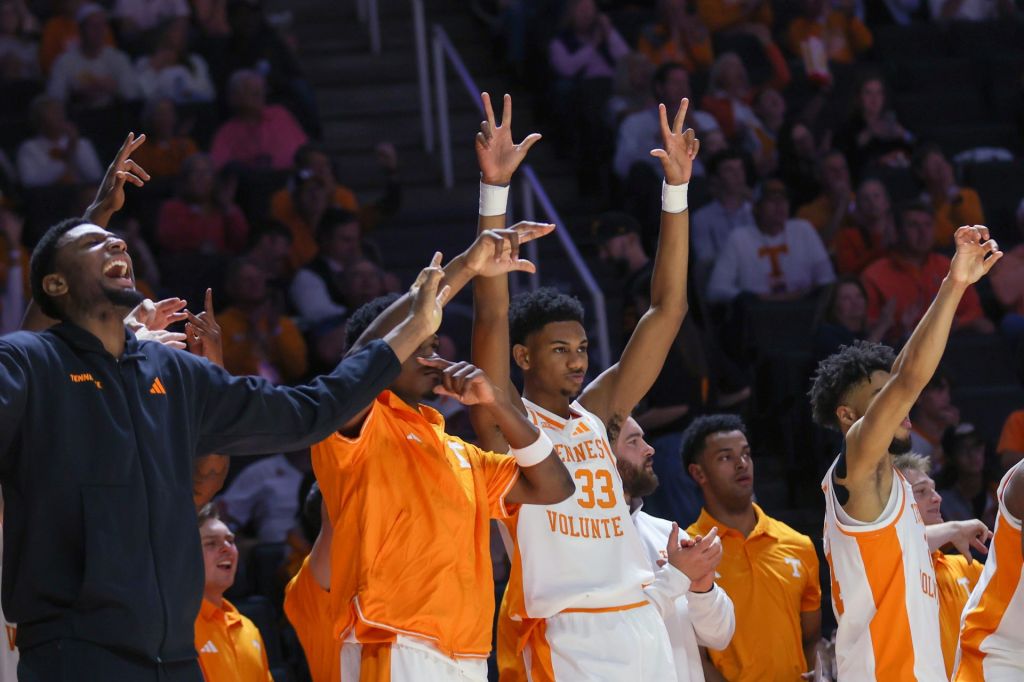
Tennessee men's basketball players have entered the realm of collective bargaining, crafting a model agreement with their university, according to an announcement on Tuesday. Spearheaded by the athlete-advocacy group Athletes.org (AO), the negotiation process covered a wide range of topics, including player compensation, health insurance benefits, and rules surrounding transfers and eligibility.
The term sheet for the agreement, which was shared with Front Office Sports, was the result of months of discussions and negotiations that began in the summer. Three player representatives, graduate student Tyler Lundblade, junior Campbell Duncan, and freshman DeWayne Brown II, were elected to represent the team. Once their positions were finalized, they brought the agreement to Tennessee athletics officials, including athletic director Danny White.
White, one of the few athletic directors to publicly support the idea of collective bargaining, stated that engaging in meaningful dialogue should not be feared. While the agreement has not been ratified and the players have not formally established a union, the negotiation demonstrates that collective bargaining could be a solution to the central question of who holds the power to create and enforce rules in college sports.
AO co-founder and former NFL player Brandon Copeland expressed optimism, saying that if this process were repeated at every Power Four university, most college sports problems could be resolved quickly. The agreement covers issues such as revenue sharing, player movement, minimum payment requirements, and a transfer window for men's basketball players.
It also establishes a five-year eligibility window and prohibits players from returning to college after declaring for the pros. Additionally, the agreement includes a system for regulating agents, with a centralized registry, caps on agent fees, and an agent certification process. The agreement would also require AO to represent the players not only in negotiating the CBA but also for other services, such as maintaining an agent database and negotiating group licensing deals.
Despite the potential benefits, some critics argue that collective bargaining could be too complex due to the vast differences in budgets and resources between sports, athletic departments, and divisions. Others suggest that players at public schools may not be able to unionize under the National Labor Relations Act or state labor laws, as they are considered public employees.
However, AO maintains that players could negotiate a CBA on a school-by-school basis without being considered employees, or they could negotiate a more traditional collective bargaining unit through a private centralized employer or a multiemployer bargaining unit.
Written by urgent.news from Front Office Sports's reporting — not their text. Machine-written — may contain errors; check the original before relying on it.