Smart meters to cost the UK billions: 2G switch-off means replacing 12-13 million
Sunset of legacy cellphone tech means forced upgrade for many millions of smart energy meter users
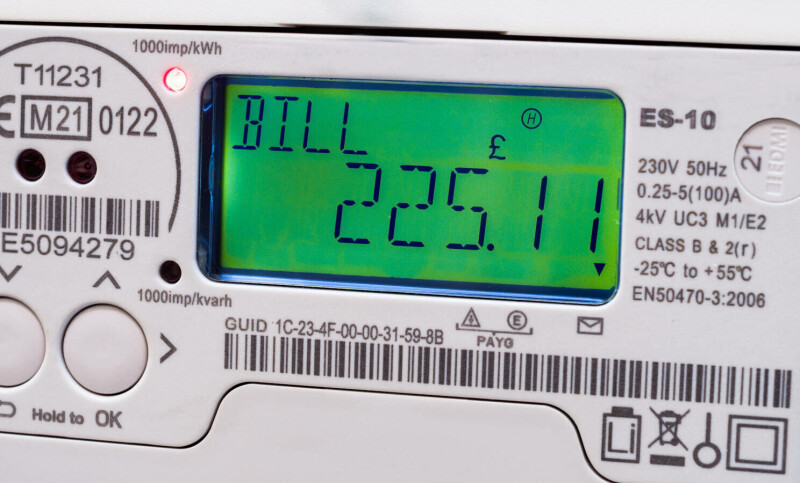
A report from connectivity firm Wirepas reveals that the UK faces a £4 billion ($5.3 billion) bill to replace around 12-13 million smart meters when 2G and 3G networks are turned off in 2033. Smart meters were initially intended to be installed in 80% of homes by 2020, but the rollout has been plagued by delays and technical issues.
These meters, which rely on 2G or 3G cellular connections to send energy usage data to energy suppliers, will become inoperable as these networks are phased out by 2033. The report highlights two main cost areas: replacing the communications module of newer SMETS2 meters, estimated at £1.3 to £1.4 billion ($1.7 to $1.9 billion), and replacing the entire older SMETS1 meters, estimated at £2.1 to £2.45 billion ($2.8 to $3.3 billion).
The UK must replace the majority of its older meters nationwide, while newer SMETS2 meters in the south are unaffected by the network shutdown. Wirepas, an IoT connectivity specialist, suggests NR+ as a solution, a technology based on the DECT-2020 New Radio standard that could be scalable and future-proof.
Written by urgent.news from The Register Science's reporting — not their text. Machine-written — may contain errors; check the original before relying on it.
This story
This is one outlet's version. Read the fullest account.