Russo-Ukrainian war, day 1721: Abu Dhabi talks open with Russia still demanding the rest of Donetsk Oblast
Reuters reports that Ukrainian drone strikes have disrupted 30% of Russia’s oil refining capacity, while Russian strikes cut power in Dnipro and Kamianske and one MP blocked the final vote on Ukraine’s Space Forces.
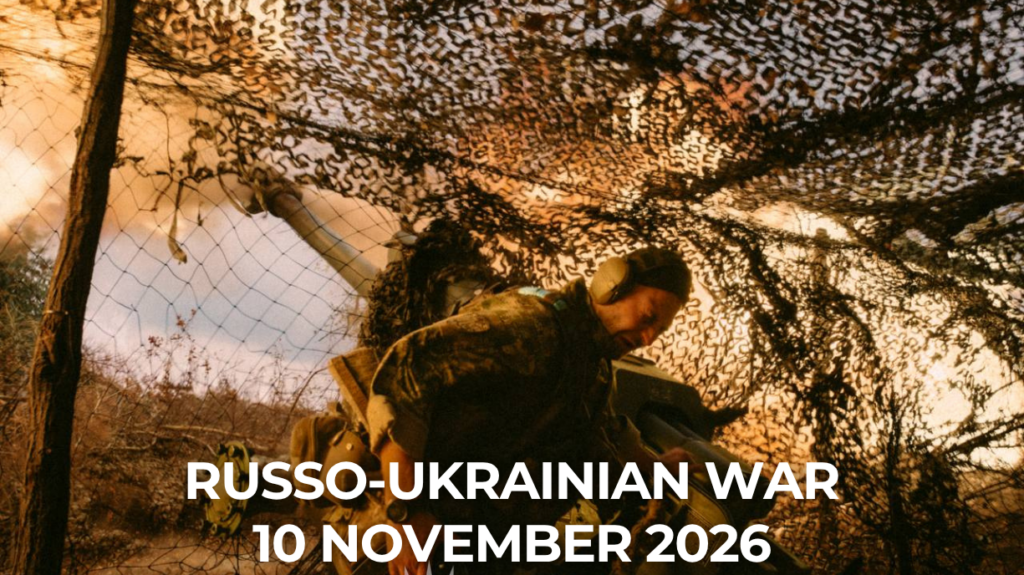
On day 1721 of the Russo-Ukrainian war, Abu Dhabi talks commenced with Russia persistently insisting on retaining control over the entire Donetsk Oblast. Ukrainian officials expressed their disappointment, as they anticipated no final agreement from the two-day negotiation. Russia's delegation was reportedly there to discuss Europe's security order, rather than reaching a ceasefire.
Ukraine's president was actively moving to scrutinize the wealth of security officers, with the opposition faction agreeing to back the measure. However, one of its lawmakers argued that the real issue lay in appointments made without open contests. Ukrainian drone strikes had disrupted approximately 30% of Russia's oil refining capacity, exacerbating the fuel crisis as Moscow continued to export diesel.
Military Reuters reported that Il-76s and Il-78s were targeted by Ukrainian drones, which likely aimed at the plants responsible for fixing both.
Reports indicated a fire at the Staraya Russa repair plant and damage to an unnamed industrial facility in Novgorod. Ukraine claimed to have successfully targeted a Russian Starlink jammer located in occupied Donetsk Oblast. Ukrainian units have been actively seeking out such systems since Russia resumed their use this year. Russia's strategy included attempting to split Ukraine along the Dnipro River, with strikes causing power outages in Dnipro and Kamianske.
During the talks, President Zelenskyy detailed Russia's campaign against bridges and the electrical grid, with some targets situated along the riverbanks. Ukraine's inquiry into the morale of soldiers on the front lines revealed that the primary concern was unrelated to Russian fire. Most Ukrainian soldiers remained effective for roughly a month, but the shortage of rotations left many stationed for longer periods.
On this particular day, one Russian soldier was lost every 29 seconds, marking Russia's costliest day of the war according to Ukraine's count.
This marked the third daily high for Russian casualties in under three weeks, and the drone force's third in eight days. Intelligence sources warned that Russia planned to target Ukraine's food industry, including foreign-owned factories, as part of its new campaign against the civilian economy. Russia's jet-powered Geran-4 drone was reported to be faster than the American Lancer 7 interceptor drone tested in Ukraine.
B&M Defense provided some drones for Ukrainian combat trials, but refused to disclose the results or any interceptions.
Ukraine's drone detector Pluton was upgraded to detect the mesh links that made Russian drones more difficult to jam. Infozahyst stated that the upgrade covered modems on Geran (Shahed), Gerbera, and Molniya drones. A covert Russian network was allegedly using France's riots to portray Macron's government as weak, while also targeting support for Ukraine. Operation Overload spread pro-Russian posts on social media, which garnered 2.8 million views.
Russia introduced a new mini cruise missile packed with American technology, as intelligence revealed the presence of 52 US components among 93 foreign parts within the missile. Ukraine responded by establishing new Space Forces aimed at destroying Russian satellites guiding their drones. Moscow had deployed 32 satellites into orbit this year to guide their drones mid-flight.
Jamming did not prevent Russian strikes on bridges, as Ukrainian experts highlighted the Iskander's last-second radar scan, indicating that an inertial system alone would not guarantee a precise hit.
International tensions arose when South Africa detained nine foreigners suspected of attempting to join Russia's war against Ukraine. Interpol and local law enforcement collaborated on the investigation. The EU pledged €70 million for Ukrainian maritime security after drone strikes left 34 dead or missing. This funding would go towards a Romanian-Bulgarian maritime security hub and sea rescue efforts.
Ukraine's request for access to the EU's GOVSATCOM system, set to become operational in 2027, was deemed less significant than the bloc's planned IRIS² system by the EU defense commissioner.
Denmark, despite being a relatively small country, was highlighted as one of Europe's biggest donors to Ukraine per capita. Its 32nd Ukraine package primarily focused on air defense. Germany threatened to block the EU's next budget unless all 27 member states contributed to closing Ukraine's 70-billion-euro funding gap. Chancellor Merz indicated that he would veto the EU's 2028-2034 budget unless all 27 states cooperated. The humanitarian and social impact of the war continued to be a significant concern.
Written by urgent.news from Euromaidan Press's reporting — not their text. Machine-written — may contain errors; check the original before relying on it.
This story
This is one outlet's version. Read the fullest account.
- Russia and Ukraine hold nearly 4 hours of U.S.-mediated talks in Abu Dhabi pbs.org
- Kushner, Witkoff mediate Ukraine-Russia ‘peace’ talks in Abu Dhabi qatar-tribune.com
- Zelenskyy calls first day of Ukraine-US-Russia talks in Abu Dhabi 'constructive and substantive' english.nv.ua
- Presidential security adviser: Abu Dhabi talks unlikely to stop the war news.err.ee