PM Shehbaz arrives in Turkiye to address COP31 summit
Prime Minister Shehbaz Sharif arrived in Antalya, Turkiye, on Tuesday for a three-day visit to attend the Leaders’ Summit of the 31st Conference of the Parties (COP 31) to the United Nations Framework Convention on Climate Change (UNFCCC). Upon arrival, the prime minister was received by Turkiye’s Deputy Culture and Tourism Minister Gökhan Yazgı, Pakistan’s Ambassador-designate Amna Baloch and…
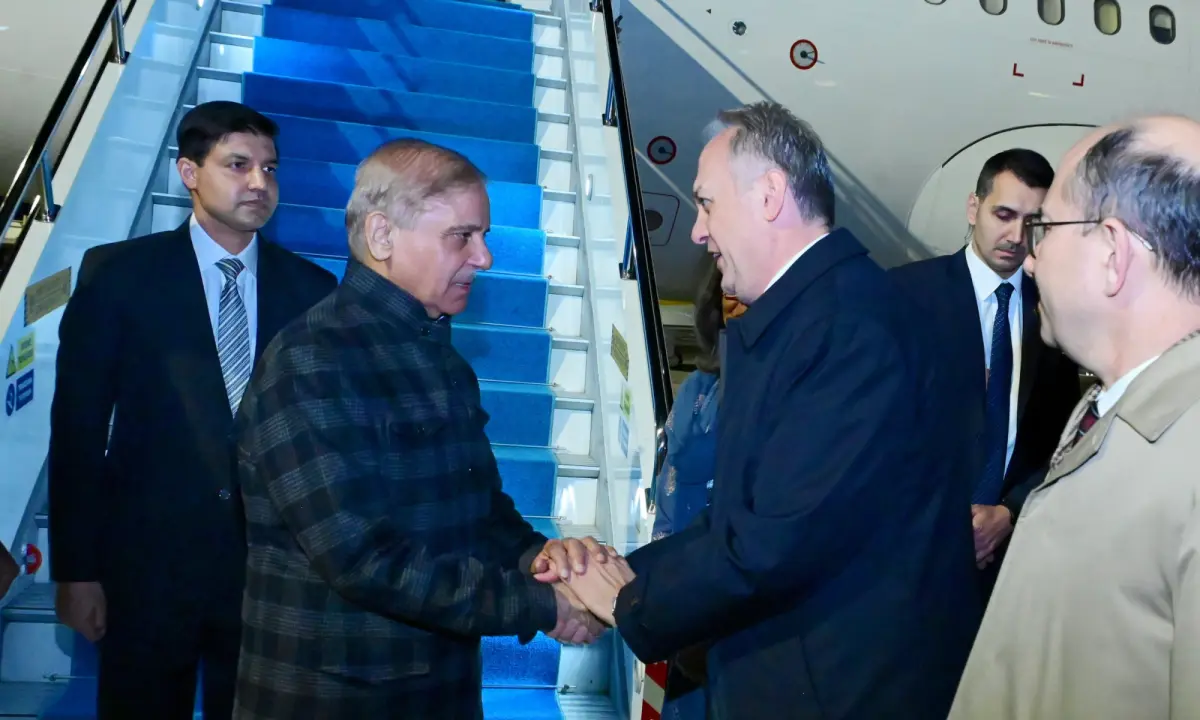
Prime Minister Shehbaz Sharif stepped onto Turkiye's soil on Tuesday, embarking on a three-day mission to the COP31 summit in Antalya. He was met by the deputy culture and tourism minister, Pakistan's ambassador-designate, and key Turkish officials. The premier, flanked by PPP senator Sherry Rehman, information minister Attaullah Tarar, and his adviser Tariq Fatemi, will champion Pakistan's climate agenda, emphasizing the urgent need for intensified global action against climate change.
At the summit, Shehbaz will spotlight Pakistan's strides in solar power and renewable energy, alongside efforts to bolster disaster readiness and early-warning systems. He will also push for global climate finance that is both reliable and affordable, aimed at bolstering resilience and sustainable development in developing nations.
Meanwhile, UN Secretary-General Antonio Guterres called for a worldwide shift away from fossil fuels, despite Turkiye's recent discovery of vast oil reserves. Guterres stressed that an accelerated transition away from fossil fuels is crucial to curb global temperature rises, which are projected to surpass the 1.5°C threshold in years. He noted that the dependence on fossil fuels exacerbates the economic and security risks highlighted by recent tensions in the Middle East.
The contrast between Guterres' call for a swift fossil fuel exit and Turkiye's celebration of its oil discovery underscores a major hurdle at the COP31 talks. Countries remain divided on how swiftly to phase out polluting fuels in favor of cleaner alternatives. Since 2023, when nations agreed to transition away from fossil fuels, progress on this front has been limited, with the COP30 summit in Brazil failing to explicitly name fossil fuels in its final outcome.
COP31 has faced a rocky start, with developing nations demanding stronger climate finance commitments in the agenda. Under UN climate agreements, developed countries, primarily responsible for greenhouse gas emissions, are expected to provide financial assistance to assist developing nations in adapting to climate impacts and shifting to cleaner energy sources. However, poorer countries argue that the provided funds are insufficient.
Negotiators have been locked in discussions over the inclusion of climate finance items in the official agenda. African countries are particularly vocal in pushing for the agenda to cover discussions on tripling adaptation finance, aimed at helping poorer nations with measures like constructing sea walls or cultivating drought-resistant crops.
Despite these challenges, few major breakthroughs are expected at COP31 amid an oil price surge and geopolitical tensions fueled by the US war on Iran and Russia's conflict in Ukraine.
Written by urgent.news from Dawn's reporting — not their text. Machine-written — may contain errors; check the original before relying on it.
This story
This is one outlet's version. Read the fullest account.