NASA Scientists Show How Gravitational Waves Can Reveal New Worlds
The LISA (Laser Interferometer Space Antenna) observatory, now in development, will detect gravitational waves, the tiny ripples in space-time caused by orbiting masses. Now two studies led by NASA astrophysicists show in new detail how LISA could reveal a new and unique population of exoplanets — worlds beyond our solar system — throughout our galaxy. […]
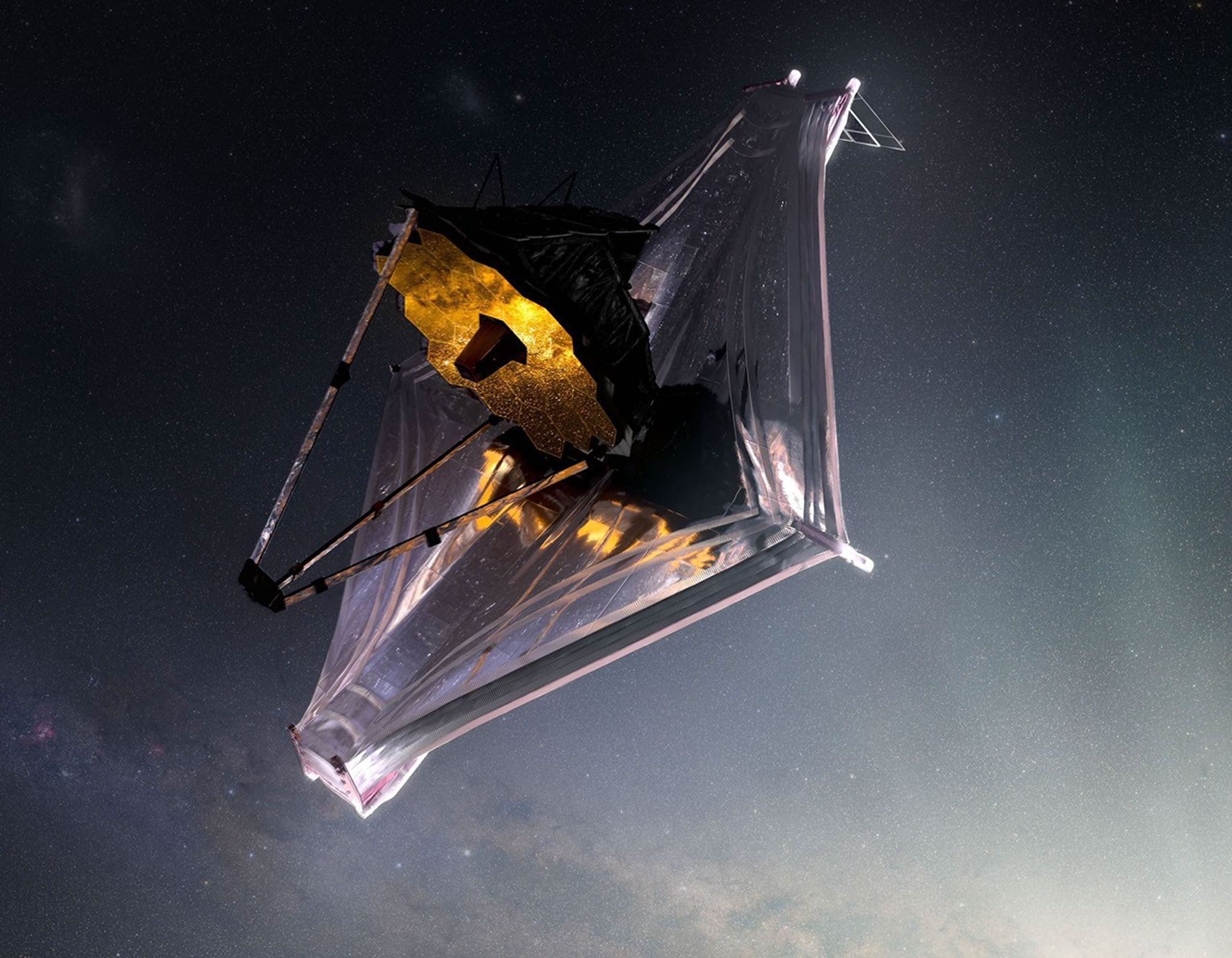
NASA scientists have revealed that the upcoming LISA observatory could help uncover new worlds - exoplanets - residing in binary white dwarf systems. The LISA observatory is a space-based mission currently in development that will monitor gravitational waves, or minute ripples in space-time produced by orbiting masses. Two recent studies led by NASA astrophysicists detail how LISA could detect a novel population of exoplanets throughout our galaxy.
Gravitational waves carry crucial information about their source. In the case of tightly orbiting white dwarfs, the presence of a planet modifies the gravitational wave signal in a way that LISA can identify. A Jupiter-mass planet in such a system could be detected up to thousands of light-years away by LISA.
The two papers published in The Astrophysical Journal detail the detection method and potential confirmation using NASA's James Webb Space Telescope. The concept of detecting exoplanets around LISA's double white dwarf systems was first proposed in 2008 by Japanese astronomer Naoki Seto.
LISA's detection method shares similarities with the radial velocity method currently used to discover exoplanets around nearby stars. As a planet orbits, its gravity tugs on its host star, causing the star's spectrum to oscillate, similar to the Doppler effect. LISA's detection would manifest as sidebands, or secondary signals, at higher and lower frequencies than the primary wave.
White dwarfs are the remnants of stars like the Sun, and detecting exoplanets around binary white dwarf systems would represent a new exoplanet population. Our Milky Way galaxy is estimated to contain around 10 million such systems with orbital periods of less than an hour. LISA is expected to resolve approximately 10,000 individual systems and around 100 mixed binaries, each composed of white dwarfs, neutron stars, or black holes.
To confirm the existence of these planets, the researchers propose using NASA's infrared-sensitive James Webb Space Telescope. A planet in a double white dwarf system would emit a larger portion of infrared light than the stars themselves. Webb's instruments can detect this infrared excess up to a distance of 500 light-years. The team's analysis suggests that Webb could detect an exoplanet about five times Jupiter's mass, while LISA could identify a sub-Jupiter exoplanet in ideal circumstances.
Written by urgent.news from NASA's reporting — not their text. Machine-written — may contain errors; check the original before relying on it.