KNUST Researcher investigates how AI can improve brain scan analysis
How well can artificial intelligence developed using medical data from Europe and North America analyse brain scans from Ghanaian patients? This question took Ghanaian biomedical engineer Dr Prince Ebenezer Adjei to the German Cancer Research Center (DKFZ) in Heidelberg, where he worked with researchers to investigate how medical imaging AI tools perform on Ghanaian clinical scans. Dr Adjei, who…
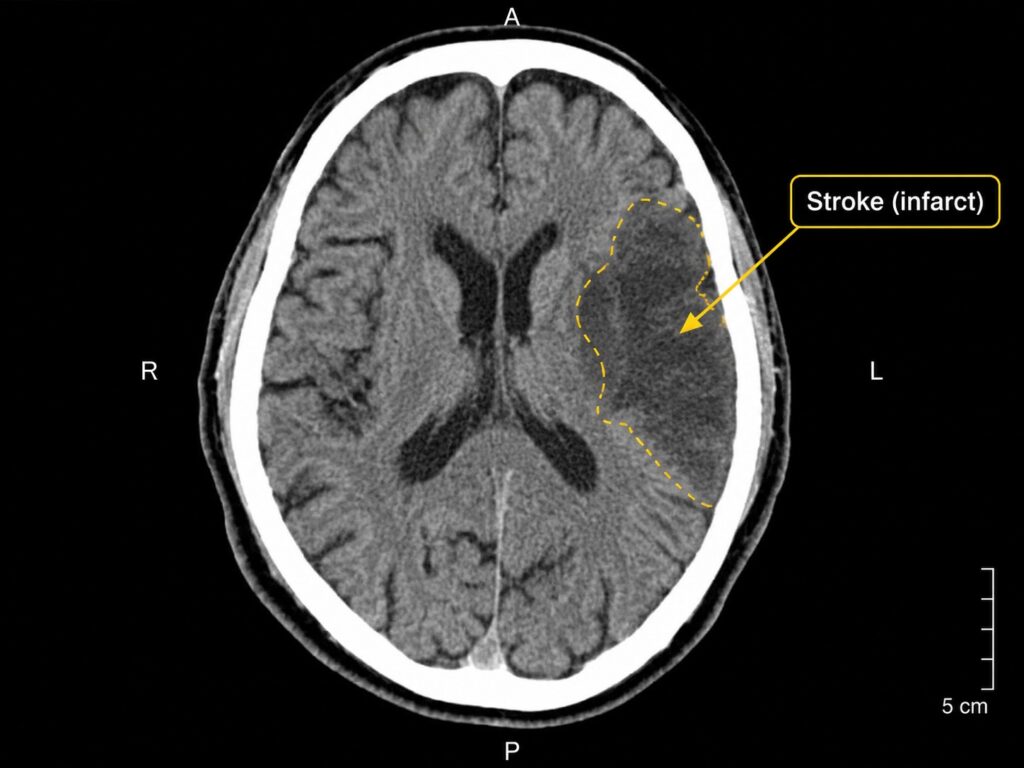
How well can AI developed with medical data from Europe and North America analyze brain scans from Ghanaian patients? This question prompted Ghanaian biomedical engineer Dr. Prince Ebenezer Adjei to visit the German Cancer Research Centre (DKFZ) in Heidelberg. While there, Dr. Adjei collaborated with researchers to assess the performance of medical imaging AI tools on Ghanaian clinical scans.
With approximately 1,600 unlabelled head CT scans from Ghana, Dr. Adjei utilized a technique called self-supervised learning to train AI models. The study employed nnFoundation and nnU-Net, both medical imaging AI tools developed by DKFZ, to test various tasks such as detecting brain damage from acute strokes and estimating a person's brain age.
Although nnFoundation did not outperform nnU-Net in identifying stroke damage or estimating brain age, it did show advantages in other tasks. The research emphasizes the importance of data quality, as clear and accurate examples significantly improve AI results. Dr. Adjei believes AI could help doctors interpret brain scans more efficiently, particularly in hospitals with limited radiologists.
However, further testing and regulatory considerations are necessary before AI tools can be integrated into routine clinical care. The research continues, with larger experiments planned in Germany and the collection of more high-quality Ghanaian brain scans in Ghana. The partnership aims to develop AI tools specifically designed for African patients using African data.
Written by urgent.news from MyJoyOnline Ghana's reporting — not their text. Machine-written — may contain errors; check the original before relying on it.