Kearney, MIT put US driverless truck cost parity at 2028
A Kearney and MIT Mobility Initiative report says autonomous trucks cost $4 a mile in 2026 but match the cost of human-driven trucks in the US around 2028. The post Kearney, MIT put US driverless truck cost parity at 2028 appeared first on FreightWaves .
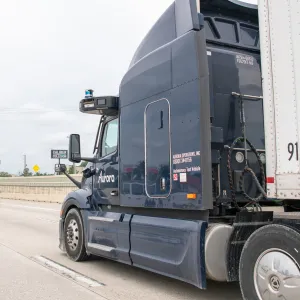
Kearney and MIT's Mobility Initiative have forecasted that autonomous trucks will reach cost parity with conventional trucks with drivers in the United States around 2028. The model estimates a driverless truck to cost $4 per mile in 2026, compared to $2.50 for a traditional truck. The costs will converge around $2.60 per mile in 2028.
The analysis attributes a significant portion of a US truck's per-mile cost to the driver, accounting for about half of the expense. Commercial deployment is currently limited and concentrated geographically, but companies like Aurora have already logged over 500,000 driverless miles on public roads. The United States is projected to surpass Europe and the Middle East in adopting autonomous trucks due to higher driver costs.
In the United States, a fully loaded long-haul driver, including benefits, costs approximately $10,000 per month, twice the cost in Europe and four times the cost in the Middle East. The Kearney model, based on interviews with over 25 autonomous vehicle developers, truck makers, carriers, brokers, and investors, projects the driverless cost to fall to around $2 per mile by 2035, a 49% decrease.
Most of this decline is due to spreading the cost of building the virtual driver across a larger number of trucks. The report outlines four potential business models for driverless trucks: OEM-led platforms like Volvo’s VNL Autonomous, purpose-built vehicles like Humble’s, autonomous carriers like Bot Auto, and virtual-driver-only models such as Waabi and Aurora.
These models collectively target the high-cost human driver, which is estimated at $1.26 per mile. The market for private truckload fleets is estimated at $450 billion, with around $180 billion in driver costs. The report highlights the uncertainty surrounding regulation and liability, as well as the need to determine how claims will be divided among carriers, truck manufacturers, and virtual-driver providers in the event of an incident.
Written by urgent.news from FreightWaves's reporting — not their text. Machine-written — may contain errors; check the original before relying on it.