Jeffries pushes tighter China chip restrictions amid Nvidia CEO scandal
House Minority Leader Hakeem Jeffries (D-N.Y.) backed an effort Monday to pass new restrictions on China's access to advanced AI chips through an annual defense bill amid a scandal over Nvidia CEO Jensen Huang's relationship with an alleged Chinese spy. Jeffries, who could become Speaker in the next Congress, said he "strongly supports" chip restrictions...
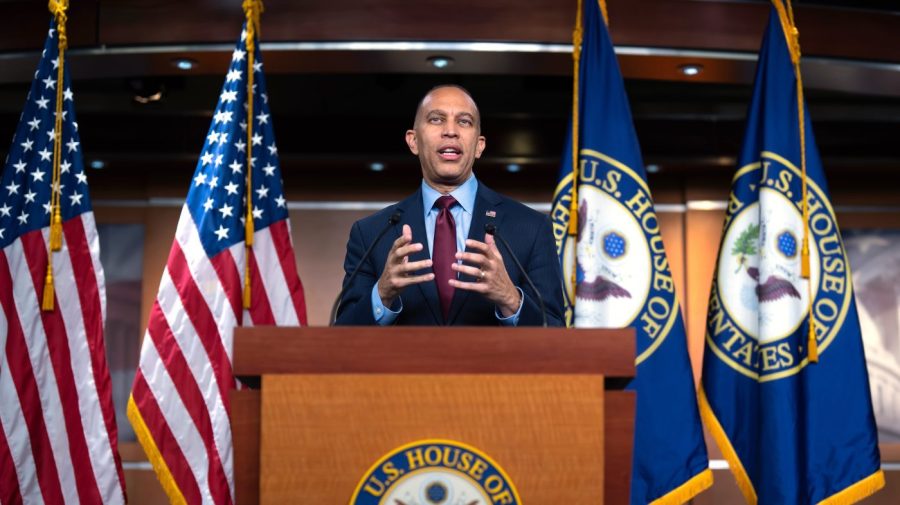
A political storm erupted over reports suggesting US intelligence agencies believe Nvidia CEO Jensen Huang may have been the target of an espionage operation. China has denied these allegations. This controversy could further tighten the US's technological blockade on China following a Democratic win in midterms. Analysts suggest the political momentum from these developments could help Congress pass stricter semiconductor export rules, accelerating efforts to curb third-country chip smuggling and prohibit Chinese tech firms from accessing overseas cloud computing clusters.
Kang Mengjie, an analyst at Hutong Research, believes the investigations and the incoming Democratic-controlled Congress will heighten pressure for tighter export controls and stronger enforcement. This could undermine Huang's role as a prominent advocate for maintaining US semiconductor trade relations with China. Myron Xie, AI supply chain lead at SemiAnalysis, notes that Huang's lobbying efforts for less restrictive rules on selling graphics processing units to China could be viewed with skepticism due to potential foreign influence.
The controversy also provides lawmakers with reasons to investigate whether executives' connections to the White House influenced export policies or the administration's response to national security concerns. The scandal might bolster bipartisan efforts to tighten restrictions on technology transfers to Beijing. The Remote Access Security Act, which passed the House but hasn't been approved by the Senate, aims to extend export controls to cover some foreign entities' remote access to US computing technology.
This bill could gain traction in 2027 after the incident and subsequent investigation. The scandal could also bolster support for the Overwatch Act and Remote Access Security Act. The four primary channels through which Chinese firms obtain advanced computing power include domestically produced chips, legally compliant US imports, illicit smuggling, and remote access to offshore data centers.
A US clampdown on remote access could significantly impact China's artificial intelligence development. Without direct access to top-tier processors, Chinese tech giants have relied on overseas facilities to train cutting-edge AI models. While Huawei has made progress with its Ascend series, local foundries are unlikely to fully bridge the gap.
Sealing off these channels altogether would be challenging for US regulators due to the complex global supply chain. Enforcing cloud bans would also face diplomatic hurdles, requiring cooperation from hosting governments. Restricting overseas cloud access would necessitate stricter customer verification and cooperation from service providers in countries like Singapore, Malaysia, and the United Arab Emirates.
While Washington can disrupt major channels and reduce the reliability of illicit supply, closing every route is unlikely, according to Kang. However, the unintended consequence of these tightening measures could bolster the commercial case for the domestic AI tech stack, as Chinese labs learn to operate with less compute.
Written by urgent.news from SCMP Tech's reporting — not their text. Machine-written — may contain errors; check the original before relying on it.
This story
This is one outlet's version. Read the fullest account.