Ice core records uncover widespread air pollution from early 20th-century copper production
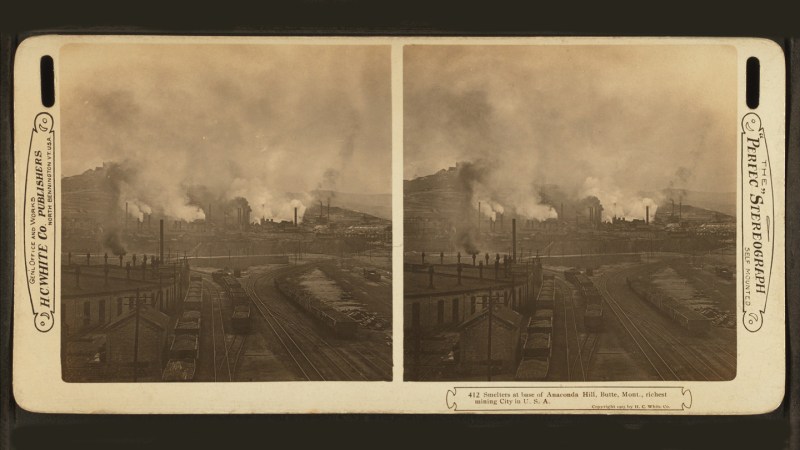
About a century ago, the Anaconda Copper Mine complex near Butte, Montana, was emitting vast amounts of air pollution into the atmosphere. As small particles of arsenic and other heavy metals were carried by winds over the Arctic, storms eventually helped pull them to the ground, where they joined layers of history embedded in the ice.

During the early 20th century, the Anaconda Copper Mine complex near Butte, Montana, was releasing significant amounts of air pollution into the atmosphere. As arsenic and other heavy metals from the mine's smelting operations were carried by winds, they eventually deposited into the ice in the Arctic. Scientists at DRI's Ice Core Lab have now analyzed natural ice archives to better understand the extent of this air pollution and its impact on North America and western Greenland.
The research, published in Nature Sustainability, reveals that during the peak production years of 1886-1918, there was a 15-fold increase in toxins like arsenic and lead in Arctic ice compared to previous levels. The study estimates that the Anaconda Copper Mine released 11,000 tons of arsenic and 4,400 tons of lead per year during its peak production period.
This pollution likely impacted over 50 million Americans and 600,000 Canadians, with those living closest to the mine exposed to levels exceeding WHO's recommended maximum threshold for chronic arsenic exposure. The lead pollution exposure is estimated to have caused cognitive decline equivalent to a 2.6 IQ point reduction for 1.4 million Americans and Canadians.
The researchers used ice cores from Greenland, the Russian Arctic, and northern Canada to reconstruct the atmospheric levels of these toxic metals and pinpoint the Anaconda Copper Mine as the primary source of emissions.
Written by urgent.news from Phys.org's reporting — not their text. Machine-written — may contain errors; check the original before relying on it.