Ex-US diplomat says OPCON transfer may not move rapidly, cites 'no consensus' in Washington
A former U.S. diplomat said Tuesday that the envisioned transfer of wartime operational control (OPCON) from Washington to Seoul may not move forward swiftly, citing "no consensus" on the key alliance issue in the United States. Speaking virtually at a forum, Joseph Yun, former acting U.S. ambassador to South Korea and special representative for North Korea, also said that there is no consensus…
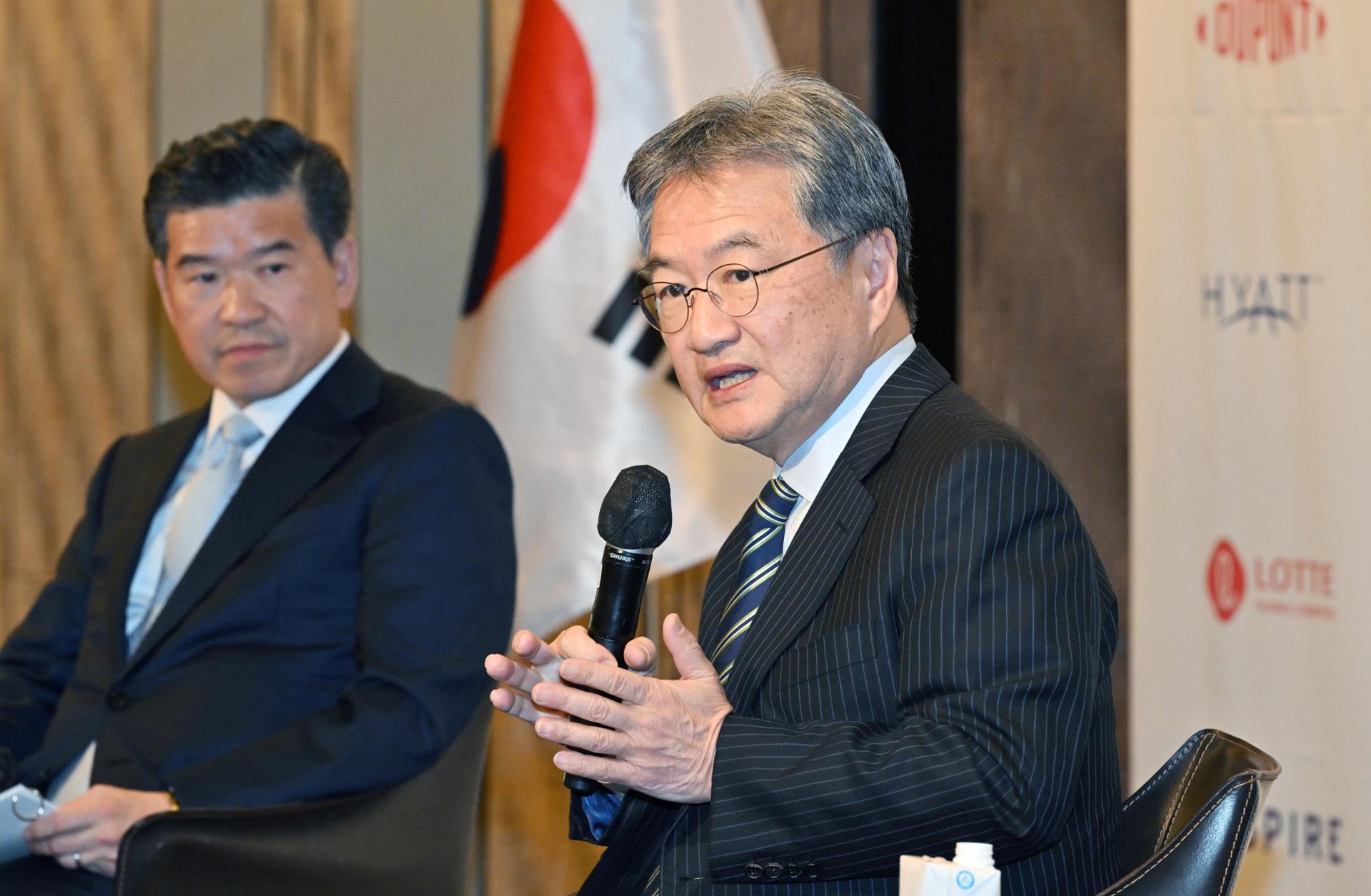
Former U.S. diplomat Joseph Yun has expressed doubts about the rapid transfer of wartime operational control (OPCON) from Washington to Seoul, citing the lack of consensus on the issue within the United States. During a virtual forum, Yun, who served as the acting U.S. ambassador to South Korea and special representative for North Korea, also highlighted the absence of consensus regarding South Korea's pursuit of the rights to enrich uranium for peaceful civilian purposes and the acquisition of nuclear submarines.
Yun's comments were made in the context of the remaining two years of President Donald Trump's administration, particularly following the recent U.S. midterm elections in which Democrats gained control of both the Senate and the House of Representatives. He expressed uncertainty about the speed at which OPCON transfer efforts could progress, stating that he could not imagine them moving very swiftly.
Yun's concerns extend to the nuclear issues, emphasizing that there is no consensus in Washington regarding South Korea's potential to possess enrichment capabilities or nuclear submarines. The South Korean and U.S. governments continue to grapple with these sensitive matters amid the shifting political landscape in the United States.
Written by urgent.news from The Korea Times's reporting — not their text. Machine-written — may contain errors; check the original before relying on it.
This story
This is one outlet's version. Read the fullest account.