Episode 186: Supercomputing
Dr. Marian Nemec, chief of the Computational Physics Branch at NASA Ames Research Center in Silicon Valley, California, takes us inside the world of NASA Advanced Supercomputing. The post Episode 186: Supercomputing appeared first on NASA Science .
Episode 186: Supercomputing
Supercomputers are vital in solving aerospace's most complex challenges, from predicting the quiet hum of a supersonic aircraft to studying potential hazards in space. On this episode of Small Steps, Giant Leaps, Dr. Marian Nemec, branch chief of computational physics at NASA Ames Research Center, takes us inside the world of NASA supercomputing.
He explains how these powerful computing systems help engineers simulate real-world conditions, refine spacecraft and aircraft designs, and make informed decisions before hardware is built or tested.
Dr. Nemec, thank you for joining us. Can you tell us more about your role at NASA? You hold two positions. One is a branch chief for computational physics within the Advanced Supercomputing Division at NASA Ames, based in Silicon Valley, California. Your team focuses on simulation work for the entire agency. Your second role involves leading part of the X-59 program, which deals with prediction tool development and validation, focusing on noise predictions and performance for the X-59 aircraft.
How do you determine when a simulation accurately represents real-world testing, like with the X-59? It's essential to ensure that we're solving the right equations and solving them correctly. We have to consider numerical methods that might introduce errors. For instance, too much dissipation could smooth out important flow features like noise levels with the X-59.
We also need to ensure we're using the appropriate physical models, such as the Euler equations or Navier-Stokes equations, to capture the main physics accurately. Wind tunnel testing and flight tests help validate these models and make necessary adjustments.
Through testing, are you frequently adjusting the simulations? Yes, feedback loops are becoming increasingly tight, with computation, wind tunnel experiments, and flight tests closely coupled. We adjust parameters in simulations based on reality captured through these tests to continually improve predictions and engineering tasks.
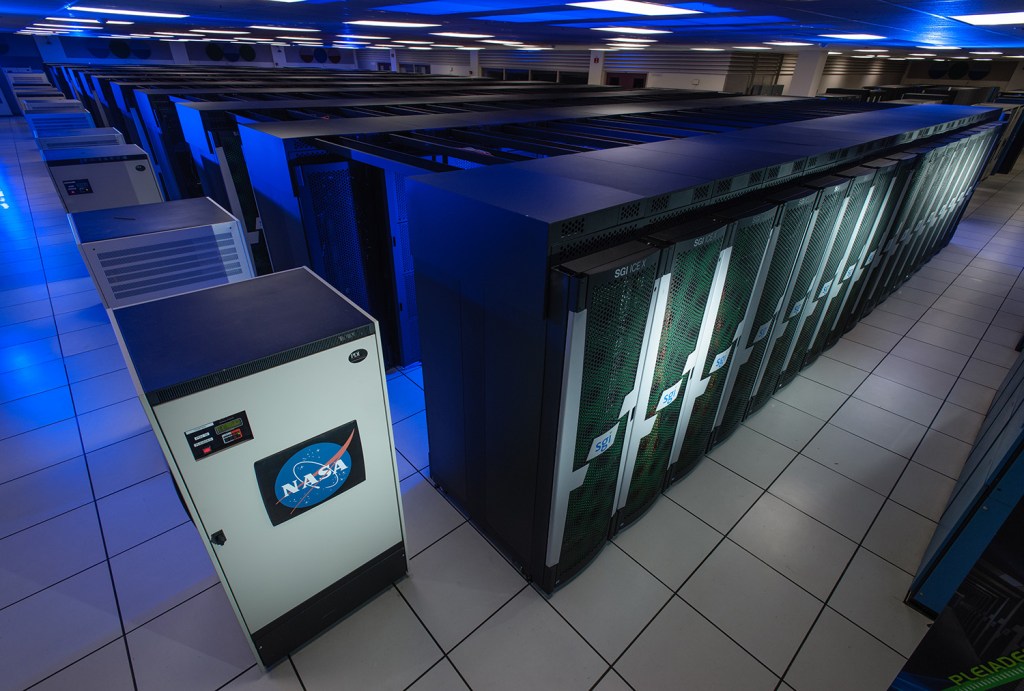
Can you describe the hardware and software required for your branch or supercomputing at NASA? NASA has several supercomputers on-site, including the latest one called Athena, which went online in January. It boasts over 250,000 cores and nearly 800 terabytes of memory, interconnected and working together to solve complex problems.
These supercomputers tackle a wide range of issues, from heliophysics and planetary defense to rotorcraft and air mobility, including the X-59 project and classic civil transport airplanes. The X-59 example is a prime example of how these powerful systems are used to simulate and optimize various aerospace applications.
Written by urgent.news from NASA Science's reporting — not their text. Machine-written — may contain errors; check the original before relying on it.